










Resumindo:
- Most traders overlook how their payment choices impact liquidity, costs, and discipline, which can harm their trading performance.
- Effective payment management involves diversifying methods, understanding settlement timing, and maintaining mental clarity to optimize capital use and prevent liquidity issues.
Most traders spend hours analyzing charts and almost no time thinking about how they pay for things. That oversight costs them. The role of payment options in trading goes far beyond which card you swipe. Payment method choices directly affect your liquidity, your settlement timing, your transaction costs, and even your psychological relationship with money. Cash accounts for about 1 in 7 payments even as digital options multiply, which tells you something important: this is not a solved problem, and the decision deserves more thought than most traders give it.
Índice
- Principais conclusões
- Common payment options and what traders need to know
- How payment choices affect transaction efficiency and liquidity
- The psychology of paying and why it affects trading discipline
- Strategic trade-offs when selecting payment methods
- My take on payment discipline and trading performance
- Why Ollatrade supports smarter payment decisions
- Perguntas frequentes
Principais conclusões
| Apontar | Detalhes |
|---|---|
| Payment timing affects liquidity | Settlement delays from card payments can mask cash outflows and distort your true available capital. |
| Behavioral inertia is a real risk | Most traders stick to familiar payment methods out of habit, not because those methods serve them best. |
| Pain of paying matters | Cash creates stronger spending awareness; digital methods reduce it, which can loosen financial discipline. |
| Diversification has strategic value | Using multiple payment tools matched to specific transaction types improves both speed and cost efficiency. |
| Platform flexibility changes outcomes | Choosing a trading platform with multiple deposit and withdrawal options directly supports better capital management. |
Common payment options and what traders need to know
Understanding the importance of payment methods starts with knowing what each one actually does under the hood, not just how it feels to use.
Dinheiro is the most transparent payment tool available. You see exactly what leaves your hands. For traders who use physical business accounts, petty cash, or manage operations across regions with limited digital infrastructure, cash remains a real consideration. It imposes a natural spending ceiling because you can only spend what you carry.
Credit and debit cards dominate transactions, with two-thirds of payments made by card. For traders, the key distinction is settlement timing. Debit cards pull funds almost immediately; credit cards introduce a billing cycle that separates the act of spending from the act of paying. That gap is where financial discipline either holds or breaks.
Digital wallets and mobile payments (think PayPal, Apple Pay, and similar services) process transactions faster than traditional banking rails and often without the friction of entering card details. For active traders depositing funds to a platform or moving capital between accounts, speed matters. The downside is that frictionless payments can reduce your awareness of how much you are actually moving.
Buy now, pay later (BNPL) is the newest entrant worth understanding. BNPL transactions reached $70 billion in 2025, roughly 1.1% of total credit card spending. For trading operations, BNPL is rarely a front-line tool, but it can serve as a targeted bridge for equipment or software purchases when cash flow is temporarily constrained. The catch is that mixed welfare effects appear among users with limited financial planning discipline.
- Cards: High ubiquity, moderate fees, delayed settlement on credit
- Digital wallets: Fast, low friction, reduced spending awareness
- Cash: Maximum transparency, physical spending ceiling, limited scalability
- BNPL: Useful for specific purchases, carries credit risk without careful tracking
Dica profissional: Before defaulting to your “usual” payment method, ask one question: does this method give me a clear picture of my available capital right now, or does it obscure it? That single question will surface better payment decisions faster than any comparison table.
How payment choices affect transaction efficiency and liquidity
This is where the rubber meets the road for active traders. The impact of payment options on your actual trading capital is real, measurable, and consistently underestimated.
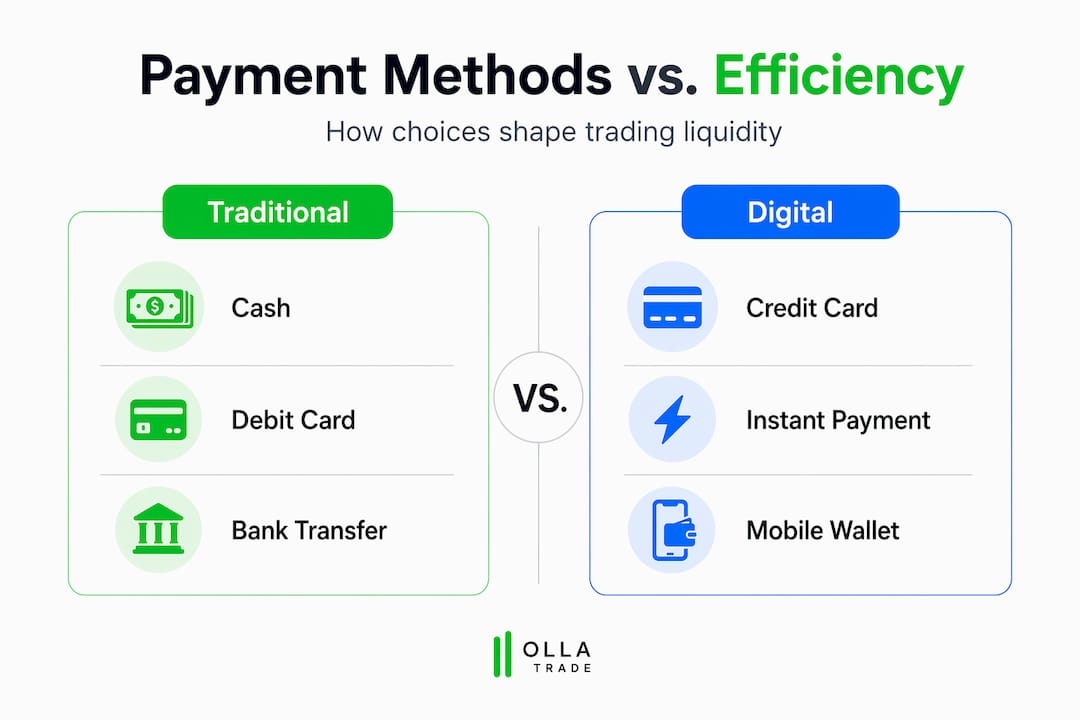
Settlement timing is the most direct lever. When you pay by credit card, the money does not leave your bank account for days or weeks. That sounds like a benefit, but it creates a gap between what you think you have and what you actually have committed. For traders managing tight positions, that gap can lead to over-deployment of capital. Delayed payment with cards changes spending and financial management in ways most people do not consciously track.
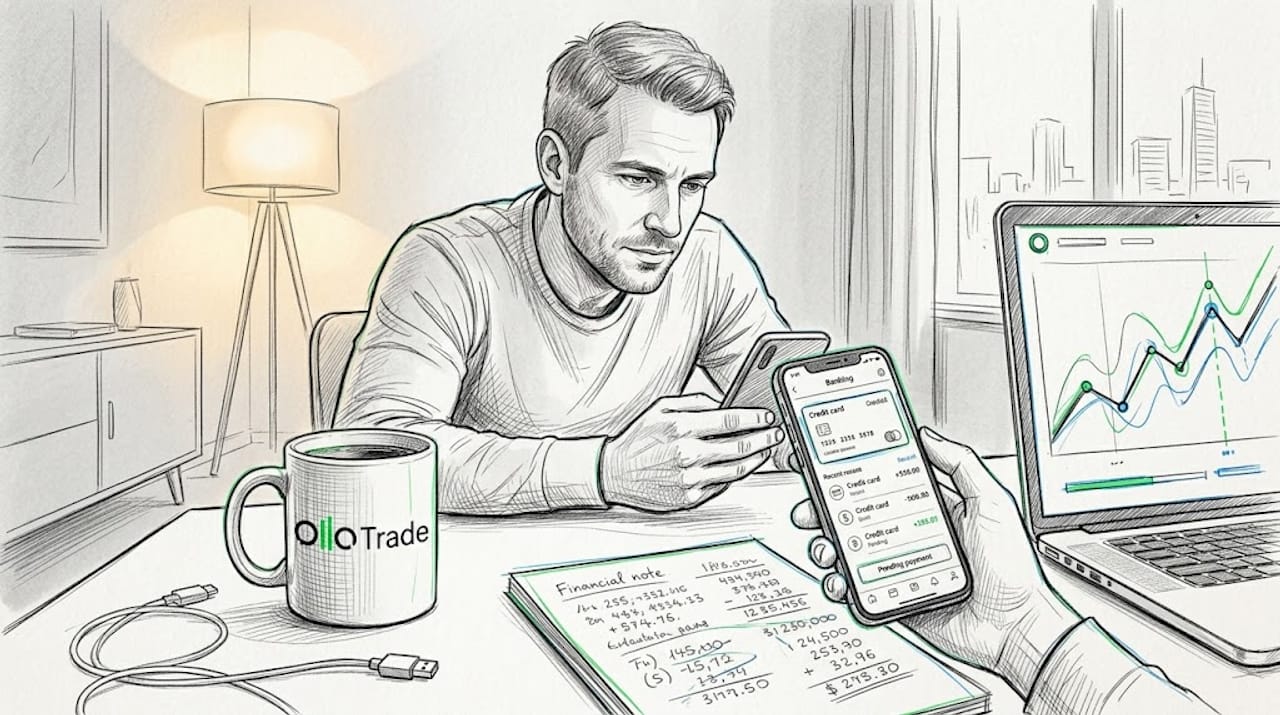
Real-time payment rails introduce a different problem. Instant payment systems require “always-on” funding buffers, which means you need more liquid capital sitting idle to support real-time transactions. That idle capital is capital not working in your trades. Understanding your trading liquidity means factoring in these buffers as part of your total cost of operating.
Payment method inertia compounds the problem. Research shows that inertia is stronger with debit and credit cards than with cash. Traders keep using familiar payment tools not because those tools are optimal, but because changing behavior requires deliberate effort. The result is a slow drift toward suboptimal liquidity profiles that rarely gets flagged until a cash crunch forces a rethink.
Dica profissional: Map your payment methods against your trading cycle. If your primary positions settle on a weekly basis, your payment methods should give you clear, real-time visibility into available capital at least 48 hours before settlement. Anything that obscures that window creates unnecessary risk.
Here is what this looks like in practice:
- A trader using credit cards for platform fees and software subscriptions may not feel the cash impact until the billing cycle closes, creating a false sense of liquidity mid-month.
- A trader using real-time digital transfers for all capital movements needs a larger cash buffer, effectively reducing the capital available for active positions.
- Switching to debit for recurring, predictable costs and reserving credit for strategic, planned purchases creates a cleaner picture of available trading capital at any given moment.
The psychology of paying and why it affects trading discipline
Here is something that rarely appears in trading education: the method you use to pay for things physically changes how you value money, and that has direct consequences for trading discipline.
The concept is called the “pain of paying.” Cash involves an immediate, visible outflow, which creates a measurable psychological response. You feel the loss of cash more acutely than the equivalent swipe of a card. That friction is not a bug. It is a built-in spending control mechanism.
Digital and card payments reduce that friction by design. The convenience that makes them attractive for fast transactions is the same feature that loosens your awareness of what you are spending. For traders who already operate in an environment of high-stakes, fast-moving financial decisions, that reduced awareness can quietly erode capital discipline outside of trading hours.
Mental accounting adds another layer. Traders often mentally separate their “trading account” from their “personal account,” treating them as distinct buckets. The payment method they use reinforces those mental categories. When a trader uses a dedicated card for platform deposits, they mentally treat it as trading capital. When they use the same card for everyday expenses, those boundaries blur. The role of digital payment systems in supporting or undermining those mental categories is significant but largely invisible.
The most dangerous payment habit for a trader is not overspending on any single transaction. It is the slow, invisible erosion of spending awareness that happens when every payment feels equally painless and equally unreal.
Applying this practically means treating payment method selection as part of your trading discipline framework. Use cash or debit for discretionary personal spending to maintain awareness. Reserve digital speed for transactions where precision and timing matter, such as platform deposits during volatile market windows. Keep the mental accounts clean by keeping the payment tools clean.
Strategic trade-offs when selecting payment methods
Choosing the right payment method for the right transaction is not about finding the best single option. It is about building a deliberate mix that serves different needs without creating blind spots.
| Payment method | Velocidade | Custo | Transparência | Best use case for traders |
|---|---|---|---|---|
| Dinheiro | Immediate | Zero fees | Maximum | Discretionary personal expenses |
| Debit card | Near real-time | Baixo | Alto | Recurring, predictable platform costs |
| Credit card | Delayed settlement | Variable fees | Baixo | Planned, strategic larger purchases |
| Digital wallet | Instant | De baixa a moderada | Moderado | Fast platform deposits and transfers |
| BNPL | Deferred | Interest risk | Baixo | Equipment or software, used sparingly |
The benefits of diverse payment choices are not theoretical. A diverse payment ecosystem reduces costs and ensures reliability for individuals and businesses alike. For traders specifically, that means no single payment failure or limitation blocks access to capital at a critical moment.
Merchant acceptance and platform fees affect the calculation too. Some trading platforms charge fees for specific deposit methods. A credit card deposit that costs 2.5% in processing fees is a direct reduction to your available trading capital before you have made a single trade. Checking these costs upfront is basic due diligence that many traders skip.
Payment flexibility also matters when market conditions shift rapidly. If your primary deposit method fails during high-volatility periods, having a secondary option ready is not just convenient. It is a form of operational risk management. Consider exploring alternative funding models that expand your payment options beyond standard card-based channels.
- Review platform deposit fees for each payment method before committing to a routine
- Maintain at least two active payment methods for platform funding to avoid single-point failure
- Assign specific payment methods to specific expense categories to preserve mental accounting clarity
- Review your payment method mix every quarter to check if it still matches your trading volume and cash flow patterns
My take on payment discipline and trading performance
I’ve spent years watching traders optimize every aspect of their strategy while completely ignoring how their payment habits undermine their cash flow management. And I get it. Payment methods feel administrative. They do not feel strategic. But that framing is exactly the problem.
In my experience, the traders who manage capital most effectively treat their payment tools with the same intentionality they apply to position sizing. They are not using whichever card was sitting in their wallet. They have a clear system. Debit for predictable costs, digital transfers for speed-critical platform deposits, and strict separation between trading and personal expenses at the payment level.
The uncomfortable truth about digital convenience is this: the easier a payment method makes it to spend, the harder it makes it to track. I’ve seen traders who are meticulous about stop-loss placement drain their capital buffers through a dozen small, invisible transactions across multiple digital payment channels, each one too small to trigger concern, all of them adding up to a meaningful liquidity problem.
What I’ve found works is periodic payment audits. Every month, pull every transaction across every payment method and map it against your trading cycle. You will almost certainly find payment habits that made sense once and quietly became liabilities. Changing them takes deliberate effort, but most payment inertia is habit, not preference. Habits can be changed with intention.
— FX
Why Ollatrade supports smarter payment decisions
Ollatrade is built for traders who take financial management seriously, and that includes how you move money in and out of your trading account. The platform supports multiple deposit and withdrawal methods, giving you the flexibility to match your funding approach to your cash flow strategy rather than being forced into a single option.
Whether you are depositing quickly during a fast-moving market window or managing a structured withdrawal schedule, the ability to choose your payment method on Ollatrade keeps you in control. The platform’s clean account interface makes it straightforward to track your transaction history across methods, which directly supports the kind of payment awareness this article has been building toward. Start with Forex trading on Ollatrade and experience how payment flexibility, combined with tight spreads and fast execution, creates a genuinely efficient trading environment. If you want a structured path to applying these ideas, the guia de negociação passo a passo on Ollatrade walks you through risk management and capital deployment with practical clarity.
Perguntas frequentes
What is the role of payment options in trading?
Payment options determine how quickly capital reaches your account, what fees reduce your available balance, and how clearly you can track your liquidity. Choosing the wrong method at the wrong time can distort your cash flow picture and create operational risk.
How do payment methods affect spending discipline for traders?
Research shows that cash creates stronger spending awareness than card or digital payments. Traders who use digital methods for all transactions often lose track of small outflows that accumulate into significant capital erosion.
Is BNPL useful for trading-related expenses?
BNPL can work for specific, planned purchases like equipment or software, but it carries credit risk for users without strong financial planning habits. BNPL reached $70 billion in 2025 but remains a niche option rather than a core payment tool for active traders.
Why does payment settlement timing matter for traders?
Settlement timing determines when funds actually leave or arrive in your account. Real-time payment rails require funding buffers that reduce available trading capital, while delayed credit card settlement can create a false impression of liquidity that leads to over-deployment.
How many payment methods should a trader use?
There is no fixed number, but using at least two active funding methods for your trading platform protects against single-point failure. Beyond that, the goal is assigning specific payment tools to specific transaction types so that each one gives you clear, accurate information about your capital position.