










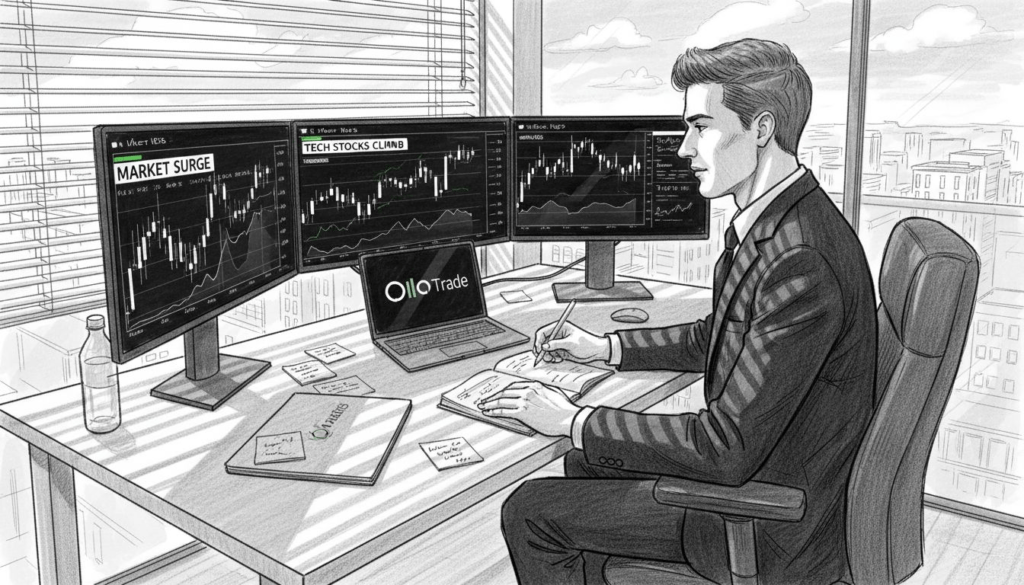
In August 2012, Knight Capital suffered a $440 million trading loss in just 45 minutes because of a software deployment error. This catastrophic event shows how critical your choice of trading platform really is. Trading platforms are the software systems that connect you to financial markets, enabling you to execute trades in Forex, CFDs, stocks, and cryptocurrencies. Whether you’re a retail trader starting out or a professional managing significant capital, understanding platform types, technology architecture, and selection criteria can protect your investments and boost your performance. This guide breaks down everything you need to know about trading platforms in 2026.
Índice
- Understanding Trading Platforms: Types And Core Features
- Technology Behind Trading Platforms: Architecture And Execution Quality
- Comparing Popular Trading Platforms: Pros And Cons For Traders
- How To Choose And Optimize Your Trading Platform Experience
- Explore Olla Trade Platforms And Tools For 2026
Principais conclusões
| Apontar | Detalhes |
|---|---|
| Platform definition | Trading platforms are software systems enabling execution and management of trades across Forex, CFDs, stocks, and crypto markets. |
| Technology impact | Superior execution technology reduces slippage and preserves capital, directly affecting your profitability and risk exposure. |
| Platform variety | Options range from widely licensed platforms like MetaTrader to custom-built institutional solutions with varying features and costs. |
| Advanced capabilities | Multi-device access, hardware acceleration, and advanced charting tools significantly improve trading performance and agility. |
| Selection importance | Careful platform evaluation matching your trading style, instruments, and technical needs is essential for both retail and professional traders. |
Understanding trading platforms: types and core features
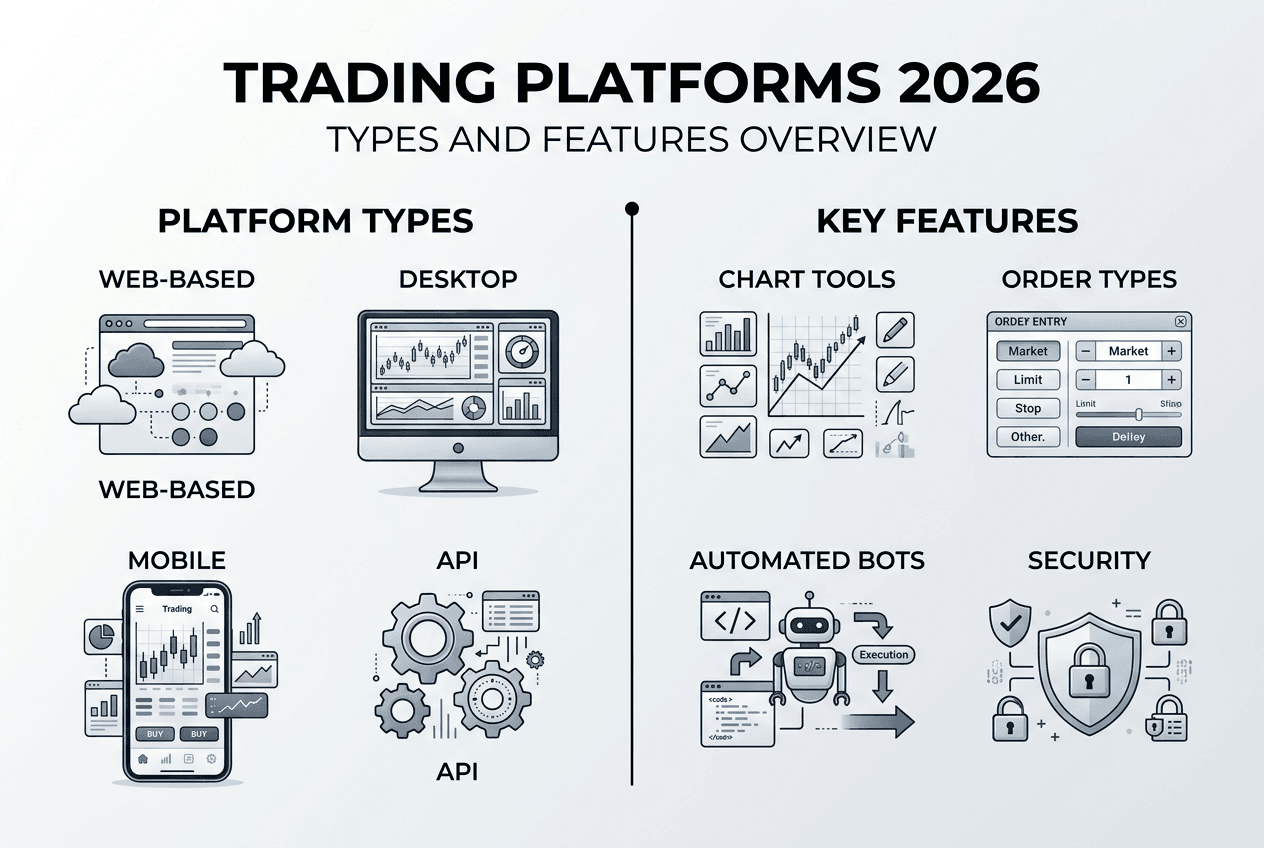
Trading platforms are software applications that allow you to execute, monitor, and manage trades across multiple financial markets. They serve as your gateway to Forex pairs, contracts for difference on indices and commodities, stocks, and cryptocurrencies. Without a reliable platform, you cannot participate in modern electronic trading.
Platforms fall into two broad categories. Licensed retail platforms like MetaTrader 5 and cTrader offer proven stability, extensive broker support, and large user communities. These platforms come ready to use with established features and regular updates. Custom-built institutional-grade platforms, on the other hand, are developed by brokerages or trading firms seeking specific functionality or competitive advantages. The guide is for founders and CTOs considering building a custom trading platform instead of licensing MT5 or cTrader.
Core functions of any trading platform include:
- Real-time charting with technical indicators and drawing tools
- Order execution capabilities supporting market, limit, stop, and advanced order types
- Risk management features like stop-loss and take-profit automation
- Account monitoring showing positions, margin, profit and loss, and transaction history
- Reporting and analytics for performance review and tax preparation
Professional trading platforms distinguish themselves through advanced analytics, hardware acceleration for lower latency, algorithmic trading support, and deeper market access. Retail platforms prioritize ease of use, educational resources, and accessibility across devices. Understanding Principais características das plataformas de negociação helps you identify which category suits your needs.
Your choice between licensing an established platform or building custom software depends on resources, technical expertise, and strategic goals. Most retail traders and smaller brokers benefit from licensed solutions offering immediate deployment and ongoing support. Larger institutions with specific requirements may justify custom development despite higher costs and risks. Grasping basic trading platform concepts provides the foundation for making this decision confidently.
Technology behind trading platforms: architecture and execution quality
The technology powering your trading platform directly determines execution speed, reliability, and ultimately your profitability. At the core sits the execution management system, or EMS, which routes your orders to liquidity providers, exchanges, or market makers. A well-designed EMS minimizes latency, ensuring your trades execute at intended prices.
Hardware acceleration represents a significant technological advancement in institutional trading. Field-programmable gate arrays, or FPGAs, process trading signals and execute orders in microseconds, far faster than traditional software-based systems. Architecture bifurcation between EMS software and hardware-accelerated FPGA solutions is increasingly common in professional environments where milliseconds translate to competitive advantage.
Execution slippage, the difference between your expected trade price and actual execution price, erodes capital over time. Slippage occurs due to market volatility, slow order routing, or insufficient liquidity. Superior platform technology mitigates slippage through:
- Direct market access reducing intermediary delays
- Smart order routing selecting optimal liquidity sources
- Co-location services placing servers near exchange infrastructure
- Advanced algorithms splitting large orders to minimize market impact
Reduce execution slippage through superior technology or face capital erosion, especially in high-frequency or large-volume trading scenarios. The Knight Capital disaster illustrates how technology failures can destroy capital instantly, emphasizing the need for robust, tested systems.
Multi-device access enhances trading agility by allowing you to monitor markets and execute trades from desktops, tablets, and smartphones. Modern platforms synchronize data across devices in real time, ensuring you never miss opportunities regardless of location. Cloud-based architectures enable this flexibility while maintaining security and performance standards.
Pro Tip: Prioritize platforms with proven execution technology and transparent políticas de execução de ordens to protect your capital and maximize profitability, particularly when trading volatile instruments or during high-impact news events.
Entendimento multi-device trading advantages helps you leverage technology for better trading outcomes. The platform’s technological foundation is not just a technical detail but a critical factor in your trading success.
Comparing popular trading platforms: pros and cons for traders
Choosing among available trading platforms requires understanding their strengths, weaknesses, and suitability for different trading styles. MetaTrader 4 and 5 dominate retail Forex and CFD trading, offering extensive broker support, automated trading via Expert Advisors, and vast communities sharing indicators and strategies. cTrader appeals to traders seeking advanced charting, level II pricing, and a more modern interface. Proprietary platforms built by brokers or institutions provide customized features but may lack third-party support.

| Platform Type | Market Coverage | Execution Speed | Usability | Supported Instruments | Key Advantage |
| — | — | — | — | — | |
| MetaTrader 4/5 | Forex, CFDs, stocks, crypto | Moderate to fast | Moderate learning curve | Extensive | Largest community and broker support |
| cTrader | Forex, CFDs | Fast | User-friendly interface | Forex-focused | Advanced charting and level II data |
| Custom Proprietary | Varies by design | Ultra-fast (with FPGA) | Varies widely | Customizable | Tailored features and competitive edge |
| Web-based Platforms | Forex, stocks, crypto | Moderate | Very accessible | Broad | No installation required, multi-device |
MetaTrader platforms excel in automation and customization, making them ideal for algorithmic traders and those using technical indicators extensively. However, their interface feels dated compared to newer alternatives. cTrader offers superior charting and transparency with level II pricing, benefiting scalpers and day traders who need precise entry and exit points. Its smaller broker network limits availability.
Proprietary platforms allow brokers to differentiate their offerings and optimize for specific markets or trading styles. Founders and CTOs often weigh licensing MT5/cTrader vs building custom platforms, considering factors like development cost, time to market, ongoing maintenance, and competitive positioning. Custom platforms require substantial investment but offer complete control over features, branding, and technology stack.
Factors to consider when choosing a platform include:
- Order types supported (market, limit, stop, trailing stop, OCO)
- Charting capabilities and available technical indicators
- Automated trading support and scripting languages
- Community resources, forums, and third-party tool availability
- Broker availability and regulatory compliance
- Mobile app quality and synchronization
- Cost structure including spreads, commissions, and data fees
Pro Tip: Test multiple platforms using demo accounts to evaluate execution quality, interface usability, and feature sets before committing real capital, ensuring the platform aligns with your trading strategy and technical requirements.
Exploring MetaTrader 4 platform guide and reviewing top trading software 2025 provides detailed comparisons to inform your decision.
How to choose and optimize your trading platform experience
Selecting the right trading platform requires systematic evaluation aligned with your specific needs, trading style, and technical capabilities. Follow this step-by-step approach:
- Assess your trading needs including instruments traded, frequency, position sizes, and strategy complexity
- Research available platforms considering technology, features, broker support, and costs
- Test platforms using demo accounts to evaluate execution speed, interface usability, and stability
- Evaluate execution quality by monitoring slippage, requotes, and order rejection rates during volatile periods
- Train yourself on platform features through tutorials, webinars, and practice trading
- Optimize settings and workflows as you gain experience and markets evolve
Execution speed and slippage directly impact profitability, especially for short-term traders. Before committing capital, test order execution during high-volatility events like economic announcements. Record the difference between intended and actual execution prices over multiple trades. Platforms with consistently low slippage and minimal requotes deserve preference.
Continuous learning maximizes platform value. Most platforms offer educational resources, including video tutorials, documentation, and community forums. Leverage these to discover advanced features like custom indicators, automated strategies, or risk management tools you might otherwise overlook. Engaging with educação profissional em negociação accelerates your skill development.
Risk management features protect your capital. Configure default stop-loss and take-profit levels, position sizing calculators, and margin alerts to prevent catastrophic losses. Review your broker’s trading execution details to understand how orders are processed and what protections exist during extreme market conditions.
Pro Tip: Regularly update your trading platform software and review execution policies to maintain optimal performance and security, as outdated versions may expose you to bugs, security vulnerabilities, or degraded execution quality.
Platform optimization is ongoing. As you refine your trading strategy, adjust charting layouts, indicator settings, and order templates to streamline execution. Many traders create multiple workspace configurations for different market conditions or trading sessions. Periodically reassess whether your platform still meets your evolving needs or if switching would provide better tools and execution.
Compliance and security cannot be overlooked. Ensure your platform and broker meet regulatory requirements in your jurisdiction. Enable two-factor authentication, use strong passwords, and verify SSL encryption for web-based platforms. These precautions protect your account from unauthorized access and fraud.
Explore Olla Trade platforms and tools for 2026
Now that you understand trading platform fundamentals, technology, and selection criteria, it’s time to explore solutions that deliver on these principles. Olla Trade offers a sophisticated plataforma de negociação forex supporting Forex, CFDs on metals, indices, stocks, energies, and cryptocurrencies. Our platform combines tight spreads, fast execution speeds, and advanced charting tools to meet the needs of both retail and professional traders.
Whether you’re developing your skills or refining advanced strategies, our professional trading education resources provide the knowledge foundation you need. Explore our comprehensive guide to key features of trading platforms to see how Olla Trade implements the technology and capabilities discussed in this article. Start trading with confidence in 2026.
Perguntas frequentes
What are the most important features to look for in a trading platform?
Prioritize execution speed, supported instruments, charting capabilities, order types, and security features when evaluating platforms. A platform should match your trading style, whether you’re a day trader needing fast execution or a swing trader requiring advanced technical analysis tools. Review the broker’s regulatory compliance and customer support quality. Testing key platform features through demo accounts reveals whether a platform meets your practical requirements before risking capital.
Can I build my own trading platform instead of using popular ones?
Building a custom trading platform requires substantial financial resources, technical expertise, and ongoing maintenance commitment. The guide targets founders and CTOs evaluating custom platforms versus licensing established solutions like MetaTrader. Custom development offers complete control over features and branding but carries higher risks of bugs, security vulnerabilities, and regulatory compliance issues. Most traders and smaller brokers benefit from licensing proven platforms that provide immediate deployment, regular updates, and extensive support networks.
How does trading platform technology impact my trade executions?
Platform technology determines execution speed, slippage, and order routing efficiency, directly affecting your profitability. Reduce execution slippage through superior technology or face gradual capital erosion, particularly in fast-moving markets. Advanced platforms use hardware acceleration, smart order routing, and direct market access to minimize delays between order submission and execution. Poor technology leads to requotes, rejected orders, and unfavorable price fills. Understanding trading execution information helps you evaluate whether a platform’s technology meets your performance requirements.
Are mobile trading platforms as reliable as desktop versions?
Modern mobile trading platforms offer comparable reliability and functionality to desktop versions, though screen size limits charting complexity. Leading platforms synchronize data in real time across devices, allowing seamless transitions between desktop analysis and mobile execution. Mobile platforms excel for monitoring positions and executing quick trades while away from your desk. However, complex technical analysis and multi-chart monitoring remain more efficient on larger desktop screens. Test mobile app stability and execution speed during your demo period to ensure it meets your needs.
How often should I update or change my trading platform?
Update your platform software immediately when new versions release to maintain security, performance, and feature access. Consider changing platforms only when your current solution no longer meets evolving trading needs or when significantly better technology becomes available. Frequent platform switching disrupts your workflow and requires relearning interfaces and features. However, if you experience consistent execution problems, lack essential features, or find better alternatives offering trading software alternatives, making a change can improve your trading outcomes. Evaluate platforms annually to ensure you’re using optimal tools for your strategy.
Recomendado
- Domine as principais funcionalidades das plataformas de negociação para obter melhores resultados.
- Melhores opções de negociação em 2025: ferramentas para investidores inteligentes – Olla Trade
- O que são sinais de negociação? Um guia para negociações mais inteligentes até 2026.
- O melhor software de negociação para traders de varejo e profissionais em 2025 – Olla Trade