












TL;DR:
- Crypto markets offer 24/7 access and advanced derivatives tools that enable precise trading and risk management. These features facilitate diversification, faster execution, and operational security, but success depends on disciplined strategy and proper platform use. Building knowledge, controlling fees, and timing entries are essential for leveraging crypto’s true trading advantages.
Crypto markets have matured fast, yet the core crypto trading benefits that attracted early adopters still apply today. The difference now is that both retail traders and professionals have access to tools, derivatives, and platforms that let them express more precise trading ideas with better risk controls than ever before. Whether you are building a diversified portfolio or actively speculating on price moves, understanding what crypto markets genuinely offer, beyond the hype, determines whether you capture opportunity or just absorb volatility.
Key takeaways
| Point | Details |
|---|---|
| 24/7 market access | Crypto markets never close, giving you flexibility to trade around your schedule and react to news instantly. |
| Derivatives expand your toolkit | CFDs and futures let you go long or short without owning crypto, enabling more precise risk expression. |
| Diversification requires discipline | Crypto’s low correlation to stocks helps portfolios, but timing decisions drive most of the actual return. |
| Blockchain adds operational security | Immutable transaction records and transparent on-chain data reduce counterparty ambiguity. |
| Fee awareness protects profits | Monitoring transaction costs actively protects net profitability, especially for high-frequency strategies. |
1. The core crypto trading benefits start with 24/7 market access
Traditional equity markets close at the bell. Forex has gaps over the weekend. Crypto never stops. The Bitcoin and altcoin markets run around the clock, 365 days a year, which creates genuine flexibility that professional traders in other asset classes simply do not have.
That round-the-clock availability matters for several concrete reasons:
- You can react to macroeconomic announcements, geopolitical events, or on-chain data signals the moment they emerge, not when a market opens hours later.
- Traders in different time zones compete on equal footing. There is no “market open advantage” concentrated in one geography.
- Overnight price gaps, a common source of unplanned losses in stocks, are structurally less common because there is no session close to create them.
High liquidity and 24/7 access make crypto particularly attractive for active traders who need to manage positions dynamically. Getting started also requires far less infrastructure than traditional brokerage accounts. An internet connection and a verified trading account are the primary requirements.
Pro Tip: Set price alerts rather than watching charts constantly. Round-the-clock access is an advantage only if you use it deliberately, not reactively.

2. Lower transaction fees and faster execution than traditional finance
One of the underappreciated advantages of crypto trading is the cost structure. Bank wire transfers can take two to three business days and carry fees that eat into smaller transactions. Many crypto platforms offer low fees with near-instant settlement, which matters more than it might seem when you are compounding gains over dozens of trades.
For CFD-based crypto trading specifically, the cost is typically built into the spread rather than charged as a separate commission. That model makes it easier to calculate your breakeven point before entering a trade. When you know your exact cost upfront, position sizing becomes more precise.
Speed matters too. Fast execution directly affects your realized entry price, especially in volatile markets. A delay of even a few seconds during a sharp Bitcoin move can shift your average cost by hundreds of dollars per contract. Platforms that optimize execution speed give traders a measurable edge when markets are moving hard.
3. Diverse instruments: CFDs, futures, and spot trading
Spot trading gets most of the attention, but the more significant story in crypto market structure is derivatives. Crypto derivatives now account for over 70% of total market volume in 2026, with leverage typically ranging from 5x to 20x for experienced traders.
What does that mean for you practically? Here is how the main instrument types compare:
- Spot trading: You own the underlying asset. Your gain or loss tracks price movement one-to-one. You need a wallet and face custody responsibilities.
- CFDs (Contracts for Difference): You speculate on price direction without owning the asset. You can go long or short, apply leverage, and set defined exit conditions through stop-loss orders.
- Futures: Standardized contracts with expiry dates. Common in institutional crypto trading for hedging or directional positions.
The ability to go short with CFDs means you can profit from falling prices rather than sitting on the sidelines during bear phases. That alone changes crypto from a buy-and-hold asset class into an active trading market. You are no longer dependent on a bull trend to generate returns.
Pro Tip: If you are new to leveraged instruments, start with minimum position sizes. The goal in the first month is learning how your chosen platform handles margin, not maximizing exposure.
4. Portfolio diversification and crypto’s unique risk-return profile
Adding crypto to a traditional portfolio of stocks and bonds does provide measurable diversification. The correlation between Bitcoin and the S&P 500 has historically been lower than between most equity pairs, which means crypto can move independently when traditional markets are under stress.
Here is a practical comparison of how crypto fits against other asset classes:
| Asset class | Typical annual volatility | Correlation to S&P 500 | Liquidity |
|---|---|---|---|
| Bitcoin (BTC) | 50–80% | Low to moderate | Very high |
| Gold | 12–18% | Low | High |
| US Equities (SPY) | 15–20% | 1.0 (benchmark) | Very high |
| Bonds (AGG) | 4–7% | Negative to low | High |
Crypto adds diversification benefits to traditional portfolios, but the higher volatility demands that you size positions carefully. A 5% allocation to crypto can meaningfully change your portfolio’s return distribution without catastrophically increasing drawdown risk if markets turn.
The critical insight, and one most discussions miss, is that entry timing explains 70 to 79% of variance in crypto returns. Classical mean-variance optimization, the kind that works reasonably well for equities, is far less predictive in crypto markets. That means when you enter matters more than how much you allocate.
Pro Tip: Treat crypto as a satellite position rather than a core holding. Use it to express specific tactical views, not as a permanent fixed-weight allocation.
5. Blockchain transparency and cryptographic security
The technology underpinning crypto trading carries real operational benefits that get lost in price speculation discussions. Cryptography creates inalterable activity records on blockchain. Every transaction is timestamped and publicly verifiable, which eliminates the kind of counterparty ambiguity you sometimes encounter with over-the-counter instruments in traditional finance.
For traders, this translates into several concrete advantages:
- On-chain data provides a public audit trail that no single party can alter retroactively.
- Exchange order books and settlement records are more transparent than many traditional brokerage structures.
- Smart contracts can automate settlement conditions, reducing execution risk on certain derivative structures.
- Regulatory clarity from bodies like the SEC and CFTC continues to improve, giving traders clearer frameworks for classification, venue access, and capital treatment.
One particularly useful operational benefit applies to CFD traders specifically. CFDs eliminate wallet and custody risk entirely. You never hold crypto directly, which removes private key management, exchange hacking exposure, and the complexity of self-custody entirely from your workflow. You focus purely on price action.
Pro Tip: Use on-chain analytics tools alongside price charts. Metrics like exchange inflow/outflow volumes and whale wallet movements often lead price by hours.
6. Liquidity, fee structures, and the mechanics of smart trade timing
Liquidity in major crypto pairs like BTC/USD and ETH/USD is deep enough that retail-sized orders have minimal market impact. You can enter and exit positions at prices close to what you see quoted, which is not always the case in smaller equity names or thinly traded currency pairs.
Fee management is where many traders quietly lose ground. Flat fee models help active crypto traders calculate costs precisely, which directly improves trade planning. Spread-based costs on CFDs serve a similar function. If you cannot calculate your break-even price before entering a trade, you are trading blind.
Knowing how to monitor your trading fees across a month of activity often reveals cost leakage that compounds into significant profit drag over time. Reducing fees by even 0.1% per trade adds up materially when you are running 50 to 100 trades per month.
Timing remains the dominant driver of realized returns. Technical and momentum signals can improve entry quality, but stress periods still produce sharp drawdowns. Risk controls, specifically stop-loss orders, defined position sizing, and maximum daily loss limits, are not optional features. They are the mechanism through which you stay in the game long enough to compound wins.
My honest take on what crypto trading actually offers
In my experience working with traders across crypto and traditional markets, the most common mistake I see is treating crypto trading benefits as self-executing. People hear “24/7 access” and think availability equals opportunity. They see leverage and think amplification equals profit.
What I have actually found is that the advantages of crypto trading are real, but they are asymmetric. They reward traders who show up prepared and punish those who treat volatility as a free lunch. The opportunity is outsized compared to most asset classes. The path to realizing it is not.
What genuinely separates traders who do well from those who do not is platform choice, discipline, and ongoing education. I have seen traders with sound strategy consistently underperform because of poor execution infrastructure or fee structures they never examined. I have seen the opposite too, where solid platform tools and tight risk management turned modest edge into consistent returns over time.
My honest view: digital asset risk monitoring and position discipline matter more than finding the perfect entry. If you are thinking seriously about integrating crypto into your portfolio or trading strategy, approach it the way professionals approach any other market. Respect the edge, manage the risk, and build your understanding before scaling exposure.
— FX
Start capturing these advantages with Ollatrade
Ollatrade gives you direct access to crypto CFD trading alongside Forex, metals, indices, and stocks, all from one platform built for both retail and professional traders.
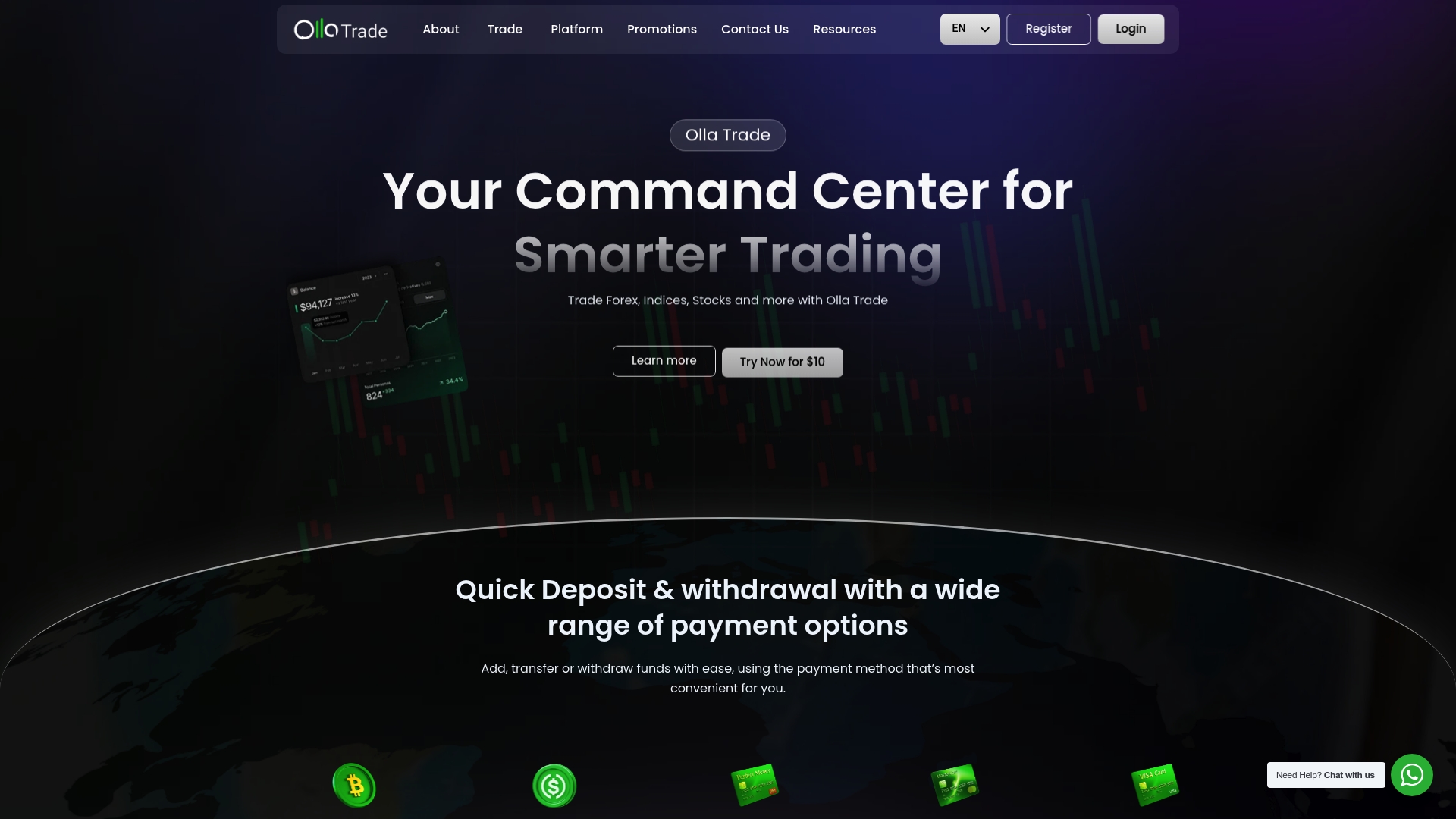
With crypto CFDs on Ollatrade, you trade Bitcoin, Ethereum, and other major cryptocurrencies with competitive spreads, no wallet required, and full access to leverage controls and stop-loss tools. The platform integrates MetaTrader 4, giving you advanced charting and expert advisor support from day one. If you are newer to derivatives, Ollatrade’s educational resources walk you through how CFDs work before you put real capital at risk. The infrastructure is built for speed, security, and transparent pricing. That is exactly what the crypto trading advantages covered in this article demand.
FAQ
What are the main crypto trading benefits for retail traders?
The primary benefits include 24/7 market access, lower transaction fees compared to traditional finance, the ability to go long or short through derivatives, and portfolio diversification from an asset class with low correlation to equities.
Is crypto trading worth it for professional portfolio managers?
Yes, when approached with disciplined position sizing and risk controls. Crypto provides diversification and return potential that complements traditional assets, though higher volatility requires careful allocation sizing, typically in the 5 to 10% range of a portfolio.
How do CFDs differ from spot crypto trading?
CFDs let you speculate on price direction without owning the underlying asset, eliminating custody and wallet risks. You can go short, apply leverage, and set defined exit conditions, which gives you more tactical flexibility than spot trading alone.
What is the biggest risk that offsets crypto trading advantages?
Volatility is the primary risk. Timing explains most of the return variance in crypto portfolios, meaning poor entry timing can erase the benefits of even a well-constructed position. Stop-loss orders and strict position sizing are the main defenses.
How do beginners start trading crypto safely?
Start with a regulated platform, use a step-by-step trading guide to understand the mechanics, begin with minimum position sizes, and spend time learning fee structures before scaling. Education and small initial exposure beat aggressive entry every time.