











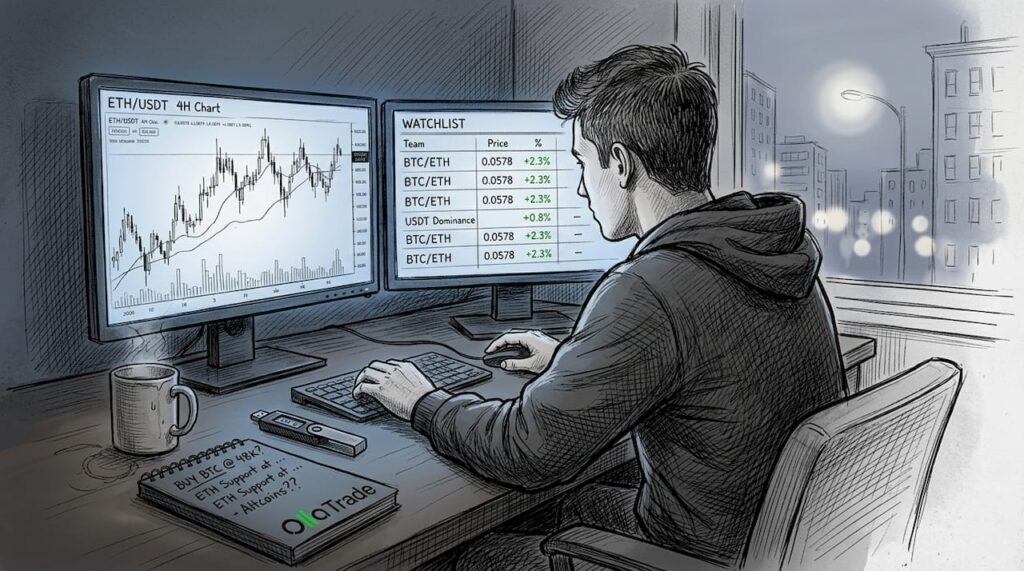
Many traders still view cryptocurrencies as purely speculative gambles, suitable only for risk-seeking investors chasing quick profits. This misconception overlooks how digital assets have fundamentally reshaped modern trading strategies and market dynamics. Cryptocurrencies now enable sophisticated approaches that deliver measurably superior risk-adjusted returns compared to traditional markets. From pairs trading enhanced by machine learning to derivatives that dominate price discovery, crypto assets have become integral tools for both retail and professional traders. This article explores how cryptocurrencies influence trading tactics, market behavior, and portfolio construction in 2026.
Table of Contents
- Crypto Trading Strategies: From Pairs To Machine Learning
- Market Dynamics And Derivatives Shaping Crypto Trading
- Cryptocurrencies’ Impact On Portfolio Diversification And Risk
- Risks And Challenges For Retail Traders In Crypto Markets
- Explore Trading Opportunities With Olla Trade
Key takeaways
| Point | Details |
|---|---|
| Advanced strategies | Cryptocurrencies enable specialized trading strategies like pairs trading using Generalized Hurst Exponent achieving higher Sharpe and Sortino ratios than traditional indices. |
| Derivatives dominance | Perpetual futures account for 93% of crypto derivatives volume, with centralized exchanges leading price discovery through 61% higher market integration than decentralized platforms. |
| Portfolio diversification | Adding BTC and ETH to stock portfolios boosts expected returns but increases volatility, making them suitable primarily for risk-tolerant investors. |
| Retail trader risks | 70-80% of retail traders lose money using leverage in crypto markets, often due to timing errors and strategy overfitting. |
| Machine learning edge | Ensemble models like XGBoost and Gradient Boosting consistently outperform traditional technical analysis in crypto price prediction and strategy optimization. |
Crypto trading strategies: from pairs to machine learning
Cryptocurrencies support trading strategies that consistently outperform traditional markets when adjusted for volatility and risk. Pairs trading using Generalized Hurst Exponent (GHE) achieves higher Sharpe and Sortino ratios in crypto markets compared to traditional stock indices. This approach exploits mean reversion patterns unique to digital assets, where price dislocations between correlated pairs create profitable arbitrage windows. The GHE framework identifies optimal entry and exit points by measuring long-term memory in price series, something particularly valuable in crypto’s volatile environment.
Machine learning models have revolutionized crypto strategy development. Ensemble methods combining XGBoost and Gradient Boosting deliver superior price predictions compared to single-model approaches or traditional technical indicators. These algorithms process vast datasets including order book depth, social sentiment, and cross-exchange price differentials to identify patterns invisible to conventional analysis. The computational advantage becomes especially pronounced during high-volatility periods when traditional models fail to adapt quickly enough.
Technical analysis tools like RSI require careful evaluation in crypto markets. While widely used, these indicators demand timing precision that most traders struggle to achieve consistently. The Rolling Strategy-Hold Ratio (RSHR) provides a robust framework for testing whether a strategy genuinely adds value or simply fits historical noise. This metric compares strategy returns against a simple buy-and-hold approach across multiple rolling windows, revealing whether apparent profitability stems from genuine market insight or statistical luck.
Volatility in crypto markets creates alpha opportunities unavailable in traditional assets. Price swings that would signal crisis in equity markets represent normal trading conditions for Bitcoin and Ethereum. Sophisticated traders exploit this characteristic through volatility arbitrage, options strategies, and dynamic position sizing that adjusts exposure based on realized volatility metrics. Understanding how to harness rather than fear volatility separates successful crypto traders from those who exit at losses.
Pro Tip: Test all strategies using out-of-sample data and calculate RSHR across multiple market regimes before risking capital, as overleveraging causes most retail losses in crypto trading.
Key strategy considerations:
- Pairs trading works best with cryptocurrencies showing strong historical correlation but temporary price divergence
- Machine learning models require continuous retraining as market microstructure evolves
- Indices trading strategies from traditional markets often need substantial modification for crypto application
- Backtesting must account for crypto-specific factors like exchange downtime and extreme slippage during volatility spikes
Market dynamics and derivatives shaping crypto trading
Crypto market structure differs fundamentally from traditional financial markets, with perpetual futures dominating at 93% of derivatives volume. These instruments enable continuous trading without expiry dates, creating unique arbitrage opportunities and risk exposures. Unlike traditional futures that converge to spot prices at settlement, perpetual contracts use funding rates to maintain price alignment. This mechanism creates predictable cash flows for traders who understand how to position around funding intervals.

Centralized exchanges (CEXs) demonstrate 61% higher price discovery integration compared to decentralized exchanges (DEXs). This integration advantage stems from superior liquidity, faster execution speeds, and institutional participation concentrated on centralized platforms. Price movements on major CEXs like Binance and Coinbase propagate to other venues within milliseconds, establishing these platforms as primary price formation centers. Traders monitoring order flow on leading CEXs gain informational advantages over those relying solely on aggregated price feeds.
Arbitrage opportunities exist but face significant practical constraints. Transaction costs, withdrawal delays, and price reversals limit the profitability of simple cross-exchange arbitrage. Successful arbitrageurs employ sophisticated infrastructure including co-located servers, direct exchange APIs, and algorithms that account for all-in costs including network fees and slippage. The efficiency gains from arbitrage activity have substantially reduced pricing inefficiencies compared to crypto’s early years, though opportunities still emerge during extreme volatility.
Understanding market microstructure proves essential for strategy design. The dominance of algorithmic trading, prevalence of wash trading on certain exchanges, and concentration of liquidity in specific trading pairs all influence execution quality and strategy viability. Traders must account for these structural factors when sizing positions and setting realistic performance expectations.
Market structure comparison:
| Venue Type | Daily Volume Share | Price Discovery Integration | Arbitrage Efficiency |
|---|---|---|---|
| Centralized Exchanges | 87% | High (61% above DEX) | Moderate to High |
| Decentralized Exchanges | 13% | Lower | Limited by costs |
Critical microstructure factors:
- Perpetual funding rates create predictable cash flows for informed traders
- Crypto trading basics require understanding unique market mechanics absent in traditional markets
- Order book depth varies dramatically across exchanges, affecting execution quality
- Trading fees monitoring becomes crucial as costs compound rapidly with high-frequency strategies
Cryptocurrencies’ impact on portfolio diversification and risk
Introducing cryptocurrencies into traditional portfolios creates measurable impacts on both returns and risk profiles. Adding BTC and ETH to European stock portfolios boosts expected returns but simultaneously elevates overall volatility. This tradeoff makes crypto allocations suitable primarily for investors with higher risk tolerance and longer time horizons. The low correlation between cryptocurrencies and traditional assets like stocks and bonds provides genuine diversification benefits during normal market conditions.
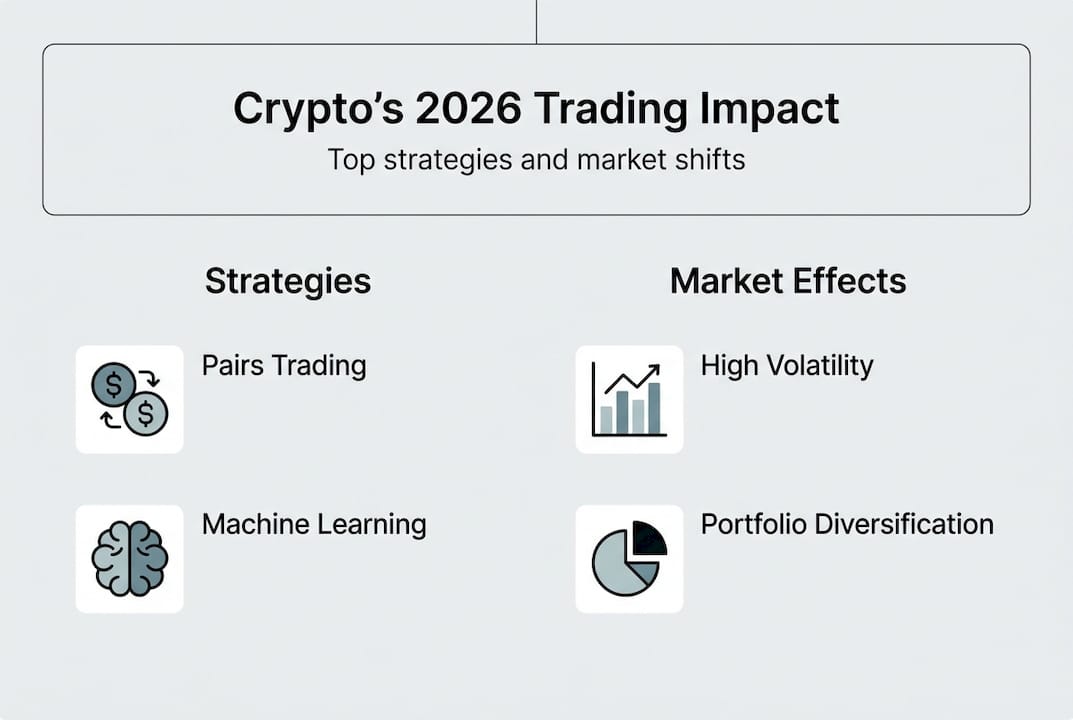
Volatility spillovers intensify during market crises, reducing diversification benefits precisely when investors need them most. During systemic stress events, correlations between crypto and traditional assets increase sharply as liquidity constraints force traders to sell across all markets simultaneously. This correlation breakdown undermines the theoretical diversification advantage, creating portfolio-wide drawdowns that exceed what individual asset volatilities would suggest. Understanding this dynamic proves crucial for risk management and position sizing.
Hybrid portfolios combining traditional and crypto assets require careful construction. Optimal allocation depends on individual risk preferences, investment horizons, and market conditions. Most research suggests crypto allocations between 2-5% of total portfolio value provide meaningful upside exposure while limiting downside risk to acceptable levels for moderate-risk investors. More aggressive allocations suit traders comfortable with significant short-term volatility in exchange for potentially higher long-term returns.
Steps to incorporate cryptocurrencies effectively:
- Assess your risk tolerance using quantitative measures like maximum acceptable drawdown and volatility thresholds
- Start with small allocations (1-3% of portfolio) and monitor performance across multiple market cycles
- Rebalance periodically to maintain target allocations as crypto prices fluctuate significantly
- Monitor correlation changes during stress periods and adjust exposure when spillover risks increase
- Consider using crypto derivatives for exposure management rather than holding spot assets directly
Pro Tip: Adjust crypto exposure based on realized volatility metrics and reduce allocations during periods of elevated correlation with traditional assets to maintain genuine diversification benefits.
Portfolio impact comparison:
| Portfolio Type | Expected Annual Return | Annual Volatility | Sharpe Ratio |
|---|---|---|---|
| Traditional Stocks Only | 8.2% | 14.5% | 0.57 |
| Stocks + 5% BTC/ETH | 9.8% | 18.3% | 0.54 |
| Stocks + 10% BTC/ETH | 11.4% | 22.7% | 0.50 |
The relationship between crypto and forex trading overview markets also deserves attention, as currency movements influence crypto valuations through dollar-denominated pricing. Traders operating in multiple asset classes must account for these cross-market dynamics when constructing positions and hedging risk exposures.
Risks and challenges for retail traders in crypto markets
Retail traders face disproportionate risks in cryptocurrency markets, with 70-80% losing money when using leverage. This alarming statistic stems from multiple factors including inadequate risk management, poor timing decisions, and strategy overfitting. Leverage amplifies both gains and losses, but retail traders often underestimate how quickly positions can move against them during volatile periods. Margin calls and forced liquidations occur with shocking frequency, wiping out accounts before traders can react.
Technical indicators like RSI require sophisticated evaluation frameworks to avoid costly mistakes. Many retail traders apply these tools mechanically without understanding their limitations or properly testing their effectiveness. The Rolling Strategy-Hold Ratio provides essential validation by comparing strategy returns against passive holding across multiple time periods. Strategies that fail this test typically reflect overfitting to historical data rather than genuine market insight. Without rigorous testing, traders risk deploying capital based on statistical illusions.
Market microstructure knowledge separates successful traders from those who consistently lose. Understanding how order types execute, how liquidity varies across price levels, and how market makers profit from bid-ask spreads all influence execution quality and strategy viability. Retail traders who ignore these factors pay unnecessary costs and suffer worse fills than informed participants. The complexity of crypto market structure exceeds that of traditional markets in many respects, creating additional learning curves.
Common retail trading pitfalls:
- Overleveraging positions beyond sustainable risk levels, especially when using leveraged trading risks
- Ignoring market microstructure factors like funding rates, order book depth, and exchange-specific quirks
- Poor timing decisions based on incomplete technical analysis or emotional reactions to price movements
- Overfitting strategies to historical data without proper out-of-sample testing and validation
- Failing to account for all-in costs including spreads, fees, slippage, and funding charges
Education and disciplined risk management represent the only sustainable path to retail trading success. Traders must invest time understanding everything about leverage before deploying it in live markets. Position sizing based on account equity and maximum acceptable loss per trade prevents single positions from causing catastrophic damage. Stop-loss orders, while imperfect in volatile crypto markets, provide essential protection against unlimited downside.
Robust testing protocols must precede live trading with real capital. Paper trading or small-scale live testing allows traders to validate strategies under actual market conditions without risking significant capital. This approach reveals execution challenges, psychological pressures, and strategy weaknesses that backtesting cannot capture. Only after consistent profitability across multiple market conditions should traders increase position sizes to meaningful levels.
Explore trading opportunities with Olla Trade
Applying the strategies and insights covered in this article requires a robust trading platform with comprehensive tools and support. Olla Trade offers sophisticated infrastructure for crypto trading platform access, combining tight spreads with fast execution speeds essential for capitalizing on short-lived opportunities in volatile markets. The platform integrates advanced charting tools, technical indicators, and risk management features that help traders implement the sophisticated approaches discussed throughout this article.

Whether you focus on leveraged trading benefits and risks or prefer spot market strategies, Olla Trade provides the infrastructure needed to execute effectively. Educational resources help traders understand market dynamics and develop skills progressively, while expert support assists with platform optimization and strategy refinement. Access to multiple asset classes including forex, indices, and cryptocurrencies enables the portfolio diversification strategies proven to optimize risk-adjusted returns. Explore forex trading guide 2026 to understand how currency markets interact with crypto valuations and create cross-market opportunities.
FAQ
What are cryptocurrencies’ advantages in trading?
Cryptocurrencies provide access to highly volatile markets that enable advanced trading strategies unavailable in traditional assets. Their unique characteristics support pairs trading, machine learning-enhanced prediction models, and derivatives strategies that consistently deliver superior risk-adjusted returns. Digital assets offer genuine portfolio diversification benefits during normal market conditions due to low correlations with stocks and bonds.
How can traders manage risk in volatile cryptocurrency markets?
Use leverage cautiously and fully understand margin requirements before opening positions, as excessive leverage causes most retail losses. Apply robust backtesting methods like Rolling Strategy-Hold Ratio to validate strategies before live deployment. Diversify portfolios by including traditional assets alongside crypto holdings to reduce concentration risk. Monitor market structure factors including funding rates and exchange liquidity to adapt strategies as conditions evolve.
What role do centralized and decentralized exchanges play in crypto trading?
Centralized exchanges dominate trading volume and lead price discovery due to superior liquidity and 61% higher market integration compared to decentralized platforms. These venues attract institutional participation and offer faster execution speeds essential for time-sensitive strategies. Decentralized exchanges provide alternative venues emphasizing privacy and non-custodial trading but face liquidity constraints and higher transaction costs that limit arbitrage efficiency. Traders should consider these structural differences when selecting platforms for strategy execution.
Is cryptocurrency suitable for all types of traders?
Cryptocurrency’s extreme volatility suits primarily risk-tolerant and experienced traders who understand market dynamics and possess strong risk management discipline. Retail traders must invest substantial time in education and practice with small positions before scaling up, especially when considering leverage use. Hybrid portfolios can optimize benefits by combining traditional and crypto assets, but require informed allocation decisions based on individual risk profiles and investment horizons rather than following generic advice.