












خلاصه؛ خلاصه:
- اسکالپینگ شامل معاملات سریع و مکرر است که حرکات کوچک قیمت را در عرض چند ثانیه تا چند دقیقه هدف قرار میدهند.
- موفقیت به جای پیشبینی بازار، به اجرای منظم، کنترل هزینه و درک شرایط بازار متکی است.
- تنظیمات مناسب، مدیریت ریسک و اجتناب از اخبار پرنوسان برای اسکالپینگ سودآور بسیار مهم است.
بیشتر معاملهگران تصور میکنند که مسیر سود به معنای یافتن یک معامله عالی و ادامه دادن آن با تمام قوا است. اسکالپینگ این ایده را کاملاً برعکس میکند. اسکالپرها به جای انتظار برای حرکات بزرگ، دهها یا حتی صدها تغییر قیمت کوچک را هر روز هدف قرار میدهند و سودهای کوچک را جمعآوری میکنند تا زمانی که جمع شوند. اسکالپینگ شامل معاملات فوق کوتاه مدت است که به دنبال سودهای کوچک و مکرر هستند تا شرطبندیهای جهتدار بزرگ. اگر تا به حال از خود پرسیدهاید که آیا این سبک پرسرعت میتواند در بازارهای فارکس یا CFD برای شما مفید باشد، این راهنما شما را با تمام مفاهیم کلیدی، استراتژیهای اصلی و نحوه شروع هوشمندانه آشنا میکند.
فهرست مطالب
- اسکالپینگ در معاملات چیست؟
- انواع اسکالپینگ: توضیح استراتژیهای محبوب
- مزایا و معایب: آیا اسکالپینگ برای شما مناسب است؟
- چگونه اسکالپینگ را شروع کنیم: مراحل و بهترین شیوهها
- چرا اکثر مردم اسکالپینگ را اشتباه درک میکنند (و اینکه چه چیزی واقعاً مهم است)
- با ابزارها و منابع تخصصی، معاملات خود را پیشرفتهتر کنید
- سوالات متداول
نکات کلیدی
| نقطه | جزئیات |
|---|---|
| تعریف اسکالپینگ | اسکالپینگ یک سبک معاملاتی است که بر ثبت حرکات کوچک قیمت با معاملات سریع و مکرر تمرکز دارد. |
| انواع استراتژی | روشهای محبوب اسکالپینگ شامل بازارسازی، شکست قیمت (breakout)، بازگشت به میانگین (mean-reversion) و معاملات مبتنی بر اخبار است. |
| امور مربوط به اجرا | موفقیت در اسکالپینگ به اجرای سریع، هزینههای معاملاتی پایین و نظم و انضباط دقیق بستگی دارد. |
| مزایا و معایب | اسکالپینگ بازخورد سریعی ارائه میدهد اما نسبت به کمیسیونها و هزینههای اسپرد حساس و سختگیرانه است. |
| شروع به کار | از یک فرآیند ساختاریافته استفاده کنید و همیشه هنگام شروع اسکالپ، ریسک را به دقت مدیریت کنید. |
اسکالپینگ در معاملات چیست؟
اسکالپینگ یک سبک معاملاتی کوتاهمدت است که در آن شما موقعیتها را در عرض چند ثانیه تا چند دقیقه باز و بسته میکنید و حرکات کوچک قیمت را به طور مکرر در طول جلسه معاملاتی هدف قرار میدهید. هدف، گرفتن یک روند عظیم نیست. هدف، کسب تعداد زیادی معامله برنده است که هر کدام چند پیپ یا امتیاز سود داشته باشند، به طوری که نتیجه تجمعی معنادار باشد.
در اینجا نحوهی عملکرد یک معاملهی اسکالپ معمولی را مشاهده میکنید:
- شما یک الگوی قیمت کوتاهمدت یا سیگنال مومنتوم را مشاهده میکنید
- شما با ریسک مشخصی وارد معامله میشوید (حد ضرر محکم)
- بازار چند پیپ به نفع شما حرکت میکند
- شما با سود کمی، اغلب در عرض یک تا پنج دقیقه، خارج میشوید.
- شما این روند را دهها بار در طول روز تکرار میکنید
از آنجا که اسکالپینگ بسیار کوتاهمدت است و چندین بار در روز بر حرکات کوچک تمرکز دارد، اساساً با معاملات روزانه یا معاملات سوئینگ متفاوت است. یک معاملهگر روزانه ممکن است ساعتها یک موقعیت را نگه دارد و به دنبال یک حرکت بزرگتر باشد. یک معاملهگر سوئینگ ممکن است روزها یا هفتهها موقعیت را نگه دارد. اسکالپرها به ندرت به اندازه کافی در یک معامله میمانند تا یک شمع نمودار را به طور کامل بسته شوند.
تمایز کلیدی: اسکالپینگ مربوط به حجم فرصتها و ثبات اجرا است، نه اندازه هر برد.
اسکالپینگ در بازارهای فارکس و CFD رونق دارد زیرا این ابزارها معمولاً اسپردهای کم و نقدینگی بالایی را ارائه میدهند که از شرایط ضروری هستند. شما باید اسپرد (تفاوت بین قیمت خرید و فروش) تا حد امکان کم باشد، زیرا هر معامله قبل از سودآوری باید بر این هزینه غلبه کند.
اسکالپینگ همچنین با آنچه برخی مبتدیان اشتباه میگیرند متفاوت است. معامله در مقابل قمار. اسکالپینگ قانونی به یک مزیت تکرارپذیر، قوانین سختگیرانه و اجرای منظم متکی است. این مربوط به احساسات یا هیجانات نیست.
اگر آشنایی دارید معاملات روزانه توضیح داده شد با جزئیات، متوجه برخی همپوشانیها خواهید شد، اما اسکالپینگ از نظر تمرکز و سرعت اجرا به طور قابل توجهی دشوارتر است.
نکته حرفهای: قبل از تلاش برای اسکالپینگ در چندین بازار، روی تسلط بر یک جفت ارز یا ابزار CFD تمرکز کنید. دانستن اسپرد معمول، الگوهای نوسان و ساعات معاملاتی ابزار انتخابی شما، به شما یک مزیت واقعی میدهد.
انواع اسکالپینگ: توضیح استراتژیهای محبوب
حالا که اصول اولیه را درک کردید، بیایید به رایجترین سبکهای اسکالپینگ و نحوه عملکرد آنها در بازارها نگاهی بیندازیم. انواع اصلی شامل بازارسازی، شکست/مومنتوم، بازگشت به میانگین و اسکالپینگ مبتنی بر اخبار است که هر کدام منطق و شرایط ایدهآل خود را دارند.
| استراتژی | ایده اصلی | بهترین وضعیت بازار | ریسک اصلی |
|---|---|---|---|
| بازارسازی | سود حاصل از اسپرد خرید/فروش | بازار آرام و پرنوسان | جهش ناگهانی در جهت مخالف موقعیت |
| شکست/مومنتوم | وقتی قیمت سطح کلیدی را شکست، وارد شوید | روند، جلسه نوسانی | جوشهای کاذب |
| بازگشت به میانگین | محو شدن حرکات شدید و بازگشت به حالت متوسط | بازار متلاطم و در محدودهی رنج | ادامه روند |
| مبتنی بر اخبار | پس از انتشار دادهها، حرکات تند معاملاتی انجام دهید | رویدادهای خبری با تأثیر بالا | اسپردهای نامنظم، لغزش |
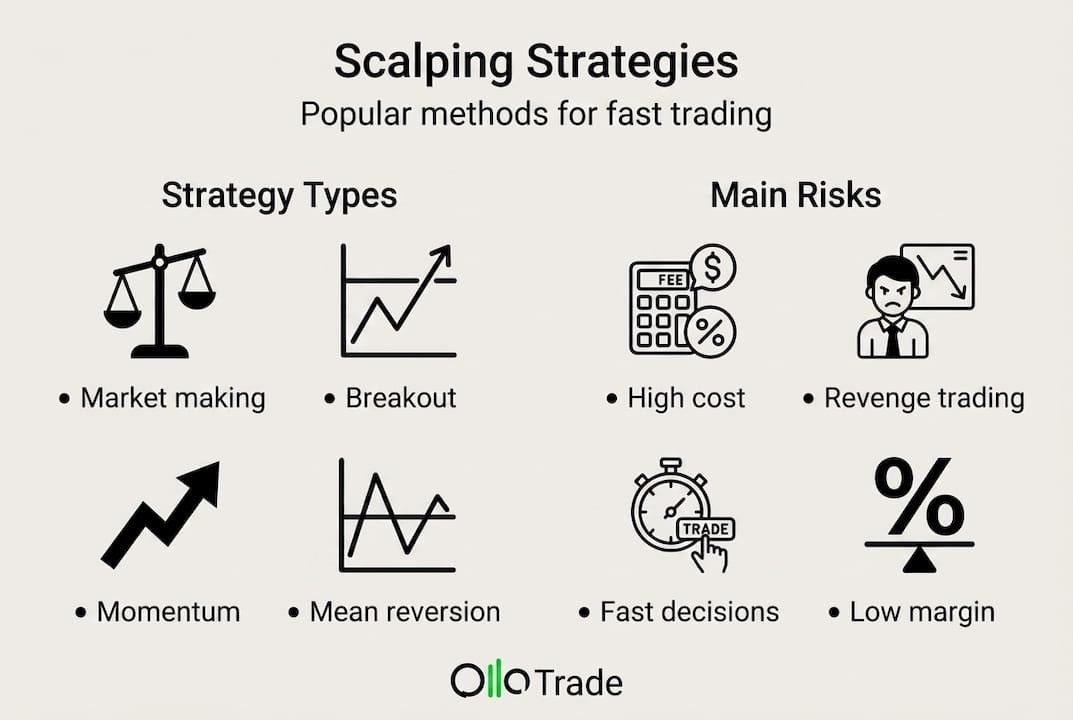
بازارسازی شامل قرار دادن سفارشات خرید و فروش در حدود قیمت فعلی و سود بردن از خودِ اسپرد است. معاملهگران خرد به ندرت این کار را به معنای خالص انجام میدهند، اما درک ... نقش سازندگان بازار توضیح میدهد که چرا در زمانهای کلیدی، اسپردها (اختلاف قیمتها) کاهش یا افزایش مییابند.
اسکالپینگ بریکاوت و مومنتوم احتمالاً محبوبترین رویکرد در بین معاملهگران خرد است. شما به دنبال یک سطح قیمت (حمایت، مقاومت یا منطقه تثبیت) هستید و وقتی قیمت آن را شکست، با حجم یا قاطعیت وارد معامله میشوید. سرعت در اینجا حرف اول را میزند.

اسکالپینگ بازگشت به میانگین با این فرض کار میکند که قیمت پس از یک حرکت کوتاهمدت شدید، تمایل به بازگشت ناگهانی دارد. اگر یورو/دلار در عرض 30 ثانیه 15 پیپ بدون هیچ کاتالیزور خبری کاهش یابد، یک اسکالپر با رویکرد بازگشت به میانگین ممکن است روی یک بهبود جزئی شرطبندی کند. این یکی از ... استراتژیهای فارکس اثباتشده این امر مستلزم درک خوب از مومنتوم کوتاهمدت است.
اسکالپینگ مبتنی بر اخبار تلاش میکند تا حرکات شدید پس از انتشار دادههای اقتصادی مهم مانند گزارش اشتغال غیرکشاورزی یا اطلاعیههای بانک مرکزی را ثبت کند. تأثیر اخبار بازار قیمت میتواند در چند ثانیه اول بسیار زیاد باشد، اما اسپردها اغلب افزایش مییابند و خطر لغزش قابل توجهی ایجاد میکنند.
ابزارهای مفیدی که اسکالپرها به آنها تکیه میکنند عبارتند از:
- نقل قول های سطح دوم برای مشاهده عمق قیمت پیشنهادی و درخواستی به صورت آنی
- نمودارهای تیک که در هر معامله بهروزرسانی میشود، نه فقط فواصل زمانی
- شاخصهای مومنتوم مانند RSI یا MACD در تایم فریمهای بسیار کوتاه
- تقویمهای اقتصادی برای علامتگذاری پنجرههای خبری پرخطر
مزایا و معایب: آیا اسکالپینگ برای شما مناسب است؟
شما دیدهاید که چه استراتژیهایی وجود دارد. در مرحله بعد، بیایید واقعیت تلاش برای اسکالپ و معنای آن را برای مسیر معاملاتی شما بسنجیم.
| مزایا | معایب |
|---|---|
| حلقه بازخورد سریع در مورد تصمیمات شما | هزینههای بالای معاملاتی به سرعت حاشیه سود را کاهش میدهند. |
| بدون ریسک شکاف شبانه | فشار روانی شدید در طول جلسه |
| هر روز فرصتهای زیادی | به راحتی میتوان بیش از حد معامله کرد و نظم و انضباط را از دست داد |
| نیازی به دنبال کردن روندهای بزرگ ندارد | نیاز به پلتفرم سریع و اجرای عالی |
| رویکردی شفاف و مبتنی بر قانون امکانپذیر است | با مزاج همه سازگار نیست |
موفقیت در اسکالپینگ به شدت به هزینهها و سرعت اجرا بستگی دارد. این فقط یک سلب مسئولیت نیست، بلکه یک محدودیت تعیینکننده است. اگر هدف شما ۳ تا ۵ پیپ در هر معامله است و اسپرد شما ۲ پیپ است، برای رسیدن به نقطه سربهسر، به حرکت حداقل ۲ پیپ بازار نیاز دارید. هر معامله این هزینه اضافی را به همراه دارد.
بیایید مشخص کنیم چه کسانی تمایل به پیشرفت دارند:
- شکوفا میشود: معاملهگرانی که بسیار منظم، از نظر احساسی پایدار، با تکرار راحت هستند و میتوانند تحت فشار از قوانین پیروی کنند.
- مبارزات: معاملهگرانی که برای ایجاد انگیزه به بردهای بزرگ نیاز دارند، کسانی که در معاملات خود تردید دارند، یا کسانی که ضررهای مکرر را حتی اگر نتیجه خالص مثبت باشد، دلسردکننده میدانند.
بزرگترین تله روانی در اسکالپینگ، معامله انتقامی است. یک دوره بد پنج ضرر متوالی، و میل به "بازگشت به حالت قبل" به سرعت منجر به رها کردن کامل سیستم شما میشود. مدیریت نکات مربوط به عملکرد معاملاتی به اندازه داشتن یک استراتژی اهمیت پیدا میکند.
نکته حرفهای: همیشه قبل از اتخاذ استراتژی اسکالپینگ، اسپرد نقطه سر به سر خود را محاسبه کنید. اگر سود هدف شما ۴ پیپ و اسپرد ۱.۵ پیپ باشد، برای پوشش هزینهها قبل از اینکه حتی یک دلار هم به دست آورید، به یک حاشیه سود ۳۷.۵۱TP3T نیاز دارید. دانستن اعداد و ارقامتان غیرقابل مذاکره است.
جنبه عملی مدیریت هزینههای معاملاتی چیزی است که اکثر مبتدیان تا زمانی که خیلی دیر شده است نادیده میگیرند. یک اسکالپر که روزانه ۱۰۰ معامله با اسپرد ۱ پیپ انجام میدهد، صرف نظر از اینکه در هر معامله برنده شود یا ببازد، ۱۰۰ پیپ بابت هزینههای اسپرد میپردازد.
چگونه اسکالپینگ را شروع کنیم: مراحل و بهترین شیوهها
تصمیم دارید اسکالپینگ را امتحان کنید؟ در اینجا نحوه شروع هوشمندانه و ایجاد عادتهای اسکالپینگ برنده را توضیح میدهیم.
- یک پلتفرم سریع با اسپرد کم انتخاب کنید. سرعت اجرا بسیار مهم است. حتی یک ثانیه تأخیر میتواند یک ورود سودآور را به یک ضرر تبدیل کند. به دنبال کارگزارانی باشید که دسترسی مستقیم به بازار داشته باشند و اسپردهای ثابت و محدودی روی ابزارهایی که قصد معامله آنها را دارید، داشته باشند.
- ابزارهای نمودار خود را تنظیم کنید. از تایمفریمهای کوتاه مانند نمودار ۱ دقیقهای یا ۵ دقیقهای استفاده کنید. چند اندیکاتور مومنتوم اضافه کنید، سطوح حمایت و مقاومت کلیدی را علامتگذاری کنید و فضای کاری خود را تمیز و مرتب نگه دارید.
- با یک حساب آزمایشی (دمو) شروع کنید. قبل از ریسک کردن با پول واقعی، استراتژی انتخابی خود را حداقل دو تا چهار هفته تمرین کنید. هر معامله را در یک دفترچه ثبت کنید، از جمله دلیل ورود، خروج، هزینه اسپرد و نتیجه.
- ریسک خود را در هر معامله تعریف کنید. یک قانون رایج در بین اسکالپرها این است که در هر معامله بیش از 0.5% تا 1% سرمایه ریسک نکنند. با اهداف سود کوچک، نمیتوانید ضررهای بزرگی را متحمل شوید که ارزش کار یک جلسه را از بین ببرد.
- یک حد ضرر روزانه تعیین کنید و از آن خارج شوید. اگر به حداکثر افت سرمایه در آن روز رسیدید، توقف کنید. هیچ استثنایی وجود ندارد.
بهترین شیوهها برای نکات هوشمندانه فارکس وقتی اسکالپینگ به طور خاص شامل موارد زیر باشد:
- در نقدشوندهترین ساعات معاملاتی معامله کنید (لندن و نیویورک برای جفت ارزهای اصلی همپوشانی دارند)
- از ورود به معاملات در عرض ۱۰ دقیقه قبل یا بعد از رویدادهای خبری با تأثیر بالا خودداری کنید.
- به جفت ارزهای اصلی فارکس مانند EUR/USD یا GBP/USD که اسپرد کمتری دارند، پایبند باشید.
- معاملات خود را در پایان هر جلسه بررسی کنید تا الگوهای اشتباهات خود را پیدا کنید.
موفقیت در اسکالپینگ به یک فرآیند تکرارپذیر و کنترل هزینهها بستگی دارد. ادامه مطلب را بخوانید استراتژی پیشرفته فارکس به شما چارچوبهای بیشتری برای اصلاح رویکردتان پس از یادگیری اصول اولیه میدهد.
نکته حرفهای: در ۱۵ دقیقه اول بازار لندن یا بازار نیویورک، سعی نکنید اسکالپ کنید، مگر اینکه ماهها در آن جلسات تجربه داشته باشید. نوسانات دقیقاً در همان لحظات بسیار نامنظم است و اسپردها اغلب بدون هشدار افزایش مییابند.
چرا اکثر مردم اسکالپینگ را اشتباه درک میکنند (و اینکه چه چیزی واقعاً مهم است)
این واقعیتی است که در اکثر راهنماهای معاملاتی نخواهید شنید. اکثر مبتدیان انرژی زیادی را صرف جستجوی سیگنال ورود بینقص میکنند، گویی ترکیب اندیکاتور مناسب سودهای مداوم را به دست میآورد. تقریباً هرگز اسکالپرها در این مورد شکست نمیخورند یا موفق نمیشوند.
اسکالپینگ سودآور کمتر به جهت مطلق و بیشتر به فرآیند و کنترل هزینه متکی است. معاملهگرانی که به طور مداوم از اسکالپینگ درآمد کسب میکنند، لزوماً در پیشبینی قیمت بهتر نیستند. آنها در اجرای مکرر یک طرح با حداقل انحراف، حفظ هزینههای کنترل معاملاتی خود و کاهش بدون تردید ضررها بهتر عمل میکنند.
حقیقت ناخوشایند این است که نظم و انضباط و آگاهی از هزینه، نه پیشبینی بازار، چیزی است که اسکالپرهای سودآور را از کسانی که از پا میافتند جدا میکند. برتری شما یک شاخص جادویی نیست. این یک فرآیند سخت، یک راهاندازی کمهزینه و استقامت روانی برای تکرار صدها بار آن در هفته بدون انحراف از قوانین است. این مهارت واقعی است که ارزش ایجاد دارد.
با ابزارها و منابع تخصصی، معاملات خود را پیشرفتهتر کنید
آمادهاید تا دانش خود را به کار بگیرید؟ اولا ترید ابزارها، شرایط و آموزش لازم را برای تمرین یا اصلاح رویکرد اسکالپینگ شما بدون هیچ گونه اصطکاک غیرضروری فراهم میکند.
با دسترسی به ابزارهای معاملاتی فارکس از جمله اسپردهای کم و اجرای سریع، میتوانید استراتژیهای اسکالپینگ را در جفت ارزهای اصلی آزمایش کنید. ما راهنمای معاملات CFD به شما کمک میکند تا نحوه کار CFDها را درک کنید تا بتوانید تاکتیکهای اسکالپینگ را در مورد فلزات، شاخصها و موارد دیگر به کار ببرید. و اگر میخواهید از اولین معامله تا اجرای مطمئن، مسیری ساختاریافته داشته باشید، ما راهنمای معاملات فارکس شما را در هر مرحله راهنمایی میکند. آنچه Olla Trade ارائه میدهد را بررسی کنید و از همین امروز عادتهای یک معاملهگر کوتاهمدت منظم و آگاه به هزینه را در خود ایجاد کنید.
سوالات متداول
برای شروع اسکالپینگ به چه مقدار پول نیاز دارید؟
شما میتوانید اسکالپینگ را با چند صد دلار شروع کنید، اما هزینههای پایین و کیفیت اجرا برای موفقیت اولیه بسیار مهمتر از اندازه حساب است.
آیا اسکالپینگ برای مبتدیان میتواند سودآور باشد؟
میتواند باشد، اما سودآوری ارتباط نزدیکی با فرآیند تکرارپذیر و کنترل دقیق هزینه دارد که هر دو برای توسعه به زمان و تمرین نیاز دارند.
کدام بازارها برای اسکالپینگ مناسبترند؟
نقدشوندهترین جفتهای فارکس و CFDها با اسپرد کم و کمیسیون پایین، مانند EUR/USD یا GBP/USD، معمولاً بهترین نقطه شروع هستند.
آیا اسکالپینگ قانونی است و توسط اکثر کارگزاران مجاز است؟
اسکالپینگ قانونی است، اما قوانین کارگزار در مورد تعداد معاملات متفاوت است، بنابراین همیشه قبل از شروع، مطمئن شوید که کارگزار شما اجازه معاملات با فرکانس بالا را میدهد.
توصیه شده
- 7 استراتژی فارکس اثبات شده: مثالهای واقعی برای معاملات برنده
- استراتژیهای معاملاتی CFD: روزانه یا نوسانی - کدامیک مؤثر است؟ - اولا ترید
- ۱۲ استراتژی معاملاتی ضروری برای افزایش برتری شما در سال ۲۰۲۶
- معاملات سوئینگ چیست: راهنمای استراتژیهای هوشمند ۲۰۲۶
- مرور کلی تکنیکهای اسکالپینگ: افزایش نتایج معاملات فارکس