







TL;DR:
- The Forex market is the largest with $9.6 trillion daily turnover, offering unmatched liquidity and 24-hour access.
- Forex trading has low costs, high accessibility, and allows traders to profit from both rising and falling markets.
- Success requires discipline and risk management despite the market’s advantages, as high liquidity increases potential losses.
Choosing where to put your trading capital is one of the most consequential decisions you’ll make as an investor. With stocks, futures, crypto, and bonds all competing for your attention, what makes Forex stand out? The answer starts with scale. The Forex market averages $9.6 trillion in daily turnover in 2025, making it the largest financial market on earth by a wide margin. That scale creates advantages that no other market can fully replicate, from razor-thin transaction costs to round-the-clock access. Whether you’re just getting started or refining a professional strategy, understanding these advantages puts you in a stronger position from day one.
Table of Contents
- Unmatched liquidity and 24-hour market access
- Low costs and accessible trading for all
- Diverse instruments and profit opportunities
- Decentralization, low regulation, and risk management
- A trader’s real advantage: What most overlook in Forex
- Ready to experience Forex trading advantages?
- Frequently asked questions
Key Takeaways
| Point | Details |
|---|---|
| Massive liquidity | Forex’s $9.6 trillion daily volume enables quick trades with little slippage. |
| Flexible trading hours | The market operates 24 hours, five days a week for maximum convenience. |
| Low costs and easy start | Traders enjoy tight spreads, low fees, and can open accounts with just $100. |
| Profit in any market direction | You can benefit from both rising and falling currencies by going long or short. |
| Diverse and decentralized | Forex offers 170+ pairs and risk management tools, but requires disciplined strategy. |
Unmatched liquidity and 24-hour market access
Liquidity is the ability to buy or sell an asset quickly without causing a big move in its price. In practical terms, high liquidity means your orders get filled fast, at the price you expect, with minimal slippage. This matters whether you’re trading $500 or $5 million.
Forex is the gold standard for liquidity. The market’s daily turnover of $9.6 trillion means there is almost always a buyer or seller ready on the other side of your trade. Major currency pairs like EUR/USD or USD/JPY can absorb enormous order volumes without price distortion. That’s a level of depth that stock markets simply can’t match during off-hours or for smaller-cap names.
Then there’s the time factor. Forex runs 24 hours a day, five days a week, cycling through the Sydney, Tokyo, London, and New York sessions. You can trade during your lunch break, after your evening commute, or in the early hours before your workday starts. That flexibility is genuinely rare in financial markets.
Here’s what 24/5 access means in practice:
- React to breaking news immediately. Central bank announcements, geopolitical events, and economic data releases move currencies fast. You don’t have to wait for a market open.
- Trade in your time zone. A trader in Asia, Europe, or the Americas can all find active, liquid sessions that fit their schedule.
- Explore the forex trading sessions overlap. The London-New York overlap (roughly 8 AM to 12 PM EST) is the most volatile and liquid window of the day.
- Scale in and out of positions without worrying about thin markets eating into your returns.
“The 24-hour Forex market gives traders a level of flexibility that no stock exchange can offer. The question isn’t whether you can trade. It’s whether you have a plan when you do.”
One important caution: high liquidity and constant access can tempt traders into overtrading. Session overlaps bring volatility that rewards preparation but punishes impulsive decisions. Discipline is the price of admission for making liquidity work in your favor.
Low costs and accessible trading for all
Beyond constant access, another major draw of Forex is how easy and affordable it is to get started. Unlike stocks or futures, most Forex brokers don’t charge per-trade commissions. Instead, they earn from the spread, which is the difference between the buy and sell price of a currency pair.
Spreads on major pairs typically run between 0.1 and 1 pip, which is extraordinarily tight. A pip is the smallest standard price increment in Forex, usually the fourth decimal place. On EUR/USD, a 0.5-pip spread on a standard lot translates to roughly $5 in transaction cost. Compare that to stock trading, where commissions, exchange fees, and bid-ask spreads can stack up quickly.
| Market | Typical transaction cost | Minimum account | Leverage available |
|---|---|---|---|
| Forex | 0.1 to 1 pip spread | From $100 | Up to 500:1 (varies) |
| Stocks | $0 to $10 commission | Varies widely | Up to 4:1 |
| Futures | $2 to $5 per contract | $1,000 or more | Up to 20:1 |
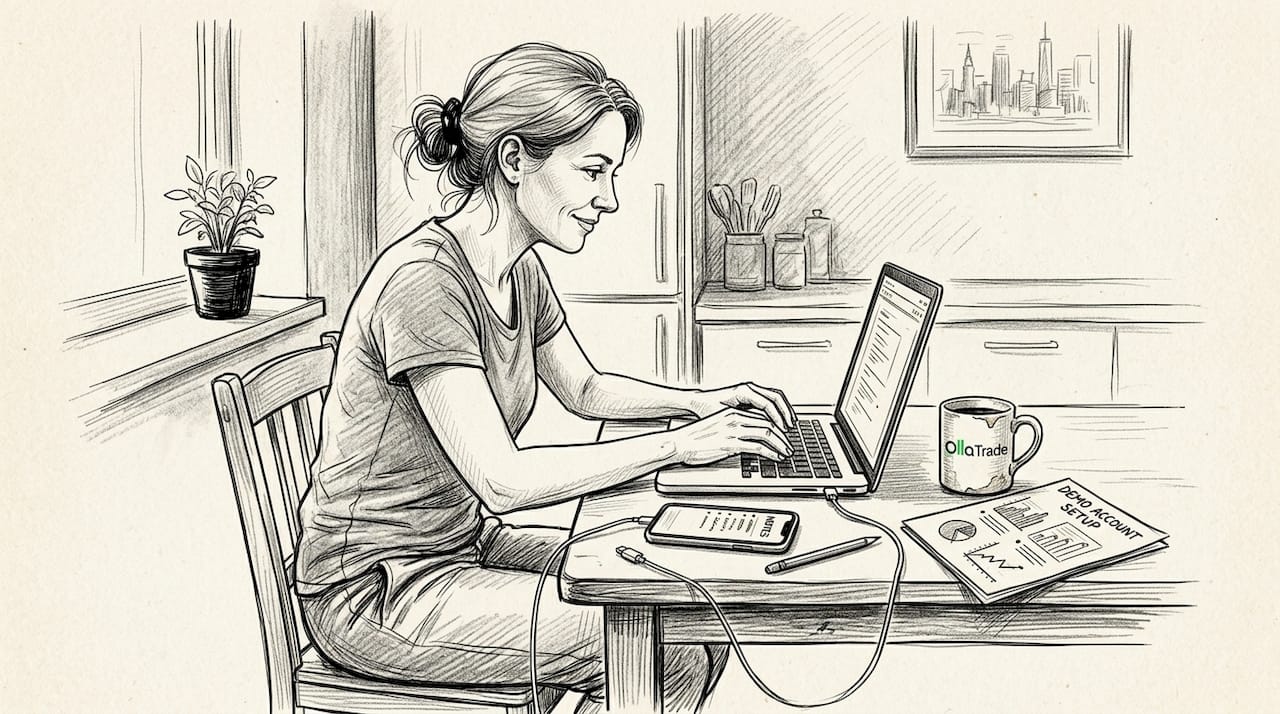
The accessibility extends beyond cost. Many brokers offer demo accounts that let you practice with virtual money before risking a cent. Micro-lots allow you to trade positions as small as 1,000 units of currency, meaning you can test strategies with minimal exposure.
Here’s a simple path to getting started:
- Choose a regulated broker with competitive spreads and a solid platform.
- Open a demo account and practice your strategy for at least 30 days.
- Study the basics through resources like trading for beginners guides.
- Learn the forex account setup process before depositing real funds.
- Start live trading with micro-lots and scale up as your confidence and results grow.
Pro Tip: Use a demo account to test your strategy across different market conditions before going live. Many traders rush this step and pay for it. Patience here is a genuine edge.
For those wondering about capital requirements, you can explore how to start trading with $100 and build from there. The barrier to entry in Forex is genuinely low, and that’s a structural advantage worth taking seriously.
Diverse instruments and profit opportunities
Access and cost matter, but so do the range and type of opportunities you can pursue as a trader. Forex offers exposure to over 170 currency pairs spanning majors, minors, and exotics, each with distinct characteristics.
- Major pairs (EUR/USD, GBP/USD, USD/JPY): Highest liquidity, tightest spreads, most news coverage. Best for beginners.
- Minor pairs (EUR/GBP, AUD/CAD): Moderate liquidity, slightly wider spreads. Good for diversification.
- Exotic pairs (USD/TRY, EUR/ZAR): Lower liquidity, wider spreads, higher volatility. Suited for experienced traders with specific macro views.
One of Forex’s most powerful features is the ability to profit in rising or falling markets by going long or short with equal ease. In stock markets, short selling often involves borrowing shares, paying fees, and navigating restrictions. In Forex, you simply sell a currency pair to go short. No extra steps, no borrowing costs.
| Feature | Forex | Stocks | Bonds |
|---|---|---|---|
| Go short easily | Yes | Restricted | Limited |
| Correlation to equities | Low | High | Moderate |
| Trading hours | 24/5 | Exchange hours | Limited |
| Number of instruments | 170+ pairs | Thousands | Thousands |
This low correlation to stocks and bonds makes Forex a genuine diversification tool. When equity markets drop sharply, currency markets often move independently, giving traders a way to stay active and potentially profitable. You can explore current market opportunities to see how different pairs behave across market conditions.
Institutions use Forex for hedging against currency exposure in international portfolios. As a retail trader, you can apply similar logic by using currency diversification strategies to reduce your exposure to local market shocks.
Pro Tip: If your local stock market is experiencing turbulence, consider pairs that historically move inversely to your domestic currency. It’s a simple way to think about portfolio-level protection.
Decentralization, low regulation, and risk management
Finally, turning to the structure of the market itself, Forex’s regulatory approach has both upsides and key risk considerations. Unlike stocks traded on centralized exchanges like the NYSE or NASDAQ, Forex is an over-the-counter (OTC) market. Trades happen directly between parties, usually through banks, brokers, and electronic networks, with no single central exchange.
This decentralized OTC structure brings real benefits. There are fewer intermediary fees, no exchange membership costs, and greater flexibility in how trades are structured. It also reduces the risk of a single point of failure or market manipulation that can occur on centralized exchanges.
“The decentralized nature of Forex is a feature, not a bug. It keeps costs low and markets competitive. But it also means you carry more responsibility for who you trade with.”
Here’s how to manage counterparty risk in a decentralized market:
- Choose regulated brokers. Look for oversight from bodies like the FCA, ASIC, or CySEC.
- Segregate your funds. Reputable brokers keep client funds separate from operational accounts.
- Understand leverage. High leverage amplifies both gains and losses. Use it deliberately.
- Use stop-loss orders. Automated exits limit downside when markets move against you.
- Study hedging strategies to protect open positions during high-volatility events.
Professional traders take this further by using forwards, swaps, and options to hedge large currency exposures. These instruments add a layer of precision to risk management that goes well beyond simple stop-losses. For practical guidance on managing your exposure, review these smart risk management frameworks before scaling up your positions.
A trader’s real advantage: What most overlook in Forex
Here’s the perspective most educational content skips: the very features that make Forex attractive are also the ones that trip up the majority of retail traders. Liquidity makes it easy to enter trades. Leverage makes it tempting to oversize them. The 24/5 schedule makes it easy to rationalize one more trade at midnight.
The uncomfortable truth is that 70 to 80 percent of retail traders lose money in Forex. That’s not because the market is rigged. It’s because most people treat the advantages as a shortcut rather than a responsibility. High liquidity doesn’t mean low risk. It means your mistakes happen faster.
The traders who build lasting results in Forex treat it like a profession. They follow strict position sizing rules. They keep a trading journal. They know exactly why they’re entering a trade before they click the button. They use the forex market tips that experienced traders rely on, not the ones that promise quick returns.
The real advantage in Forex isn’t the spread or the leverage. It’s the discipline to use a world-class market correctly.
Ready to experience Forex trading advantages?
The advantages covered here, from deep liquidity to flexible hours and diverse instruments, are real and accessible. But knowing about them is only the first step. Putting them to work requires the right platform, the right tools, and a clear starting point.
At Olla Trade, you get access to a full suite of Forex instruments with tight spreads, fast execution, and MetaTrader 4 integration built for serious traders. Whether you want to trade forex with Olla Trade starting today or work through a detailed forex trading guide first, the resources are ready when you are. For a broader view of the market, start with the complete forex overview and build your knowledge from the ground up.
Frequently asked questions
How much money do I need to start Forex trading?
You can open a Forex account with as little as $100, and many brokers offer demo accounts and micro-lot sizing so beginners can practice before committing larger capital.
Is Forex trading riskier than stocks or futures?
Forex’s leveraged, decentralized structure can increase risk significantly, and 70 to 80 percent of retail traders lose money, but disciplined risk management with stop-losses and proper position sizing can reduce that exposure.
Can I trade Forex part-time or outside business hours?
Yes. Forex runs 24 hours a day, five days a week across global sessions, so you can trade before work, after hours, or during any time zone that fits your schedule.
Are there costs or commissions for Forex trades?
Most Forex brokers are commission-free, earning instead from tight bid-ask spreads that can be as low as 0.1 pip on major pairs like EUR/USD, making transaction costs very competitive.
Is it possible to profit in both rising and falling Forex markets?
Absolutely. Forex lets you go long or short on any currency pair with equal ease, meaning you can position yourself to profit whether a currency is strengthening or weakening.