












Forex traders today face an overwhelming flood of advice, strategies, and supposed shortcuts to profitability. Sorting actionable intelligence from noise demands a sharp eye and disciplined evaluation criteria. This guide delivers ten expert-backed forex market tips grounded in risk management, market sentiment, institutional tactics, and advanced technology, all designed to sharpen your trading skills and improve your results in 2026.
Table of Contents
- Top Forex Market Tips For Risk Management And Disciplined Trading
- Harnessing Market Sentiment And Institutional Tactics For Smarter Trading
- Advanced Hedging Techniques And Machine Learning In Forex Trading
- Comparing Forex Tips: Which Strategies Fit Your Trading Style?
- Enhance Your Forex Trading With Olla Trade
Key takeaways
| Point | Details |
|---|---|
| Risk management is essential | Position sizing and stop-loss orders protect capital and prevent catastrophic losses. |
| Market sentiment drives trends | Monitoring news and indicators helps anticipate directional moves and improve timing precision. |
| Institutional strategies enhance execution | Order flow analysis and liquidity grabs provide entry signals professional traders rely on daily. |
| Hedging reduces exposure | Direct and correlation hedging techniques offset risk without closing core positions. |
| Machine learning improves forecasts | Advanced models enhance directional accuracy but require separate risk controls to avoid overfitting. |
Navigating forex market tips: criteria for effective strategies
Before diving into specific tips, establish clear criteria for evaluating any forex strategy or advice. The best tips empower you to control risk, make informed decisions, and adapt to changing market conditions. They prioritize discipline over prediction and emphasize capital preservation alongside profit potential.
Strong strategies share common traits. They incorporate robust risk management frameworks, maintain awareness of macroeconomic drivers, and remain flexible enough to handle volatile price action. Trading discipline and understanding leverage in trading form the foundation of consistent profitability. Without these elements, even the most sophisticated techniques collapse under market pressure.
Use these benchmarks when assessing any forex tip:
- Does it specify clear entry and exit rules?
- Does it define risk limits and position sizing?
- Can you execute it consistently under stress?
- Does it align with your capital base and time availability?
- Does it account for transaction costs and slippage?
Retail traders often struggle with risk management, leading to significant losses that could have been prevented with disciplined frameworks. Effective tips must address these vulnerabilities directly.
Top forex market tips for risk management and disciplined trading
Risk management separates surviving traders from those who blow accounts. Position sizing determines how much capital you commit to each trade based on your total account equity and acceptable loss per trade. Most professionals risk no more than 1 to 2% of their account on a single position, ensuring that even a string of losses does not cripple their trading capital.

Stop-loss orders automatically close positions when prices move against you beyond a predefined threshold. These orders eliminate the emotional struggle of deciding when to cut losses manually. Pair stop-losses with take-profit orders to lock in gains systematically, removing guesswork from exit timing.
Leverage can amplify profits and losses and must be used judiciously. High leverage ratios magnify small price movements into large account swings, increasing the risk of margin calls and rapid capital depletion. Beginners should start with conservative leverage ratios and only increase exposure as they demonstrate consistent profitability.
A disciplined decision-making and risk management process helps avoid gambling-like behavior. Emotional trading triggered by fear or greed leads to impulsive decisions that contradict your trading plan. Keep a trading journal documenting every trade, your reasoning, and the outcome to identify patterns in your decision-making.
Regularly review and adjust your risk management plan as your account grows and market conditions shift. Strategies that worked in low-volatility environments may require recalibration during high-impact news events or structural market changes.
Key risk management tips:
- Calculate position size based on stop distance and risk percentage
- Place stop-losses immediately upon entering trades
- Avoid revenge trading after losses
- Review drawdown periods to identify weaknesses
Pro Tip: Set daily or weekly loss limits that force you to step away from the markets when breached, preventing emotional spirals that compound losses.
Explore advanced trading strategies and deepen your understanding of trading leverage essentials to build a comprehensive risk framework.
Harnessing market sentiment and institutional tactics for smarter trading
Market sentiment analysis improves trading performance by up to 15% when combined with technical analysis. Sentiment reflects the collective mood of market participants, whether bullish, bearish, or neutral, and often drives short-term price movements more powerfully than fundamentals alone.
Monitor economic indicators such as GDP reports, employment data, and central bank announcements to gauge sentiment shifts. News events create volatility spikes that offer both opportunity and risk. Use an economic calendar to stay ahead of scheduled releases and position yourself accordingly.
Institutional strategies emphasize timing, liquidity, and market intent rather than prediction. Large players like banks and hedge funds leave footprints in the form of order blocks, liquidity grabs, and imbalances. Recognizing these patterns allows you to align your trades with institutional flow instead of fighting it.
Order flow analysis examines real-time buy and sell activity to identify where large participants are accumulating or distributing positions. Liquidity grabs occur when price briefly sweeps stop-loss clusters before reversing sharply, often signaling that institutions have filled their orders and are ready to move price in the opposite direction.
Key trading sessions and their characteristics:
| Session | Time (EST) | Characteristics |
|---|---|---|
| London | 3:00 AM to 12:00 PM | Highest liquidity, major trend development |
| New York | 8:00 AM to 5:00 PM | Overlaps with London, strong volatility |
| Goldmine | 2:00 AM to 5:00 AM | Institutional accumulation before London open |
Understand institutional order blocks, which are price zones where large orders were previously executed and often act as strong support or resistance. These levels provide high-probability entry points when combined with confirmation from price action or volume.
Pro Tip: Watch for false breakouts near major support or resistance levels, especially during low-liquidity hours, as these often precede sharp reversals driven by institutional repositioning.
Master trading platform features to execute sentiment-driven strategies with precision and speed.
Advanced hedging techniques and machine learning in forex trading
Forex hedging protects positions from adverse price movements without closing long-term trades. Direct hedging involves opening opposite positions on the same currency pair simultaneously. For example, if you hold a long EUR/USD position that shows unrealized profit but you expect short-term pullback, opening a short EUR/USD position locks in your gains without triggering a taxable event or sacrificing your original thesis.
Correlation hedging uses statistically related currency pairs to offset risk. If you are long EUR/USD, you might hedge by shorting GBP/USD, which typically moves in the same direction. This approach provides partial protection while maintaining exposure to your primary trade idea.
Hedging strategies comparison:
| Technique | Mechanism | Best Use Case |
|---|---|---|
| Direct hedge | Open opposite position on same pair | Protect unrealized gains during pullbacks |
| Correlation hedge | Use negatively correlated pairs | Reduce portfolio volatility across multiple positions |
| Options hedge | Buy puts or calls for downside protection | Limit risk during high-impact events |
Feature-augmented multivariate LSTM models outperform baseline models in forecasting accuracy. Machine learning algorithms process vast datasets to identify patterns human traders might miss. These models incorporate technical indicators, sentiment scores, and macroeconomic variables to generate directional forecasts.
Understand the tradeoffs between model complexity and interpretability. Logistic regression and decision trees offer transparency, allowing you to understand which features drive predictions. Deep learning models like LSTMs and transformers achieve higher accuracy but operate as black boxes, making it difficult to diagnose failures or adjust parameters intuitively.
Machine learning tips for forex traders:
- Start with simple models to establish baseline performance
- Use separate validation datasets to prevent overfitting
- Implement strict risk controls independent of model signals
- Combine ML forecasts with discretionary analysis for confirmation
Machine learning improves directional forecasts but does not eliminate the need for position sizing, stop-losses, and drawdown management. Models trained on historical data may fail when market regimes shift unexpectedly, so always maintain redundant risk controls.
Deepen your knowledge with advanced forex techniques that integrate technology and traditional analysis.
Comparing forex tips: which strategies fit your trading style?
Different strategies suit different trader profiles based on risk tolerance, time availability, and technical sophistication. Beginners benefit most from foundational risk management and simple sentiment analysis, while experienced traders can layer institutional tactics and machine learning models for additional edge.
Strategy comparison by trader profile:
| Strategy Type | Skill Level | Time Commitment | Risk Level |
|---|---|---|---|
| Risk management basics | Beginner | Low | Low |
| Market sentiment analysis | Intermediate | Medium | Medium |
| Institutional order flow | Advanced | High | Medium |
| Hedging techniques | Advanced | Medium | Low to Medium |
| Machine learning models | Expert | High | Variable |
Risk management forms the non-negotiable foundation regardless of your experience level. Even the most sophisticated forecasting models fail without proper capital allocation and loss limits. Market sentiment analysis adds a layer of market awareness that improves timing without requiring complex technical skills.
Institutional tactics demand significant screen time and pattern recognition ability but offer high-probability setups when executed correctly. Hedging strategies reduce exposure during uncertain periods, making them ideal for traders managing larger accounts or holding positions through volatile events.
Mixing foundational and advanced strategies:
- Combine position sizing with sentiment analysis for improved entries
- Use institutional order flow to refine stop placement
- Apply hedging during earnings or central bank announcements
- Validate ML signals with traditional technical confirmation
Your trading style determines which combination works best. Scalpers prioritize execution speed and tight spreads, making institutional order flow particularly valuable. Swing traders benefit more from sentiment analysis and hedging to navigate multi-day holding periods.
Compare day vs swing trading strategies to identify which approach aligns with your lifestyle and capital base.
Enhance your forex trading with Olla Trade
Applying these forex market tips requires robust tools and ongoing education. Olla Trade offers advanced trading platforms designed for precision execution and flexibility across market conditions. Access real-time data feeds, advanced charting packages, and MetaTrader 4 integration to implement institutional strategies and machine learning models seamlessly.
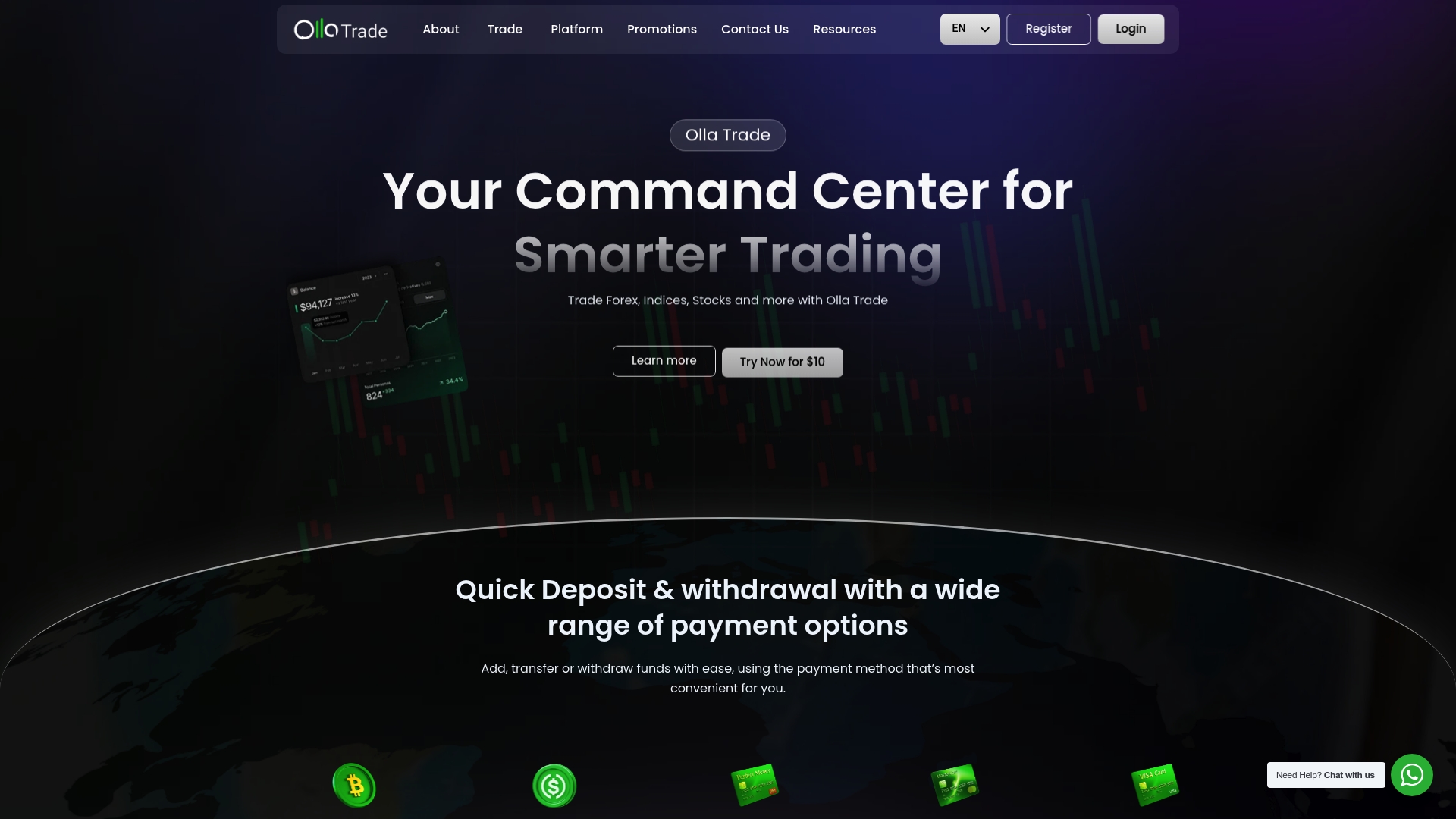
Our forex trading platform delivers tight spreads and fast execution speeds critical for capitalizing on short-lived opportunities. Use the economic calendar tool to track high-impact events and position yourself ahead of volatility spikes. Sharpen your skills with professional forex courses covering risk management, technical analysis, and advanced hedging techniques taught by experienced traders.
FAQ
What are the most common mistakes forex traders make?
Overleveraging, poor risk management, and emotional trading are common pitfalls that destroy accounts quickly. Traders often risk too much per trade, fail to use stop-losses, and chase losses impulsively. Discipline and ongoing education help prevent these costly errors. Learn more about forex leverage mistakes to avoid these traps.
How can I effectively use market sentiment to improve my forex trading?
Track economic news and indicators regularly through reliable sources and calendars. Combine sentiment tools with technical analysis to improve timing precision and filter false signals. Sentiment alone does not guarantee profitability but provides context for price action. Explore using economic calendars to stay informed about market-moving events.
What is forex hedging and when should I apply it?
Hedging involves taking offsetting positions to reduce risk exposure without closing your primary trade. Use hedging when expecting high market volatility, uncertain trends, or when protecting unrealized gains during pullbacks. Direct and correlation hedging techniques offer flexibility for different scenarios. Master advanced hedging methods to protect your portfolio effectively.
Are machine learning models reliable for forex trading predictions?
ML models can improve directional forecasts and pattern recognition but need separate risk controls to prevent catastrophic losses. Simpler, interpretable models often perform better in practice than complex black-box ones because they allow you to understand and adjust when market conditions change. Always validate model outputs with discretionary analysis and maintain strict position sizing regardless of forecast confidence.