










संक्षेप में:
- योजना की कमी और भावनात्मक रूप से प्रेरित होकर ट्रेडिंग करने जैसी आम गलतियों के कारण अधिकांश खुदरा व्यापारियों को 70 से 971% तक विफलता का सामना करना पड़ता है। प्रभावी जोखिम प्रबंधन, अनुशासित निष्पादन और निरंतर समीक्षा दीर्घकालिक सफलता के लिए महत्वपूर्ण हैं। एक ठोस ट्रेडिंग योजना बनाना, भावनाओं को नियंत्रित करना और उचित उपकरणों का उपयोग करना समय के साथ परिणामों में सुधार ला सकता है।.
अधिकांश खुदरा व्यापारी बड़ी उम्मीदों के साथ बाजार में प्रवेश करते हैं और खाली हाथ बाहर निकलते हैं। हजारों व्यापारियों पर किए गए शोध में यह पाया गया है। 70 से 97% तक नुकसान लगातार लाभ कमाने वाले ट्रेडरों की संख्या बहुत कम है, जिनमें से केवल 11 TP3T ही लगातार लाभ कमा रहे हैं। यह संख्या चौंकाने वाली है, लेकिन यह संयोगवश नहीं है। नुकसान कुछ निश्चित गलतियों के कारण होते हैं: योजना का अभाव, जोखिम प्रबंधन में कमी और भावनात्मक निर्णय। यह गाइड आपको फॉरेक्स, सीएफडी और क्रिप्टोकरेंसी बाजारों में ट्रेडिंग से अधिकतम लाभ प्राप्त करने के लिए चरण-दर-चरण प्रक्रिया से अवगत कराती है। एक ठोस योजना बनाने से लेकर पोजीशन प्रबंधित करने और अपने परिणामों की समीक्षा करने तक, प्रत्येक अनुभाग आपको काम करने के लिए एक ठोस ढांचा प्रदान करता है।.
विषयसूची
- जोखिमों को समझें: अधिकांश व्यापारी क्यों नुकसान उठाते हैं
- एक सफल ट्रेडिंग योजना तैयार करें: तैयारी और विश्लेषण
- जोखिम प्रबंधन में महारत हासिल करें: वास्तविक लाभ बढ़ाने वाला कारक
- क्रियान्वयन और मनोविज्ञान: योजनाओं को वास्तविक लाभ में बदलना
- ट्रेडिंग मुनाफे को अधिकतम करने के बारे में अधिकांश गाइडों में जो बात छूट जाती है
- स्मार्ट ट्रेडिंग के लिए प्लेटफ़ॉर्म सुविधाओं और उन्नत गाइडों को अनलॉक करें
- अक्सर पूछे जाने वाले प्रश्नों
चाबी छीनना
| बिंदु | विवरण |
|---|---|
| अनुशासन अत्यंत महत्वपूर्ण है। | लगातार क्रियान्वयन और मनोवैज्ञानिक नियंत्रण से खुदरा व्यापारियों के लिए योजनाएं मुनाफे में बदल जाती हैं।. |
| जोखिम प्रबंधन सर्वप्रथम | पोजीशन साइजिंग, स्टॉप-लॉस ऑर्डर और विविधीकरण पूंजी की रक्षा करते हैं और टिकाऊ व्यापार की अनुमति देते हैं।. |
| यथार्थवादी लक्ष्य मायने रखते हैं | प्राप्त करने योग्य लक्ष्य निर्धारित करना और संरचनात्मक सीमाओं को जानना महंगी गलतियों से बचने में मदद करता है।. |
| निरंतर समीक्षा | सफल व्यापारी बेहतर परिणाम प्राप्त करने के लिए नियमित रूप से अपनी रणनीतियों का विश्लेषण और अनुकूलन करते हैं।. |
जोखिमों को समझें: अधिकांश व्यापारी क्यों नुकसान उठाते हैं
बाज़ार में सफलता पाने से पहले, आपको यह जानना ज़रूरी है कि आपको किन चुनौतियों का सामना करना पड़ रहा है। आंकड़े आपको हतोत्साहित करने के लिए नहीं हैं, बल्कि स्पष्टता लाने के लिए हैं। खुदरा व्यापारियों पर किए गए अध्ययनों से लगातार यह पता चलता है कि नुकसान की दर 701% से 971% के बीच है, और 11% से भी कम प्रतिभागी समय के साथ लाभ कमा पाते हैं। यह केवल कौशल की कमी नहीं है, बल्कि एक संरचनात्मक समस्या है।.
संस्थागत व्यापारियों की तुलना में खुदरा व्यापारी नुकसान में रहते हैं। लेन-देन की लागत हर व्यापार पर भारी पड़ती है। स्प्रेड, कमीशन और स्वैप शुल्क प्रदर्शन को लगातार प्रभावित करते हैं। इन लागतों से पार पाने के लिए, अधिकांश व्यापारियों को कम से कम लाभ कमाने के लिए भी 55% से अधिक की जीत दर की आवश्यकता होती है, और इसके लिए हर बार अनुशासित पोजीशन साइजिंग और ट्रेड चयन की आवश्यकता होती है।.
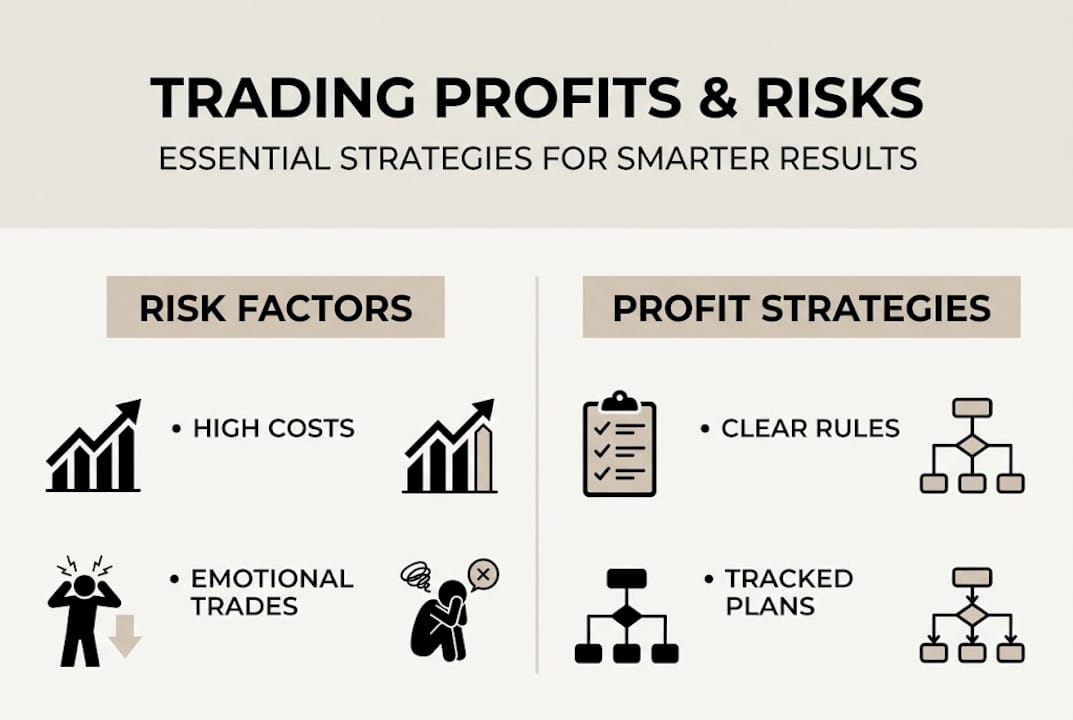
इसमें एक उपेक्षित व्यवहारिक पहलू भी शामिल है।. व्यापार लागत कम इससे प्रदर्शन के बजाय अटकलों को बढ़ावा मिलता है, क्योंकि सस्ती पहुँच उन बाधाओं को दूर करती है जो अन्यथा व्यापारियों को चयनात्मक होने के लिए मजबूर करती हैं। अधिक व्यापार अक्सर खराब परिणामों का संकेत देते हैं। यह विरोधाभासी लगता है, लेकिन अच्छी तरह से प्रमाणित है।.
यहां कुछ सबसे आम गलतियां बताई गई हैं जो खुदरा व्यापारियों को नुकसान उठाने वाले बहुमत की श्रेणी में धकेल देती हैं:
- लिखित योजना के बिना व्यापार करना
- ऊब या निराशा के कारण अत्यधिक व्यापार करना
- की उपेक्षा ट्रेडिंग मनोविज्ञान और भावनाओं को निर्णयों पर हावी होने देना
- नुकसान को समझे बिना अत्यधिक लीवरेज का उपयोग करना
- स्टॉप-लॉस न लगाना, या नुकसान से बचने के लिए उन्हें स्थानांतरित करना
- खराब सौदे के बाद हुए नुकसान की भरपाई करने की कोशिश
जीतने और हारने वाले व्यापारियों के बीच का अंतर सभी बाजारों में एक जैसा ही रहता है:
| गुण | सफल व्यापारी | नुकसान उठाने वाले व्यापारी |
|---|---|---|
| व्यापार योजना | विस्तृत और लिखित | अस्पष्ट या अस्तित्वहीन |
| प्रति व्यापार जोखिम | 1 से 2% तक सीमित | परिवर्तनशील, अक्सर उच्च |
| भावनात्मक नियंत्रण | अनुशासित और नियमबद्ध | प्रतिक्रियाशील और आवेगी |
| समीक्षा प्रक्रिया | नियमित प्रदर्शन ऑडिट | शायद ही कभी समीक्षा की गई हो या कभी नहीं की गई हो |
| नुकसानों पर प्रतिक्रिया | विश्लेषण करें और अनुकूलन करें | बदला लेने के लिए सौदा करो या छोड़ दो |
“खुदरा व्यापारियों को कई तरह की संरचनात्मक कमियों का सामना करना पड़ता है। लेन-देन की लागत लाभ के अंतर को कम कर देती है, दबाव में अनुशासन कमजोर हो जाता है, और लाभ कमाने के लिए जीत दर की आवश्यकता अधिकांश व्यापारियों की अपेक्षा से कहीं अधिक होती है।”
समझ विदेशी मुद्रा जोखिम प्रबंधन रणनीतियाँ इन वास्तविकताओं को स्वीकार करने से शुरुआत होती है। बाधाओं की पहचान करना निराशावाद नहीं है। बल्कि, यह उन बाधाओं को ध्यान में रखते हुए योजना बनाने की दिशा में पहला वास्तविक कदम है।.
एक सफल ट्रेडिंग योजना तैयार करें: तैयारी और विश्लेषण
अंतर्ज्ञान के आधार पर ट्रेडिंग करना कोई रणनीति नहीं है। यह नुकसान की ओर तेज़ी से बढ़ने वाला रास्ता है। हर सफल ट्रेडर, चाहे वह फॉरेक्स पेयर्स, सीएफडी या क्रिप्टो में ट्रेडिंग कर रहा हो, एक लिखित योजना के अनुसार काम करता है जिसमें यह बताया गया होता है कि वह क्या ट्रेड करेगा, कब ट्रेड करेगा और एक भी डॉलर का जोखिम उठाने से पहले किन शर्तों को पूरा करना होगा।. योजना विकसित करना शिक्षा, बैकटेस्टिंग, लाभ लक्ष्य और जोखिम नियंत्रण से संबंधित स्पष्ट नियम ही तैयारी को अनुमान लगाने से अलग करते हैं।.
यहां बताया गया है कि आप अपनी ट्रेडिंग योजना को शुरू से कैसे बना सकते हैं:
- पहले शिक्षा प्राप्त करें।. जिस एसेट क्लास में आप ट्रेडिंग कर रहे हैं, उसे समझें। जानें कि कैसे फॉरेक्स ट्रेडिंग क्यों करें? यह इक्विटी या क्रिप्टो ट्रेडिंग से तरलता, घंटों और अस्थिरता के मामले में भिन्न है।.
- डेमो अकाउंट पर अभ्यास करें।. असली पैसा जोखिम में डाले बिना अपनी रणनीति का परीक्षण करें। अधिकांश प्लेटफ़ॉर्म डेमो वातावरण प्रदान करते हैं जो वास्तविक बाज़ार स्थितियों के समान होते हैं।.
- मौलिक और तकनीकी विश्लेषण दोनों का प्रयोग करें।. संदर्भ के लिए आर्थिक आंकड़ों का उपयोग करें और चार्ट पैटर्न प्रवेश और निकास संकेतों के लिए। इनमें से कोई भी तरीका अकेले पर्याप्त नहीं है।.
- अपने लाभ के लक्ष्यों और जोखिम/लाभ अनुपात को परिभाषित करें।. यथार्थवादी लक्ष्य निर्धारित करें। 2:1 के लाभ-जोखिम अनुपात का अर्थ है कि आप आधे से भी कम बार सही होने पर भी लाभ कमा सकते हैं।.
- अत्यधिक व्यापार को रोकने के लिए सीमाएं निर्धारित करें।. आवेगी गतिविधि को रोकने के लिए प्रति सत्र या प्रति सप्ताह ट्रेडों की अधिकतम संख्या निर्धारित करें।.
यहां कुछ प्रमुख उपकरण दिए गए हैं जिन्हें हर ट्रेडर को अपनी तैयारी में शामिल करना चाहिए:
| उपकरण या संसाधन | उद्देश्य | के लिए सर्वश्रेष्ठ |
|---|---|---|
| डेमो खाता | पूंजी जोखिम के बिना अभ्यास करें | शुरुआती और रणनीति परीक्षण |
| मेटाट्रेडर 4 | लाइव चार्टिंग और ऑर्डर प्रबंधन | सभी व्यापारी स्तर |
| आर्थिक कैलेंडर | बाजार को प्रभावित करने वाली घटनाओं पर नजर रखना | मौलिक विश्लेषण |
| बैकटेस्टिंग सॉफ़्टवेयर | ऐतिहासिक डेटा पर परीक्षण रणनीतियाँ | रणनीति सत्यापन |
| ट्रेडिंग जर्नल | निर्णयों और परिणामों पर नज़र रखना | प्रदर्शन मूल्यांकन |
सलाह: लाइव ट्रेडिंग शुरू करने से पहले, बैकटेस्टिंग का उपयोग करके कम से कम 100 ऐतिहासिक ट्रेडों पर अपनी रणनीति का परीक्षण करें। यदि उस नमूने में सकारात्मक अपेक्षित मूल्य नहीं दिखता है, तो यह वास्तविक निवेश के लिए तैयार नहीं है।.
इसके बाद शुरुआती कार्यप्रवाह चरण यहां बताई गई बातें तुरंत लाभ की गारंटी नहीं देतीं। लेकिन इससे शुरुआती दौर की सबसे महंगी गलतियों की संभावना काफी कम हो जाएगी, और यहीं से वास्तविक लाभ सुरक्षा शुरू होती है।.
जोखिम प्रबंधन में महारत हासिल करें: वास्तविक लाभ बढ़ाने वाला कारक
अधिकांश व्यापारी मुनाफे को पहले और जोखिम को बाद में सोचते हैं। यह सोच गलत है। जोखिम प्रबंधन रक्षात्मक रणनीति नहीं है, बल्कि यह दीर्घकालिक लाभ का मूल आधार है। इसके बिना, एक अच्छी रणनीति भी नुकसान के दौर में अंततः आपके खाते को खाली कर देगी। इसके साथ, आप कठिन समय से बच सकते हैं और अपने लाभ को हासिल करने के लिए पर्याप्त समय तक बाज़ार में बने रह सकते हैं।.
प्रभावी जोखिम प्रबंधन में कई ठोस तकनीकें शामिल होती हैं जो एक साथ मिलकर काम करती हैं:
- प्रति ट्रेड 1 से 2% तक पोजीशन साइजिंग।. किसी एक ट्रेड पर अपने खाते के 2% से अधिक का जोखिम उठाने का मतलब है कि थोड़े समय के नुकसान से आपकी पूंजी का एक महत्वपूर्ण हिस्सा खत्म हो सकता है, इससे पहले कि आप उससे उबर सकें।.
- प्रत्येक ट्रेड पर स्टॉप-लॉस ऑर्डर लगाएं।. स्टॉप-लॉस लगाना अनिवार्य है। यह ट्रेड में प्रवेश करने से पहले आपके अधिकतम नुकसान को निर्धारित करता है, न कि भावनाओं के हावी होने के बाद।.
- असंबंधित परिसंपत्तियों में विविधीकरण।. फॉरेक्स पेयर्स, सीएफडी और क्रिप्टो में निवेश को फैलाकर रखने से किसी एक खराब बाजार घटना के कारण आपके पोर्टफोलियो के नष्ट होने का जोखिम कम हो जाता है।.
- दैनिक हानि सीमा।. प्रतिदिन होने वाले कुल नुकसान पर एक सख्त सीमा निर्धारित करें। कई पेशेवर ट्रेडर प्रतिदिन 3 से 51 TP3T की सीमा का उपयोग करते हैं। यदि यह सीमा पार हो जाती है, तो उस दिन के लिए ट्रेडिंग रोक दी जाती है।.
- लीवरेज के उपयोग की नियमित रूप से समीक्षा करना।. उच्च लीवरेज लाभ और हानि दोनों को बढ़ा देता है। लीवरेज को अपने खाते के आकार और रणनीति के अनुसार ही रखें।.
सलाह: प्रति ट्रेड जोखिम, कुल खुले एक्सपोज़र और दैनिक लाभ-हानि को ट्रैक करने के लिए एक सरल स्प्रेडशीट का उपयोग करें। इसमें केवल पाँच मिनट लगते हैं और इससे जवाबदेही सुनिश्चित होती है, जिसे अधिकांश खुदरा व्यापारी पूरी तरह से नज़रअंदाज़ कर देते हैं।.
व्यवहारिक दृष्टिकोण अपनाएं जोखिम प्रबंधन संबंधी सुझाव और आप एक पैटर्न देखेंगे: विजेताओं को इस बात से परिभाषित किया जाता है कि वे खराब सौदों में कितना कम नुकसान उठाते हैं, न कि केवल इस बात से कि वे अच्छे सौदों में कितना अधिक लाभ कमाते हैं।. ट्रेडिंग पोजीशन का प्रबंधन स्पष्ट नियमों के साथ सक्रिय रूप से, यह खेल में बने रहने के लिए आवश्यक आपकी पूंजी की रक्षा करता है। आप समीक्षा भी कर सकते हैं। ट्रेडिंग पूंजी की सुरक्षा कैसे करें खाता स्तर की सुरक्षा पर गहन मार्गदर्शन के लिए। अतिरिक्त विदेशी मुद्रा जोखिम रणनीतियों के लिए, बाहरी शोध भी इन्हीं मूलभूत सिद्धांतों की पुष्टि करता है।.
क्रियान्वयन और मनोविज्ञान: योजनाओं को वास्तविक लाभ में बदलना
एक उत्तम योजना को गलत तरीके से लागू करना महज़ एक महँगी थ्योरी है। असल में ट्रेडिंग तो अमल में लाने पर ही होती है, और यहीं पर मनोविज्ञान हावी होता है। ज़्यादातर ट्रेडर समझते हैं कि उन्हें क्या करना चाहिए। लेकिन मुश्किल तब आती है जब दबाव में, जब कोई ट्रेड उनके खिलाफ जा रहा हो और उनकी अंतरात्मा उन्हें अपने ही नियमों को तोड़ने के लिए उकसा रही हो, तब भी वे लगातार सही तरीके से काम करते हैं।.

बैकटेस्ट से कुछ कमियां सामने आ सकती हैं। क्रिप्टो और सीएफडी के लिए ट्रेंड रणनीतियों में काफी चर्चा है, लेकिन खुदरा व्यापारियों का अनुभवजन्य डेटा कुछ और ही कहानी बयां करता है। मनोवैज्ञानिक बाधाओं के कारण अधिकांश व्यापारी उन्हीं रणनीतियों को लगातार लागू नहीं कर पाते। ज्ञान तो मौजूद है, लेकिन अनुशासन की कमी है।.
अनुशासित क्रियान्वयन विकसित करने के चरण इस प्रकार हैं:
- अपने नियम पहले से लिख लें और ट्रेडिंग सत्रों के दौरान उन्हें सबके सामने रखें।.
- तात्कालिक और त्वरित वास्तविक समय के निर्णयों को कम करने के लिए अलर्ट और सशर्त आदेशों का उपयोग करें।.
- व्यापार से पहले एक चेकलिस्ट तैयार करें: क्या यह व्यापार आपके मानदंडों को पूरा करता है? क्या जोखिम परिभाषित है? क्या प्रतिफल पर्याप्त है?
- प्रत्येक लेन-देन के बाद, जो कुछ भी हुआ उसे नोट करें और उसकी तुलना अपनी योजना से करें।.
- व्यवहार में पैटर्न की पहचान करने के लिए, अपने साप्ताहिक प्रदर्शन की समीक्षा समग्र रूप से करें, न कि अलग-अलग मदों के आधार पर।.
निष्पादन में होने वाली सामान्य विफलताएँ जिन पर ध्यान देना चाहिए:
- ऊब जाने पर या नुकसान की भरपाई करने की कोशिश में अत्यधिक ट्रेडिंग करना
- घाटे वाली स्थिति को बंद करने से बचने के लिए स्टॉप-लॉस को आगे बढ़ाएं
- डर के मारे विजेताओं को समय से पहले ही बाहर कर देना
- FOMO (कुछ छूट जाने के डर) के कारण अपनी योजना में शामिल न होने वाले ट्रेड में प्रवेश करना।
- लगातार कुछ हार के बाद रणनीति को छोड़ देना
“"25 वर्षों से अधिक के खुदरा व्यापार अध्ययनों के आंकड़े स्पष्ट हैं: अधिकांश नुकसान खराब रणनीतियों का परिणाम नहीं होते हैं। वे दबाव में खराब क्रियान्वयन और व्यवहार संबंधी त्रुटियों का परिणाम होते हैं।"”
निष्पादन विफलताओं के पीछे छिपी व्यापार मनोविज्ञान संबंधी जानकारियों का गहन अध्ययन किया जा चुका है। व्यापारी सर्वोत्तम प्रथाएँ सोच-समझकर आत्म-समीक्षा करने से ही आप अपनी योजना और वास्तविक ट्रेडों के बीच के अंतर को कम कर सकते हैं। विशिष्ट सेटअपों पर विचार कर रहे ट्रेडरों के लिए, सिद्ध विदेशी मुद्रा रणनीतियाँ वास्तविक उदाहरणों के साथ निष्पादन अनुशासन को भी निखारा जा सकता है। फॉरेक्स ट्रेडिंग गाइड इससे आपको यह समझने में मदद मिल सकती है कि विभिन्न बाजार स्थितियों में क्रियान्वयन कैसे होता है।.
ट्रेडिंग मुनाफे को अधिकतम करने के बारे में अधिकांश गाइडों में जो बात छूट जाती है
एक कड़वा सच यह है: अधिकांश ट्रेडिंग गाइड रणनीतियों पर आधारित होते हैं, परिणामों पर नहीं। वे आपको बताते हैं कि क्या ट्रेड करना है और कैसे प्रवेश करना है। लेकिन वे शायद ही कभी यह बताते हैं कि जब सब कुछ गलत हो जाए तो क्या करना है, जबकि यही वह समय होता है जब यह सबसे ज्यादा मायने रखता है।.
पिछले 25 वर्षों के ट्रेडिंग अध्ययनों के आंकड़ों से पता चलता है कि प्रमाणित लाभ वाली रणनीतियाँ भी खुदरा व्यापारियों के हाथों में विफल हो जाती हैं। इसका कारण रणनीति नहीं है, बल्कि समय के साथ व्यवहार की समीक्षा, अनुकूलन और प्रबंधन में विफलता है। फॉरेक्स, सीएफडी और क्रिप्टो में वास्तव में स्थायी परिणाम प्राप्त करने वाले व्यापारी वे नहीं होते जो सबसे अच्छी एंट्री करते हैं। वे वे होते हैं जो बुरे दौर में सबसे कम नुकसान उठाते हैं और हर एक ट्रेड से सबसे तेजी से सीखते हैं।.
लगातार मुनाफे की उम्मीद रखना ज्यादातर खुदरा व्यापारियों के लिए एक भ्रामक धारणा है। एक यथार्थवादी रास्ता कुछ इस तरह दिखता है: महीनों का सीखना, कुछ नुकसान, धीरे-धीरे सुधार और खाते में धीमी वृद्धि। आवश्यक व्यापार रणनीतियाँ जो अनुभव से विकसित होते हैं। यही वास्तविक यात्रा है। जो कोई भी शॉर्टकट का वादा करता है, वह कुछ और ही बेच रहा होता है।.
स्मार्ट ट्रेडिंग के लिए प्लेटफ़ॉर्म सुविधाओं और उन्नत गाइडों को अनलॉक करें
सिद्धांत का ज्ञान होना तो काम का सिर्फ एक हिस्सा है। सही प्लेटफॉर्म पर सही उपकरणों के साथ इसे व्यवहार में लाना, आपने यहाँ जो कुछ भी सीखा है उसे तेजी से लागू करने में सहायक होता है।.
ओला ट्रेड में, आपको वे सभी सुविधाएं, उपकरण और शैक्षिक संसाधन मिलते हैं जो आपके ट्रेडिंग सफर के हर चरण में आपका साथ देते हैं। शुरुआत करने के लिए एक्सप्लोर करें। ट्रेडिंग प्लेटफॉर्म की विशेषताएं जो आपको अपनी योजना को गति और सटीकता के साथ लागू करने में मदद करते हैं। यदि फॉरेक्स आपका मुख्य फोकस है, तो फॉरेक्स ट्रेडिंग गाइड इसमें बुनियादी बातों से लेकर उन्नत स्तर की पोजीशनिंग तक सब कुछ शामिल है। और अगर आप सीएफडी (CFD) देख रहे हैं, तो... सीएफडी ट्रेडिंग शुरुआती गाइड यह आपको लीवरेज, मार्जिन और अनुबंध की कार्यप्रणाली को समझने के लिए एक स्पष्ट आधार प्रदान करता है। अपने बढ़ते कौशल को सही उपकरणों से जोड़ने के लिए इन संसाधनों का उपयोग करें।.
अक्सर पूछे जाने वाले प्रश्नों
ट्रेडिंग में जोखिम प्रबंधन का सबसे अच्छा तरीका क्या है?
सबसे प्रभावी दृष्टिकोण में प्रति ट्रेड आपके खाते के 1 से 2% तक सख्त पोजीशन साइजिंग, प्रत्येक पोजीशन पर स्टॉप-लॉस ऑर्डर और केंद्रित जोखिम को सीमित करने के लिए असंबंधित संपत्तियों में विविधीकरण का संयोजन शामिल है।.
मैं अत्यधिक खरीदारी और भावनात्मक फैसलों से कैसे बच सकता हूँ?
प्रत्येक ट्रेडिंग सत्र से पहले स्पष्ट, लिखित ट्रेडिंग नियम निर्धारित करें और दबाव में अभ्यास करने के लिए डेमो अकाउंट का उपयोग करें। नियमित रूप से अपने प्रदर्शन लॉग की समीक्षा करने से व्यवहारिक पैटर्न का पता चलता है और समय के साथ अनुशासन बनाए रखने में मदद मिलती है।.
खुदरा व्यापारियों के लिए लाभ की यथार्थवादी अपेक्षाएं क्या हैं?
आक्रामक मासिक लक्ष्यों के बजाय स्थिर, मामूली लाभ पर ध्यान केंद्रित करें। खुदरा व्यापारियों में से 11% से भी कम व्यापारी लगातार लाभ कमाते हैं, इसलिए यथार्थवादी लक्ष्य निरंतर सुधार है, न कि त्वरित धन।.
क्या व्यापार लागत कम करने का मतलब हमेशा अधिक मुनाफा होता है?
जरूरी नहीं। कम ट्रेडिंग लागत से अक्सर सट्टेबाजी को बढ़ावा मिलता है, जिससे अनुशासन में कमी आती है और अधिकांश खुदरा व्यापारियों का व्यक्तिगत प्रदर्शन खराब हो जाता है।.