











خلاصه؛ خلاصه:
- Selecting the right strategy depends on market volatility, liquidity, leverage, and time horizon.
- Classic strategies like trend following, momentum, and mean reversion suit different market regimes and asset types.
- Successful traders adapt strategies regularly, using backtesting and regime analysis to optimize performance.
Picking the right trading strategy is one of the hardest decisions you will make as a trader. With over a dozen distinct approaches spanning trend following, scalping, carry, pairs, and more, the options can feel paralyzing. Each asset class, whether forex, indices, metals, or crypto, responds differently to market conditions, leverage, and timing. The traders who consistently outperform are not those who found one magic strategy. They are the ones who learned which approach fits which market and had the discipline to stick to it. This article breaks down 12 proven strategies, compares their performance, and gives you a clear framework for choosing wisely.
فهرست مطالب
- How to select the right trading strategy for your market
- Trend following, momentum, and mean reversion: Classic approaches explained
- Breakout, scalping, swing, and range trading: High-frequency and tactical methods
- Pairs, carry, news, correlation, and market-making: Advanced and professional plays
- Comparing strategies: When to use each approach and common pitfalls
- Our take: Why a flexible, regime-adaptive strategy beats ‘one-size-fits-all’
- Enhance your trading with specialized tools and strategy guides
- سوالات متداول
نکات کلیدی
| نقطه | جزئیات |
|---|---|
| Choose strategies by asset | Adapt your approach for forex, indices, metals, and cryptocurrencies based on market characteristics. |
| Backtesting cuts risk | Validate strategies using Sharpe and Calmar ratios rather than chasing raw returns. |
| Risk management is vital | Apply position sizing, stop-losses, and regime adjustment to survive volatility and changing markets. |
| Automation boosts performance | Use automation and diversification for markets that trade around the clock, especially crypto. |
| Adapt to market regimes | Switch strategies according to current bull, bear, or range market to maximize results. |
How to select the right trading strategy for your market
Before you pick any strategy, you need to understand what makes each market tick. Crypto trades around the clock, seven days a week, which means volatility never sleeps. Forex is driven by interest rate differentials and macroeconomic flows. Metals like gold follow seasonal patterns and investor sentiment. Indices often respond well to options strategies because of their mean-reverting tendencies during low-volatility regimes.
Here are the key criteria to evaluate before committing to any strategy:
- Volatility: High-volatility markets like crypto reward momentum and trend strategies. Low-volatility environments favor mean reversion.
- Liquidity: Scalping requires tight spreads and deep liquidity. Illiquid markets punish high-frequency approaches.
- اهرم: Forex offers significant leverage, which amplifies both gains and losses. Match your leverage to your risk tolerance.
- افق زمانی: Day traders need fast execution. Swing traders can afford wider stops and longer holding periods.
- Automation potential: Crypto’s 24/7 nature makes manual trading exhausting. Automated bots handle overnight moves without emotional interference.
The carry trade in forex profits from interest rate differentials between currencies, while trend and momentum strategies dominate in crypto. Metals traders often lean on seasonality and skewness, and index traders frequently use options collars to manage downside risk. Matching your strategy to the asset’s natural behavior is the first step toward consistent results.
For practical guidance on navigating forex markets, explore these forex trading tips to sharpen your execution. Understanding how different trading account types affect your strategy options is equally important before you go live.
Pro Tip: If you are trading crypto, set up automated alerts or bots to manage positions overnight. Manual monitoring of a 24/7 market leads to burnout and costly emotional decisions.
Trend following, momentum, and mean reversion: Classic approaches explained
These three strategies form the backbone of most trading systems. Understanding them deeply gives you a foundation to evaluate everything else.
- دنبال کردن روند uses moving averages and crossovers to identify persistent price moves. The classic 50/200-day crossover signals a long-term shift in direction. You buy when the shorter average crosses above the longer one and sell when it crosses below.
- شتاب ranks assets by recent performance and bets that strong performers keep outperforming. It exploits the behavioral tendency of markets to overshoot in the short term.
- بازگشت به میانگین assumes prices that stray too far from their average will snap back. It works best in ranging, low-trend markets where extremes are temporary.
The mechanics of each approach differ significantly in terms of entry signals, holding periods, and risk profiles. Here is how they compare on key performance metrics:
| استراتژی | نرخ برد | عامل سود | Sharpe ratio | Max drawdown |
|---|---|---|---|---|
| دنبال کردن روند | 40-50% | 1.4-1.8 | 0.8-1.2 | 20-35% |
| شتاب | 45-55% | 1.5-2.0 | 1.0-1.5 | 15-25% |
| بازگشت به میانگین | 55-65% | 1.2-1.6 | 0.7-1.1 | 10-20% |
“The EMA 9/21 crossover on BTCUSD daily delivered a 44.3% win rate, a 1.59 profit factor, and a +0.330R expectancy in walk-forward testing. These numbers matter more than any backfit curve.”
For deeper insight into applying these methods to digital assets, check out these crypto trading strategies that break down real-world applications. If you prefer holding positions for days or weeks, the راهنمای معاملات سوئینگ covers the tactical side in detail.
Pro Tip: Always backtest using walk-forward analysis and Monte Carlo simulations before going live. A strategy that looks great on historical data but fails walk-forward testing is not ready for real capital.
Breakout, scalping, swing, and range trading: High-frequency and tactical methods
With classic strategies covered, let’s explore faster-paced and tactical approaches that suit different trader personalities and market conditions.
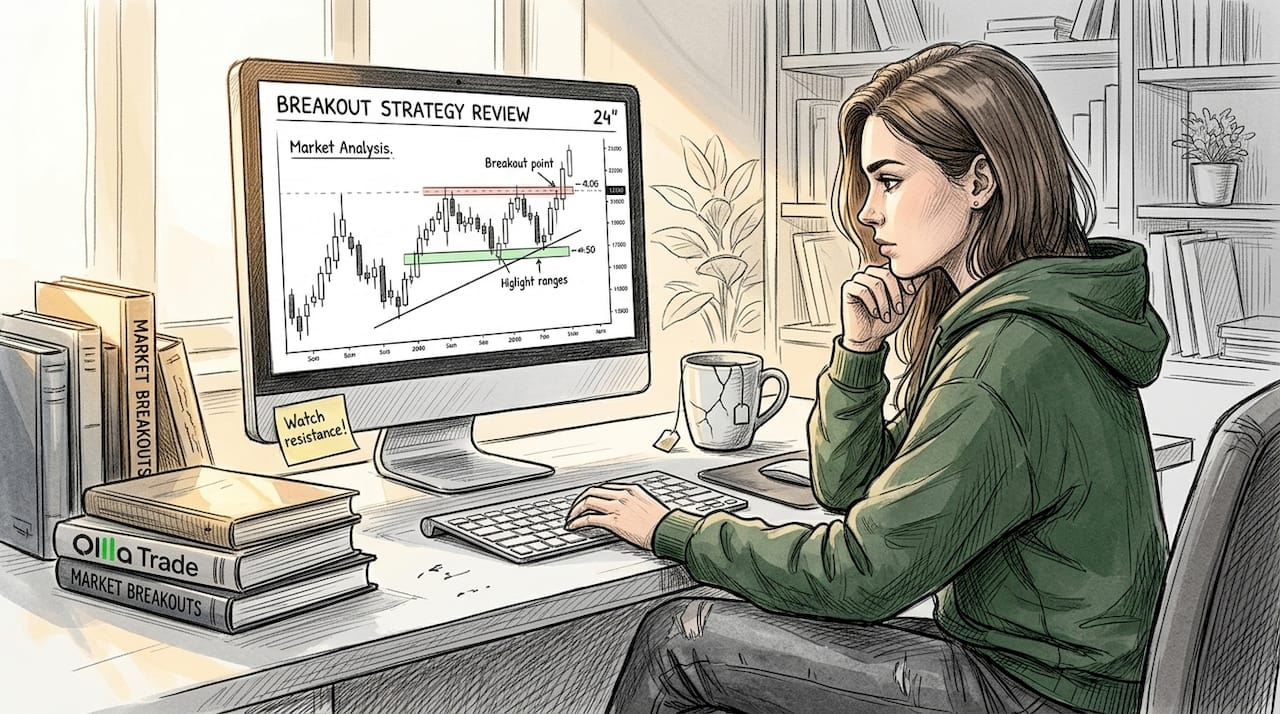
Breakout trading targets price escaping a defined range, often after a period of consolidation. The move tends to be sharp and fast. You enter on the break and ride the momentum until the move exhausts itself.
اسکالپینگ exploits tiny intraday moves with dozens or even hundreds of trades per day. Profits per trade are small, but they add up. The risk is high transaction costs eating into gains if spreads are too wide.
معاملات نوسانی targets multi-day or multi-week trends. You hold through minor pullbacks and aim for larger moves. It suits traders who cannot monitor screens all day.
معاملات محدودهای profits from price bouncing between clear support and resistance levels. It works best in low-volatility, sideways markets.
| روش | Frequency | سطح ریسک | Ideal asset | Automation potential |
|---|---|---|---|---|
| برکاوت | متوسط | Medium-High | Forex, Crypto | متوسط |
| اسکالپینگ | بسیار بالا | بالا | Forex, Indices | بالا |
| Swing | کم | متوسط | All assets | کم |
| Range | متوسط | کم-متوسط | Metals, Indices | متوسط |
Key considerations when using these methods:
- Use automated systems for crypto to handle 24/7 exposure without manual intervention.
- Always set stop-losses before entering a breakout trade. False breakouts are common and can reverse sharply.
- For scalping, choose brokers with the tightest spreads and fastest execution speeds.
A regime-adaptive grid bot tested on SOL data delivered +149% out-of-sample over 15 months with a Sharpe ratio of 2.27, showing what disciplined automation can achieve. For a direct comparison of day versus swing approaches in CFD markets, see CFD day vs swing strategies. Understanding how spreads affect your net returns is covered in this trading spread strategy breakdown.
Pairs, carry, news, correlation, and market-making: Advanced and professional plays
Moving beyond foundational and tactical strategies, let’s explore advanced plays for experienced traders who want to extract edge from market structure itself.
Here are the core mechanics and key considerations for each advanced strategy:
- Pairs trading: You buy one asset and short a correlated one simultaneously. The goal is to profit from the spread between them, not from market direction. This reduces idiosyncratic risk but requires careful correlation monitoring.
- Carry trading: You borrow in a low-interest currency and invest in a high-interest one, pocketing the differential. It works well in stable, low-volatility forex environments but unwinds violently during risk-off episodes.
- News trading: You position before or immediately after major announcements like central bank decisions or jobs reports. The reward is high but so is the slippage risk. Execution speed is everything.
- Correlation trading: You identify co-moving assets and use that relationship for diversification or hedging. Gold and the US dollar often move inversely, for example.
- Market-making: You post both buy and sell orders, earning the spread. This requires sophisticated technology, significant capital, and deep market knowledge.
“Professional traders in 24/7 crypto markets increasingly rely on AI-driven automation, regime detection, and strict position sizing rules. Retail traders who adopt even a fraction of this discipline see measurably better outcomes.”
For a solid foundation in trading risk management, understanding how to protect capital is as important as picking the right strategy. The step-by-step forex guide walks through execution from account setup to live trading.
Pro Tip: Professionals never risk more than 1-2% of their account on a single trade. Position sizing is not optional. It is the difference between surviving a drawdown and blowing up your account.
Comparing strategies: When to use each approach and common pitfalls
Finally, let’s consolidate your understanding with actionable recommendations for when and how to deploy each strategy.
Match your strategy to the current market regime. Bull markets reward trend following and momentum. Bear markets favor short selling and mean reversion. Sideways, range-bound markets are where range trading and pairs strategies shine.
Here is a quick reference for situational deployment:
| استراتژی | Best regime | Ideal asset | Key risk |
|---|---|---|---|
| دنبال کردن روند | Bull | Crypto, Forex | Late entries |
| شتاب | Bull/Breakout | همه | Crowded trades |
| بازگشت به میانگین | Range | Indices, Metals | Trend continuation |
| Carry | Low volatility | فارکس | Sudden reversals |
| اسکالپینگ | Any | Forex, Indices | High costs |
| Pairs | Any | Correlated pairs | Correlation breakdown |
The most common mistakes traders make:
- استفاده بیش از حد از اهرم مالی: Using maximum leverage without accounting for drawdown depth.
- Skipping backtesting: Going live without validating a strategy on historical data first.
- Ignoring regime shifts: Sticking to a trend strategy in a clearly ranging market.
- Chasing raw returns: Prioritizing high returns over risk-adjusted metrics like Sharpe and Calmar ratios.
- No stop-losses: Letting losing trades run in hopes of a reversal.
Backtesting reduces risk by 50% when you use metrics like Sharpe and Calmar rather than raw return figures. Interestingly, LLM-driven strategies tend to be conservative in bull markets and aggressive in bear markets, showing no consistent long-term outperformance over simpler rule-based systems.
Our take: Why a flexible, regime-adaptive strategy beats ‘one-size-fits-all’
Here is the uncomfortable truth most traders do not want to hear: the strategy that made you money last quarter may be the one destroying your account this quarter. Markets shift. Volatility regimes change. What worked in a trending crypto bull run will fail in a choppy, mean-reverting metals market.
“Static strategies are not strategies. They are habits. And habits do not adapt.”
The traders we see consistently perform well are not the ones with the most complex systems. They are the ones who review their approach regularly, validate with walk-forward analysis, and switch gears when the data tells them to. Sharpe and Calmar ratios are their north star, not raw percentage gains.
For traders who want to see this in action, real forex strategy examples show how adaptive approaches play out across different market conditions.
Pro Tip: Schedule a monthly strategy review. Compare your live results against your backtest expectations. If there is a significant gap, investigate before you lose more capital.
Enhance your trading with specialized tools and strategy guides
Understanding these strategies is the first step. Applying them with the right tools and market access is what separates knowledge from results.
Olla Trade provides access to forex, crypto, metals, indices, and more through a platform built for both retail and professional traders. Whether you are exploring forex trading resources or diving into a detailed crypto strategy guide, the tools are there to support your edge. From tight spreads to MetaTrader 4 integration, the platform is designed to execute strategies efficiently. Follow the forex trading steps to get started and put your strategy knowledge to work in live markets.
سوالات متداول
What is the safest trading strategy for beginners?
Swing trading and mean reversion are generally safer for beginners because they avoid high-frequency risks and allow more time to analyze trades before acting.
How do professionals manage risk across different strategies?
Pros rely on position sizing and stop-losses, combined with regime adaptation and rigorous backtesting, to minimize drawdowns and protect capital across changing market conditions.
Which trading strategy works best for cryptocurrencies?
Trend following and momentum are the strongest fits for crypto due to persistent trends and high volatility, but automation and diversification are essential to manage the 24/7 exposure.
Why is backtesting crucial before using a new strategy?
Backtesting with Sharpe and Calmar metrics validates performance on historical data and reduces the risk of deploying a flawed system with real capital.
توصیه شده
- بهترین شیوههای برتر برای معاملهگران: افزایش عملکرد در سال 2026
- 10 نکته برتر بازار فارکس برای معاملات هوشمندانهتر در سال 2026
- 7 استراتژی فارکس اثبات شده: مثالهای واقعی برای معاملات برنده
- چگونه در فارکس معامله کنیم: 20% بردهای بیشتر با استراتژی هوشمند 2026
- Maximize returns: advanced best practices for crypto trading
- Effective currency risk management strategies for 2026