










Choosing the right trading tools can feel overwhelming when you’re faced with hundreds of platforms, charting packages, and analytical resources. The difference between success and frustration often comes down to matching tools with your specific trading style and target markets. This article cuts through the noise by presenting a curated list of advanced trading tools designed for evaluating Forex, contracts for difference, and cryptocurrencies. You’ll discover practical criteria for selection, compare leading options across categories, and learn how different tools stack up for various trader profiles and budgets.
Table of Contents
- Key takeaways
- Criteria for selecting the best trading tools
- Top trading platforms and software tools
- Essential tools for market analysis and insights
- Automated trading and algorithmic tools overview
- Enhance your trading with Olla Trade tools and resources
- FAQ
Key Takeaways
| Point | Details |
|---|---|
| Align tools to style | Your trading approach determines which features matter most, from fast execution for day trading to robust charting for swing trading. |
| Asset focus matters | Your chosen markets shape platform requirements such as tight Forex spreads, diverse CFD underlying assets, or crypto wallet integration. |
| Data quality and speed | Real time price feeds must update within milliseconds, and historical depth supports backtesting. |
| Scorecard method | Create a weighted scorecard and rate each platform on each criterion to reduce bias and reveal the best fit. |
Criteria for selecting the best trading tools
Your trading style dictates which features matter most. Day traders need lightning-fast execution and tick-by-tick data, while swing traders prioritize robust charting with multi-timeframe analysis. Long-term investors focus on fundamental research tools and portfolio tracking. Selecting the right tools requires matching features to your trading goals and the markets you trade, so start by defining your approach clearly.
Asset focus shapes platform requirements significantly. Forex specialists need tight spreads on major pairs and exotic currency access. CFD traders require diverse underlying markets like indices, commodities, and individual stocks. Cryptocurrency traders demand wallet integration, decentralized exchange connectivity, and real-time blockchain data. Multi-asset traders benefit from unified platforms offering cross-market analysis without switching between separate tools.
Platform capabilities separate basic from professional-grade tools. Essential features include:
- Advanced charting with 50+ technical indicators and drawing tools
- Multiple order types beyond market and limit orders
- One-click trading and customizable hotkeys for speed
- Automated strategy deployment through APIs or built-in scripting
- Real-time news feeds integrated directly into the trading interface
- Economic calendar synced with chart annotations
Data quality and speed determine whether you spot opportunities or miss them. Real-time price feeds must update within milliseconds, not seconds. Historical data depth enables proper backtesting, requiring at least five years of tick data for statistical validity. Economic calendar integration should highlight high-impact events with countdown timers and consensus forecasts.
User experience affects daily efficiency more than traders realize. Customizable layouts let you arrange charts, watchlists, and order panels to match your workflow. Multi-monitor support expands screen real estate for complex setups. Mobile apps need full functionality, not stripped-down versions that force you back to desktop for critical actions.
Cost structures vary wildly across trading tools. Some platforms charge monthly subscriptions ranging from $50 to $300. Others embed costs in wider spreads or higher commissions. Watch for hidden fees like inactivity charges, data feed costs, or premium indicator packages. The best trading software for retail traders balances feature richness with transparent, affordable pricing.
Pro Tip: Create a weighted scorecard listing your top 10 must-have features, then rate each platform candidate from 1 to 5 on each criterion. This removes emotional bias and reveals which tool truly fits your needs versus which has the flashiest marketing.
Top trading platforms and software tools
Trading platforms with advanced charting, technical analysis, and multi-asset support enhance trader performance by consolidating critical functions into unified workspaces. MetaTrader 4 dominates Forex and CFD markets with its proven stability and vast Expert Advisor library. The platform supports custom indicators, automated strategies, and multi-account management. Traders appreciate its lightweight resource usage and compatibility across Windows, Mac, iOS, and Android devices.
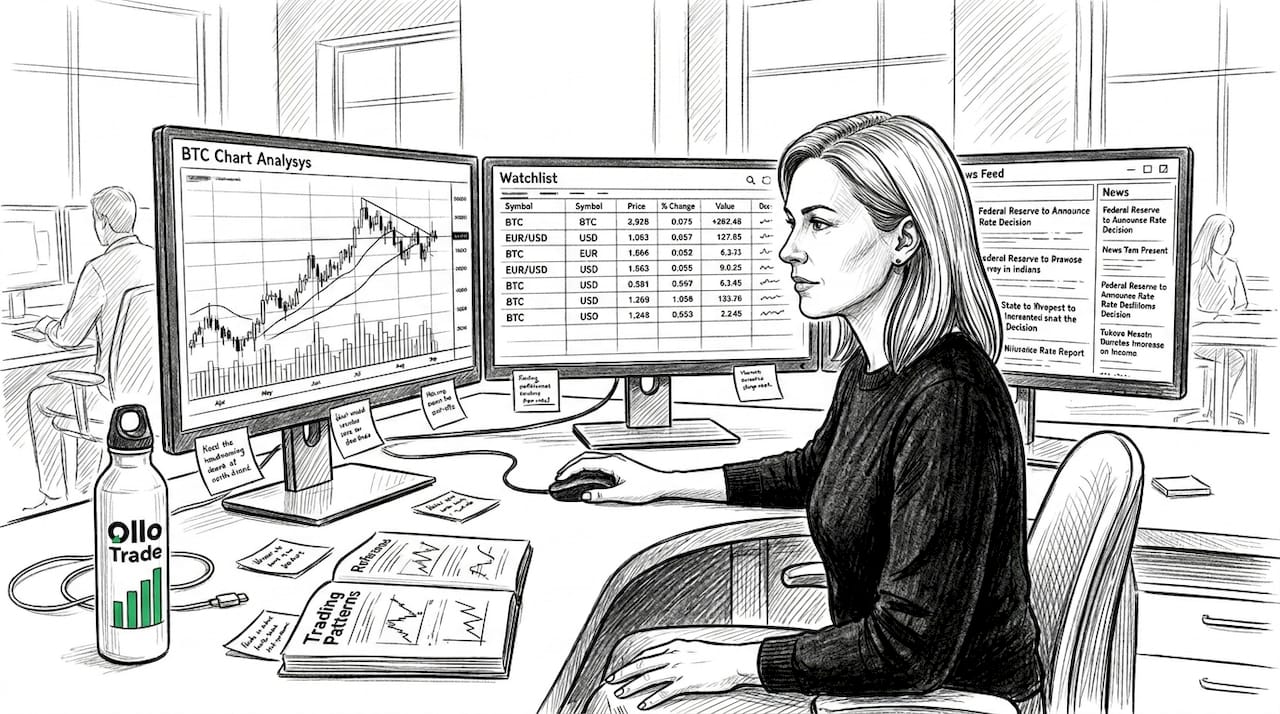
cTrader appeals to traders prioritizing modern interfaces and advanced order types. Its depth-of-market display shows real liquidity levels, not just best bid and ask. The platform offers asymmetric position sizing, allowing different stop loss and take profit distances on the same trade. Built-in cBots enable algorithmic trading without external programming, while cAlgo provides a full development environment for custom automation.
Proprietary vendor platforms often integrate exclusive research and reduced trading costs. These tools typically bundle platform access with brokerage accounts, offering seamless fund transfers and consolidated reporting. Features vary widely, from basic web interfaces to sophisticated desktop applications rivaling standalone software.
| Platform | Asset Classes | Key Strengths | Typical Cost |
|---|---|---|---|
| MetaTrader 4 | Forex, CFDs, Crypto | Automation, indicators, stability | Free with broker |
| cTrader | Forex, CFDs | Advanced orders, DOM, speed | Free with broker |
| TradingView | Multi-asset | Social features, pine script | $12.95-$59.95/month |
| NinjaTrader | Futures, Forex | Market replay, strategy analyzer | Free or $60/month |
| Thinkorswim | Stocks, options, Forex | Paper trading, education | Free with account |
Automated trading software removes emotional interference by executing predefined rules without hesitation. Expert Advisors in MetaTrader scan markets continuously, identifying setups and placing trades while you sleep. Third-party algorithmic platforms like QuantConnect and Alpaca offer cloud-based backtesting against years of historical data, then deploy winning strategies to live markets with API connections.
The complete guide to trading platforms explains how different architectures affect execution speed and reliability. Desktop applications generally outperform web-based platforms for data-intensive analysis, though browser tools excel in accessibility and cross-device synchronization. Mobile apps serve best as monitoring tools and emergency trade management rather than primary trading interfaces.
Specialized tools target specific trading styles. Scalpers need platforms with one-click order entry and sub-second execution. Position traders benefit from portfolio analytics and correlation matrices. The MetaTrader 4 guide details how to customize the platform for different approaches, from high-frequency trading to long-term trend following.
Pro Tip: Many brokers offer top automated trading software at no additional cost when you maintain minimum account balances. This provides professional-grade automation without monthly subscription fees, though you’ll need to verify the platform supports your preferred markets and order types.
Essential tools for market analysis and insights
Economic calendars and live news feeds provide crucial market-moving event updates for informed decision-making, transforming raw data releases into actionable trading signals. High-impact events like Federal Reserve rate decisions or non-farm payroll reports can swing currency pairs 100 pips in minutes. Traders who anticipate these moves position themselves ahead of the crowd, while those caught unaware face sudden losses.
Real-time market news separates reactive traders from proactive ones. Breaking geopolitical developments, earnings surprises, or regulatory announcements create volatility spikes before official economic data confirms the trend. Premium news terminals like Bloomberg and Reuters deliver millisecond advantages, though free alternatives like Investing.com and Forex Factory provide sufficient coverage for retail traders.
Analytics tools extend beyond basic price charts into market psychology and structure. Sentiment indicators aggregate positioning data from brokers or social media to reveal whether traders are overwhelmingly bullish or bearish. Extreme readings often signal reversals as the crowd gets trapped on the wrong side. Volume analysis tools highlight accumulation and distribution patterns invisible on standard candlestick charts.
| Tool Type | Popular Options | Key Features | Access |
|---|---|---|---|
| Economic Calendar | Investing.com, ForexFactory | Customizable alerts, impact ratings | Free |
| News Terminals | Bloomberg, Reuters | Ultra-low latency, verified sources | $2,000+/month |
| Sentiment Trackers | IG Client Sentiment, CNN Fear & Greed | Positioning data, contrarian signals | Free to $50/month |
| Volume Analytics | Bookmap, Sierra Chart | Order flow, liquidity heatmaps | $49-$150/month |
Cryptocurrency markets demand specialized data sources beyond traditional financial tools. On-chain analytics platforms like Glassnode and CryptoQuant track wallet movements, exchange inflows, and miner behavior. Social sentiment tools monitor Twitter, Reddit, and Telegram for emerging narratives before they hit mainstream news. These signals often precede price movements by hours or days in the fast-moving crypto space.
The economic calendar resource filters events by country, impact level, and asset relevance. Setting up alerts for high-impact releases in your traded currencies prevents surprise volatility from destroying carefully planned positions. Combining calendar awareness with technical setups creates a complete trading edge.
Cross-asset correlation tools reveal hidden relationships between markets. Gold and the US dollar typically move inversely, while stock indices and crude oil often trend together. Understanding these connections helps traders diversify risk and spot arbitrage opportunities when correlations temporarily break down. Advanced platforms calculate rolling correlations and display them as heatmaps for quick pattern recognition.
Technical indicator libraries expand analytical capabilities beyond moving averages and RSI. Proprietary indicators like the Ichimoku Cloud or Elliott Wave tools provide alternative market perspectives. Volume-weighted average price (VWAP) helps institutional traders benchmark execution quality. The market news updates section contextualizes price action with fundamental catalysts, bridging technical and fundamental analysis approaches.
Automated trading and algorithmic tools overview
Automated trading software can improve execution speed and remove emotional decision errors by following predefined rules without hesitation or fatigue. Algorithms monitor dozens of instruments simultaneously, identifying setups that meet specific criteria and executing trades within milliseconds. This speed advantage proves critical in markets where opportunities disappear before manual traders can react.
Expert Advisors in MetaTrader represent the most accessible entry point for retail algorithmic trading. These programs attach to charts and execute buy or sell orders when technical conditions align. Traders can code custom strategies using MQL4 language or purchase pre-built EAs from marketplaces. The platform’s strategy tester enables backtesting against historical data to validate performance before risking real capital.
Third-party algorithmic platforms offer more sophisticated development environments. QuantConnect supports multiple programming languages including Python and C#, with cloud-based backtesting across equities, Forex, and crypto. Alpaca provides commission-free stock trading APIs that developers integrate into custom applications. These tools appeal to programmers who want complete control over strategy logic and execution infrastructure.
Key automated trading functions include:
- Signal generation based on technical indicator crossovers or price patterns
- Position sizing calculated from account equity and risk parameters
- Stop loss and take profit placement according to volatility measures
- Trade entry timing optimized for spread costs and slippage reduction
- Portfolio rebalancing to maintain target asset allocations
- Performance tracking with detailed trade logs and equity curves
Benefits extend beyond speed into consistency and scalability. Automated systems execute the same strategy parameters every time, eliminating the inconsistency that plagues discretionary traders. They operate 24/7 across global markets, capturing opportunities in Asian or European sessions while you sleep. Backtesting capabilities let you evaluate thousands of historical trades in minutes, building statistical confidence in strategy viability.
Limitations require honest assessment before deployment. Algorithms need technical setup knowledge and ongoing monitoring to ensure proper operation. Over-optimization creates strategies that perform brilliantly on historical data but fail in live markets because they fit noise rather than genuine patterns. Stable internet connectivity becomes critical, as disconnections can leave positions unmanaged during volatile moves.
Pro Tip: Run any automated strategy on a demo account for at least three months before deploying real capital. This reveals how the system handles various market conditions beyond the backtested period. Compare live demo results to backtested performance, expecting some degradation from slippage and spread costs not fully captured in historical simulations.
The automated trading software overview examines popular platforms across price points and complexity levels. Free options like MetaTrader EAs suit traders with basic programming skills or those purchasing pre-built strategies. Premium platforms justify higher costs through advanced features like machine learning integration, multi-strategy portfolio optimization, and institutional-grade execution infrastructure.
Enhance your trading with Olla Trade tools and resources
You’ve explored criteria for selecting trading tools and compared leading platforms across categories. Now discover how Olla Trade consolidates these capabilities into an integrated trading ecosystem designed for serious market participants.
Our Forex trading platform delivers institutional-grade execution with retail-friendly interfaces. Access tight spreads on 60+ currency pairs, advanced charting with 80+ technical indicators, and one-click trading for rapid order placement. The platform integrates MetaTrader 4 for automated strategy deployment alongside proprietary tools for market analysis.
Stay ahead of market-moving events with our economic calendar tool, featuring real-time updates and customizable alerts for high-impact releases. Filter by country, asset class, or impact level to focus on events affecting your positions. Build deeper market understanding through our Forex trading guide, covering everything from currency pair basics to advanced risk management frameworks. Whether you trade Forex, CFDs on indices and commodities, or cryptocurrencies, our comprehensive resources support your journey from novice to expert.
FAQ
What are the must-have trading tools for beginner traders?
Beginners should start with intuitive platforms offering demo accounts, basic charting with common indicators, and integrated economic calendars. Look for educational resources within the platform and responsive customer support. Free options like MetaTrader 4 or broker-provided web platforms give you professional features without subscription costs while you develop skills.
How do automated trading tools improve efficiency?
Automated tools execute trades based on preset rules instantly and without emotional interference, removing fear and greed from decision-making. They monitor markets continuously across multiple timeframes and instruments, identifying opportunities you might miss manually. Backtesting capabilities let you validate strategies against years of historical data before risking real capital, building confidence in your approach.
Which economic calendar features should traders prioritize?
Prioritize real-time updates delivered within seconds of official releases, not delayed feeds that leave you behind the market. Customizable alerts via email, SMS, or push notifications ensure you never miss high-impact events affecting your positions. Look for consensus forecasts, previous readings, and impact ratings that help you gauge potential volatility. Integration with your trading platform enables seamless decision-making without switching between applications.
Can free trading tools match paid platforms in quality?
Many free platforms like MetaTrader 4 and TradingView’s basic tier offer professional-grade features rivaling paid alternatives. Brokers subsidize platform costs through spreads and commissions, providing sophisticated tools at no direct charge. Paid platforms justify costs through specialized features like advanced order flow analysis, institutional research, or premium data feeds. Evaluate whether these extras genuinely improve your trading results before committing to subscriptions.
How often should traders update their tool selection?
Review your trading tools annually or when your strategy evolves significantly. Markets and technology advance continuously, with new platforms offering improved features or lower costs. If you transition from swing trading to day trading, or add new asset classes, your tool requirements change. Stay informed about platform updates and competitor offerings, but avoid switching frequently as mastery of familiar tools often outweighs marginal feature improvements.