










بہت سے ابتدائی افراد کا خیال ہے کہ فوریکس ٹریڈنگ فوری دولت کے حصول کا ایک یقینی راستہ ہے، لیکن یہ غلط فہمی مہنگی غلطیوں کا باعث بنتی ہے۔ فاریکس ٹریڈنگ میں دنیا کی سب سے بڑی مالیاتی منڈی میں کرنسی کے جوڑوں کی خرید و فروخت شامل ہوتی ہے، جہاں میجرز کا حساب 85% ہے۔ تمام لین دین کا۔ یہ گائیڈ واضح کرتا ہے کہ فاریکس حقیقی معنوں میں کیسے کام کرتا ہے، بنیادی تصورات جیسے pips اور لیوریج سے لے کر جدید حکمت عملیوں بشمول الگورتھمک ٹریڈنگ اور رسک مینجمنٹ تک۔ چاہے آپ اپنا تجارتی سفر شروع کر رہے ہوں یا جدید ترین تکنیکوں کو بہتر کر رہے ہوں، آپ کو ایسی عملی بصیرتیں ملیں گی جو پیسے کھونے والے کامیاب تاجروں کو 90% سے الگ کرتی ہیں۔.
مندرجات کا جدول
- فاریکس ٹریڈنگ کی بنیادی باتوں کو سمجھنا
- مشہور فاریکس ٹریڈنگ حکمت عملی
- خطرات، اتار چڑھاؤ، اور ریٹیل ٹریڈر چیلنج
- اعلی درجے کی فاریکس ٹریڈنگ: ڈیٹا پر مبنی اور الگورتھمک اپروچز
- اولا ٹریڈ کے ساتھ فاریکس ٹریڈنگ دریافت کریں۔
- اکثر پوچھے گئے سوالات
اہم نکات
| نقطہ | تفصیلات |
|---|---|
| کرنسی کے جوڑے اور پپس | فاریکس میں کرنسی کے جوڑوں کی تجارت شامل ہوتی ہے جہاں منافع اور نقصان کو pips میں ماپا جاتا ہے، قیمت کی سب سے چھوٹی حرکت۔. |
| حکمت عملی کی قسم | تجارتی نقطہ نظر فوری اسکیلپنگ سے لے کر الگورتھمک سسٹمز تک، ہر ایک کے لیے الگ الگ رسک پروفائلز اور وقت کے وعدے ہوتے ہیں۔. |
| اعلی ناکامی کی شرح | زیادہ تر خوردہ تاجر نظم و ضبط کے خطرے کے انتظام اور مناسب تعلیم کے بغیر پیسے کھو دیتے ہیں۔. |
| اعلی درجے کی تکنیک | پیشہ ور تاجر مسابقتی برتری حاصل کرنے کے لیے ڈیٹا سے چلنے والے طریقے استعمال کرتے ہیں جن میں AI پیشن گوئی اور متحرک ہیجنگ شامل ہیں۔. |
| اتار چڑھاؤ مواقع پیدا کرتا ہے۔ | معاشی خبروں اور لیکویڈیٹی کی مختلف حالتوں سے کارفرما مارکیٹ کے اتار چڑھاؤ کافی خطرات اور منافع کی صلاحیت دونوں کو پیش کرتے ہیں۔. |
فاریکس ٹریڈنگ کی بنیادی باتوں کو سمجھنا
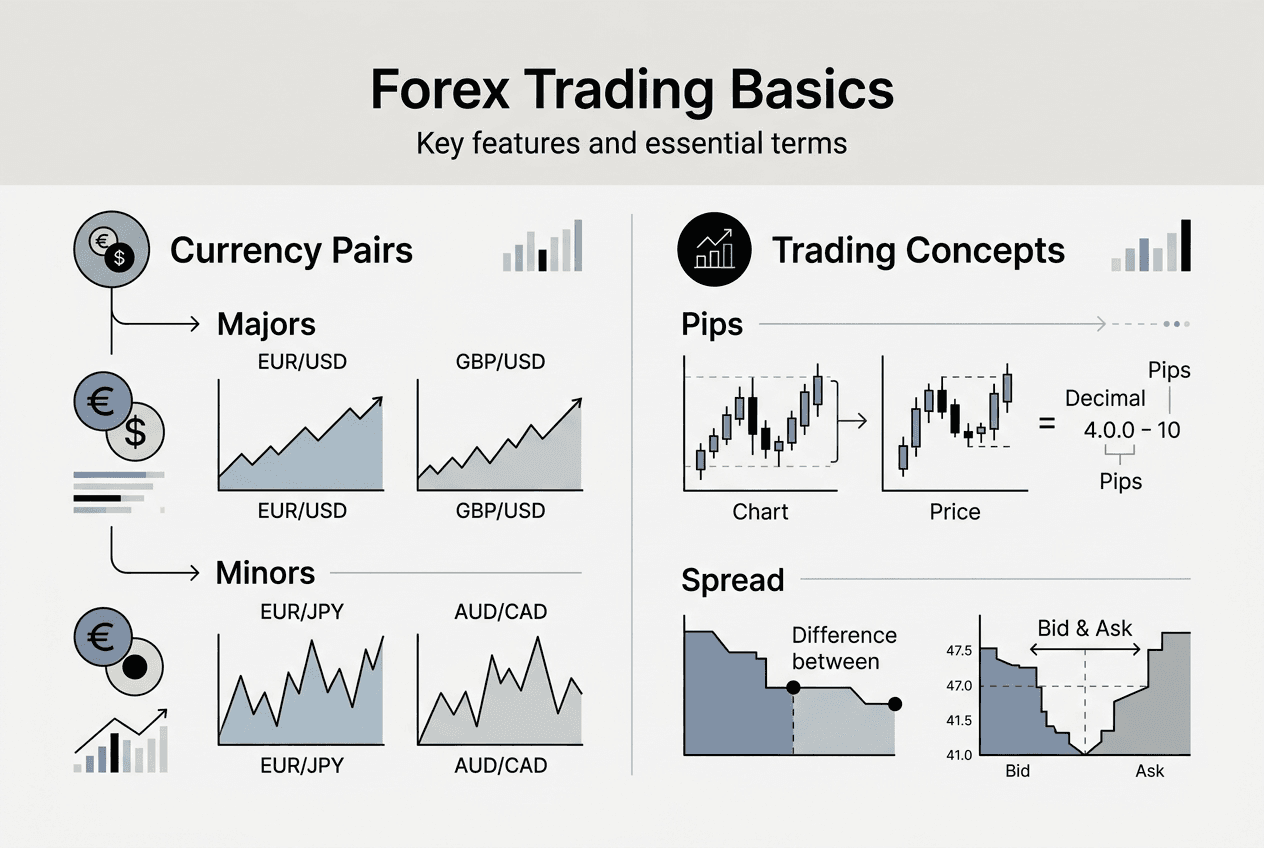
کرنسی کے جوڑوں پر فاریکس ٹریڈنگ سینٹرز، جہاں آپ بیک وقت ایک کرنسی خریدتے ہیں جبکہ دوسری بیچتے ہیں۔ ایک جوڑے میں پہلی کرنسی بنیادی کرنسی ہے، اور دوسری کوٹ کرنسی ہے۔ جب آپ EUR/USD کو 1.0850 پر دیکھتے ہیں، تو اس کا مطلب ہے کہ ایک یورو 1.0850 امریکی ڈالر کے برابر ہے۔ تجارت کرنسی کے جوڑوں میں ہوتی ہے جہاں EUR/USD، GBP/USD، اور USD/JPY جیسی بڑی کمپنیاں حجم پر حاوی ہوتی ہیں، جب کہ غیر ملکی جوڑوں میں ابھرتی ہوئی مارکیٹ کی کرنسیوں کو وسیع پھیلاؤ اور زیادہ اتار چڑھاؤ کے ساتھ شامل کیا جاتا ہے۔.
منافع اور نقصان کا حساب pips پر منحصر ہے، جو زیادہ تر جوڑوں کے لیے 0.0001 یا ین پر مبنی جوڑوں کے لیے 0.01 کی نمائندگی کرتا ہے۔ اگر EUR/USD 1.0850 سے 1.0870 پر منتقل ہوتا ہے، تو یہ 20 پِپ کا فائدہ ہے۔ 100,000 یونٹس کے معیاری لاٹ سائز کے ساتھ، ہر پائپ عام طور پر قدر میں $10 کے برابر ہوتا ہے۔ حقیقی سرمائے کو خطرے میں ڈالنے سے پہلے پائپ کے حسابات کو سمجھنا ضروری ہے، کیونکہ مارکیٹ کی چھوٹی موومنٹ بھی اہم مالیاتی تبدیلیوں کا ترجمہ کرتی ہے جب بیعانہ پوزیشن کے سائز کو بڑھاتا ہے۔.
فاریکس مارکیٹ ہفتے کے دنوں میں سڈنی، ٹوکیو، لندن اور نیویارک کے بڑے مالیاتی مراکز میں 24 گھنٹے کام کرتی ہے۔ یہ مسلسل تجارت اوورلیپنگ سیشنز تخلیق کرتی ہے جہاں لیکویڈیٹی عروج پر ہوتی ہے، خاص طور پر لندن-نیویارک کے اوورلیپ کے دوران جب حجم میں اضافہ ہوتا ہے۔ زیادہ لیکویڈیٹی کا مطلب عام طور پر سخت اسپریڈز اور بہتر عمل درآمد ہوتا ہے، جبکہ پرسکون ادوار میں وسیع پیمانے پر پھیلاؤ اور قیمتوں میں غیر متوقع فرق دیکھا جاسکتا ہے۔.

پرو ٹپ: پر ایک ڈیمو اکاؤنٹ کھولیں۔ اولا ٹریڈ کا فاریکس پلیٹ فارم حقیقی رقم کا ارتکاب کرنے سے پہلے ورچوئل فنڈز کے ساتھ مشق کرنا، آپ کو مالی خطرے کے بغیر آرڈر کی اقسام اور پوزیشن کے سائز میں مہارت حاصل کرنے کی اجازت دیتا ہے۔.
کرنسی کے جوڑے کے زمرے خصوصیات میں کافی حد تک مختلف ہیں:
- میجرز: EUR/USD، GBP/USD، USD/JPY سخت اسپریڈز اور اعلی لیکویڈیٹی پر مشتمل ہے
- نابالغ: EUR/GBP، AUD/NZD معتدل اسپریڈز اور معقول حجم کے ساتھ
- Exotics: USD/TRY، EUR/ZAR وسیع اسپریڈز اور غیر متوقع نقل و حرکت کے ساتھ
| جوڑی کی قسم | روزانہ والیوم شیئر | عام پھیلاؤ | اتار چڑھاؤ کی سطح |
|---|---|---|---|
| میجرز | 85% | 0.5-2 پیپس | اعتدال پسند |
| نابالغ | 12% | 2-5 پپس | اعتدال سے اعلیٰ |
| Exotics | 3% | 10-50 پپس | بہت اعلی |
ابتدائی افراد کو ایسے بڑے اداروں پر توجہ مرکوز کرنی چاہیے جہاں قابل پیشن گوئی سلوک اور پرچر تعلیمی وسائل سیکھنے کو مزید قابل انتظام بناتے ہیں۔ جیسا کہ آپ کے ذریعے مہارت کی ترقی پیشہ ورانہ فاریکس سیکھنے, ، آپ آہستہ آہستہ معمولی اور غیر ملکی جوڑوں کو تلاش کر سکتے ہیں جو منفرد مواقع پیش کرتے ہیں لیکن زیادہ مہارت اور خطرے کی برداشت کا مطالبہ کرتے ہیں۔.
مشہور فاریکس ٹریڈنگ کی حکمت عملی
تاجر وقت کی دستیابی، خطرے کی بھوک، اور مارکیٹ کے نقطہ نظر کی بنیاد پر متنوع طریقے استعمال کرتے ہیں۔. حکمت عملیوں میں اسکیلپنگ، ڈے ٹریڈنگ، سوئنگ ٹریڈنگ، پوزیشن ٹریڈنگ، الگورتھم، اور ہیجنگ شامل ہیں۔, ، ہر ایک مختلف مقاصد کی تکمیل کرتا ہے اور مختلف مہارتوں کی ضرورت ہوتی ہے۔ اسکیلپنگ منٹوں میں قیمتوں کی چھوٹی موومنٹ کو ہدف بناتی ہے، جبکہ پوزیشن ٹریڈنگ بنیادی تجزیہ کی بنیاد پر ہفتوں یا مہینوں تک برقرار رہتی ہے۔.
ڈے ٹریڈنگ مارکیٹ بند ہونے سے پہلے تمام پوزیشنوں کو بند کر دیتی ہے، راتوں رات خطرے کو ختم کرتی ہے لیکن تجارتی اوقات کے دوران مسلسل توجہ کا مطالبہ کرتی ہے۔ سوئنگ ٹریڈرز ٹک بہ ٹک کی نقل و حرکت پر نظر رکھنے کے بجائے روزانہ ایک یا دو بار چارٹ چیک کرتے ہوئے ملٹی ڈے ٹرینڈز کو پکڑتے ہیں۔ پوزیشن کے تاجر سرمایہ کاروں کی طرح کام کرتے ہیں، سود کی شرح کے فرق یا اقتصادی تبدیلیوں سے چلنے والی بڑی کرنسی کی دوبارہ ترتیب سے منافع حاصل کرنے کے لیے مختصر مدت کے شور کو روکتے ہیں۔.
| حکمت عملی | ٹائم ہورائزن | رسک لیول | عام ہدف | کے لیے بہترین |
|---|---|---|---|---|
| اسکیلپنگ | سیکنڈ سے منٹ تک | بہت اعلی | 5-10 پپس | فوری اضطراب کے ساتھ کل وقتی تاجر |
| ڈے ٹریڈنگ | ایک دن کے اندر گھنٹے | اعلی | 20-50 پپس | فعال تاجر راتوں رات وقفے سے گریز کرتے ہیں۔ |
| سوئنگ ٹریڈنگ | دنوں سے ہفتوں تک | اعتدال پسند | 50-200 پپس | پارٹ ٹائم ٹریڈرز صبر کے ساتھ |
| پوزیشن ٹریڈنگ | ہفتوں سے مہینوں تک | اعتدال سے کم | 200-1000+ pips | طویل مدتی بنیادی تجزیہ کار |
| الگورتھمک | پروگرام کے لحاظ سے مختلف ہوتا ہے۔ | مختلف ہوتی ہے۔ | مسلسل چھوٹے فوائد | ٹیک سیوی منظم تاجر |
ذاتی تجارتی حکمت عملی تیار کرنے کے لیے منظم اقدامات کی ضرورت ہے:
- اپنے شیڈول کا اندازہ لگائیں: اس بات کا تعین کریں کہ روزانہ کتنے گھنٹے آپ چارٹ کے تجزیہ اور تجارتی نگرانی کے لیے وقف کر سکتے ہیں۔.
- خطرے کی رواداری کی تعریف کریں: سرمائے کے زیادہ سے زیادہ فیصد کا حساب لگائیں جسے آپ کسی ایک تجارت پر کھونا چاہتے ہیں، عام طور پر 1-2%۔.
- تکنیکی اشارے منتخب کریں: 2-3 تکمیلی ٹولز جیسے موونگ ایوریجز، RSI، یا Fibonacci retracements کو بے ترتیبی کے چارٹس کے بجائے منتخب کریں۔.
- داخلے اور باہر نکلنے کے قواعد قائم کریں: دستاویز مخصوص شرائط جو تجارت اور پہلے سے متعین منافع کے اہداف کو متحرک کرتی ہیں یا نقصانات کو روکتی ہیں۔.
- اچھی طرح سے بیک ٹیسٹ کریں: لائیو ٹریڈنگ سے پہلے تاثیر کی توثیق کرنے کے لیے مارکیٹ کے مختلف حالات پر محیط تاریخی ڈیٹا پر اپنے قواعد کا اطلاق کریں۔.
- چھوٹے اور پیمانے پر شروع کریں: کم از کم پوزیشن کے سائز کے ساتھ شروع کریں، آہستہ آہستہ بڑھتے جائیں کیونکہ آپ مہینوں میں مسلسل منافع بخش ثابت ہوتے ہیں۔.
دریافت کریں۔ دن اور سوئنگ ٹریڈنگ کی حکمت عملی یہ سمجھنے کے لیے کہ مختلف ٹائم فریم کس طرح فیصلہ سازی اور رسک مینجمنٹ کو متاثر کرتے ہیں۔ بہت سے تاجروں کو سوئنگ ٹریڈنگ بہترین لگتی ہے کیونکہ یہ مناسب وقت کے وعدوں کے ساتھ منافع کی صلاحیت کو متوازن رکھتا ہے، اسکیلپنگ کے لیے درکار مسلسل نگرانی کے دباؤ سے بچتا ہے۔.
پرو ٹپ: حقیقی رقم استعمال کرنے سے پہلے کم از کم تین ماہ کے لیے کاغذی تجارت کی حکمت عملی، جرنل میں ہر فرضی تجارت کا سراغ لگانا تاکہ آپ کی فیصلہ سازی کے نمونوں اور جیت اور نقصان پر جذباتی ردعمل کی نشاندہی کی جا سکے۔.
الگورتھم اور ہیجنگ کی حکمت عملی جدید طریقوں کی نمائندگی کرتی ہے۔ الگورتھم پروگرام شدہ معیار کی بنیاد پر تجارت کو انجام دیتے ہیں، جذباتی مداخلت کو دور کرتے ہیں اور ڈیٹا کے سالوں میں بیک ٹیسٹنگ کو فعال کرتے ہیں۔ ہیجنگ میں کمی کے خطرے کو محدود کرنے کے لیے آف سیٹنگ پوزیشنز لینا شامل ہے، جیسے کہ EUR/USD کی لمبی پوزیشن رکھنا جبکہ EUR/GBP کو ڈالر کے مقابلے پاؤنڈ کے مقابلے میں الگ کرنے کے لیے مختصر کرنا۔ کے بارے میں مزید جانیں۔ سوئنگ ٹریڈنگ کی بنیادی باتیں پیچیدہ ملٹی پوزیشن کی حکمت عملیوں کو آزمانے سے پہلے بنیادی علم کی تعمیر کرنا۔.
خطرات، اتار چڑھاؤ، اور خوردہ تاجر کا چیلنج
بیعانہ فائدہ اور نقصان دونوں کو بڑھاتا ہے، غیر منصفانہ تاجروں کے لیے غیر ملکی کرنسی کو خاص طور پر خطرناک بناتا ہے۔ 50:1 لیوریج ریشو کا مطلب ہے کہ مارجن میں صرف $1,000 کے ساتھ $50,000 کو کنٹرول کرنا، لیکن 2% کا منفی اقدام آپ کے پورے داؤ کو مٹا دیتا ہے۔. خوردہ تاجروں کے 90% پیسے کھو دیتے ہیں۔ بنیادی طور پر حد سے زیادہ اور ناکافی رسک کنٹرولز کی وجہ سے، اس لیے نہیں کہ منافع بخش تجارت ناممکن ہے بلکہ اس لیے کہ وہ منی مینجمنٹ کے بنیادی اصولوں کی خلاف ورزی کرتے ہیں۔.
اتار چڑھاؤ میں اضافہ بڑے معاشی اعلانات جیسے نان فارم پے رول رپورٹس، مرکزی بینک کے فیصلوں اور جغرافیائی سیاسی واقعات کے آس پاس ہوتا ہے۔ یہ ریلیز سیکنڈوں کے اندر 100 پِپ موو کو متحرک کر سکتی ہیں، عمل درآمد سے پہلے سٹاپ نقصانات کو اڑا دیتی ہیں۔ غیر ملکی جوڑے بغیر خبروں کے بھی دائمی اتار چڑھاؤ کا مظاہرہ کرتے ہیں، کیونکہ پتلی لیکویڈیٹی واحد بڑے آرڈرز کی قیمتوں کو ڈرامائی طور پر منتقل کرنے کی اجازت دیتی ہے۔ جب کہ اتار چڑھاؤ منافع کے مواقع پیدا کرتا ہے، یہ ان تاجروں کو سزا دیتا ہے جو پوزیشن کے سائز کو نظر انداز کرتے ہیں یا حفاظتی روک کے بغیر تجارت کرتے ہیں۔.
تلخ حقیقت یہ ہے کہ زیادہ تر خوردہ فاریکس ٹریڈرز مارکیٹ کی معلومات کی کمی سے نہیں بلکہ نفسیاتی کمزوریوں اور ناقص رسک مینجمنٹ کی وجہ سے ناکام ہوتے ہیں۔ کامیاب ٹریڈنگ کا تقاضا ہے کہ اسے سخت قوانین کے ساتھ کاروبار کے طور پر برتا جائے، نہ کہ جوئے کے طور پر یا جلدی سے امیر بننے کی اسکیم کے طور پر۔.
اکاؤنٹ کی کمی کا باعث بننے والے عام نقصانات میں شامل ہیں:
- انتقامی تجارت: بڑی، متاثر کن پوزیشنیں لے کر فوری طور پر نقصانات کی وصولی کی کوشش
- سٹاپ نقصانات کو نظر انداز کرنا: امید ہے کہ کھونے والی تجارت چھوٹے منصوبہ بند نقصانات کو قبول کرنے کے بجائے الٹ جائے گی۔
- اوور ٹریڈنگ: بیک وقت بہت ساری پوزیشنیں لینا یا بہت زیادہ تجارت کرنا، پھیلاؤ کے اخراجات جمع کرنا
- تجارتی منصوبے کی کمی: پہلے سے طے شدہ معیار کے بجائے جذبات کی بنیاد پر من مانی فیصلے کرنا
- ناکافی سرمایہ: بازار کے عام اتار چڑھاو کو برداشت کرنے کے لیے بہت کم مقدار سے شروع کرنا
رسک مینجمنٹ کی مؤثر حکمت عملی آپ کے سرمائے کی حفاظت کرتی ہے:
- اعتماد کی سطح سے قطع نظر ہر تجارت کو اکاؤنٹ کی کل قیمت کے 1-2% تک محدود کریں۔
- بغیر کسی استثنیٰ کے ہر پوزیشن پر سٹاپ لوس آرڈرز کا استعمال کریں، جو تکنیکی سطحوں کی بنیاد پر رکھے گئے ہیں نہ کہ صوابدیدی مقداروں پر
- کم از کم 1:2 کا رسک ریوارڈ ریشو برقرار رکھیں، یعنی ممکنہ منافع دوگنا ممکنہ نقصان ہونا چاہیے
- انتہائی مربوط پوزیشنوں پر توجہ مرکوز کرنے کے بجائے غیر متعلقہ جوڑوں میں تنوع پیدا کریں۔
- ہر تجارت کا تفصیلی ریکارڈ رکھیں جس میں معقولیت، نتیجہ، اور جذباتی حالت شامل ہیں تاکہ بہتری کے شعبوں کی نشاندہی کی جا سکے۔
سمجھیں۔ فاریکس رسک مینجمنٹ کی تجاویز مستقل جیتنے والوں کو اکثریت سے الگ کرنے کے لیے نظم و ضبط کی ذہنیت تیار کرنا جو اکاؤنٹس کو اڑا دیتے ہیں۔ رسک مینجمنٹ نقصانات سے مکمل طور پر بچنے کے بارے میں نہیں ہے بلکہ ان کے سائز کو کنٹرول کرنے کے بارے میں ہے تاکہ وقت گزرنے کے ساتھ ساتھ جیتنے والے ٹریڈز ہارنے والوں سے بڑھ جائیں۔ یہاں تک کہ پیشہ ور تاجر بھی صرف 40-60% تجارت جیتتے ہیں، اعلی پوزیشن کے سائز کے ذریعے کامیاب ہوتے ہیں اور ہارنے والوں کو تیزی سے کاٹتے ہوئے جیتنے والوں کو بھاگنے دیتے ہیں۔.
اعلی درجے کی فاریکس ٹریڈنگ: ڈیٹا پر مبنی اور الگورتھمک نقطہ نظر
پیشہ ور تاجر تیزی سے مقداری طریقوں پر انحصار کرتے ہیں جو جذباتی تعصب کو دور کرتے ہیں۔. کیری، ویلیو، اور رفتار کے عوامل کے ساتھ متحرک ہیجنگ ایسے پورٹ فولیوز تخلیق کرتا ہے جو مارکیٹ کے بدلتے ہوئے نظاموں کے مطابق ہوتے ہیں، سنگل حکمت عملی کے نقطہ نظر کے مقابلے میں رسک سے ایڈجسٹ شدہ منافع کو بہتر بناتے ہیں۔ شرح سود کے فرق سے فائدہ اٹھانے کی حکمت عملی، مومینٹم ٹرینڈنگ کرنسیوں کو پکڑتا ہے، اور قدر خریداری کی طاقت کی برابری یا حقیقی شرح مبادلہ کی بنیاد پر غلط قیمت والے جوڑوں کی شناخت کرتی ہے۔.
جی ڈی پی کی نمو اب کرنسی کی نقل و حرکت کے لیے پیشن گوئی کی طاقت فراہم کرتی ہے، جیسا کہ حقیقی وقت کے معاشی تخمینے سرکاری اعداد و شمار کے اجراء سے پہلے تبدیلی کا اشارہ دیتے ہیں۔ مشین لرننگ ماڈلز صرف انسانی تجزیہ سے زیادہ درستگی کے ساتھ قلیل مدتی قیمت کی سمت کی پیش گوئی کرنے کے لیے تجارتی بہاؤ، جذبات کے اشارے اور تکنیکی نمونوں سمیت وسیع ڈیٹا سیٹس پر کارروائی کرتے ہیں۔ ان طریقوں کے لیے پروگرامنگ کی مہارت اور شماریاتی علم کی ضرورت ہوتی ہے لیکن تیزی سے موثر مارکیٹوں میں منظم کناروں کی پیشکش کرتے ہیں۔.
| نقطہ نظر | عام سالانہ واپسی۔ | زیادہ سے زیادہ ڈرا ڈاؤن | پیچیدگی کی سطح | سرمایہ درکار ہے۔ |
|---|---|---|---|---|
| دستی ڈے ٹریڈنگ | 5-15% (اگر منافع بخش ہو) | 20-30% | اعتدال پسند | $5,000+ |
| سوئنگ ٹریڈنگ | 10-25% | 15-25% | اعتدال پسند | $10,000+ |
| ڈائنامک فیکٹر ہیجنگ | 15-30% | 10-20% | اعلی | $50,000+ |
| AI/ML کی پیشن گوئی | 20-40% | 12-18% | بہت اعلی | $100,000+ |
الگورتھمک حکمت عملی جذبات کو دور کرتی ہے۔ مکمل طور پر پہلے سے طے شدہ اصولوں پر مبنی تجارت کو انجام دے کر، سرمائے کو خطرے میں ڈالنے سے پہلے کنارے کی تصدیق کرنے کے لیے تاریخی اعداد و شمار میں بیک ٹیسٹ کیا جاتا ہے۔ یہ سسٹم 24/7 کام کرتے ہیں، انسانی تھکاوٹ یا نفسیاتی مداخلت کے بغیر تمام تجارتی سیشنز میں مواقع حاصل کرتے ہیں۔ تاہم، الگورتھم کو تکنیکی ناکامیوں کے لیے مسلسل نگرانی کی ضرورت ہوتی ہے اور مارکیٹ کی حرکیات کے ارتقا کے ساتھ ساتھ متواتر اصلاح کی ضرورت ہوتی ہے۔.
پرو ٹپ: پیچیدہ مشین لرننگ ماڈلز کو آزمانے سے پہلے سادہ اصول پر مبنی الگورتھم کے ساتھ شروع کریں، اس بات کو یقینی بناتے ہوئے کہ آپ اپنے سسٹم کے ہر جزو کو سمجھتے ہیں اور کارکردگی میں کمی آنے پر مسائل کی تشخیص کر سکتے ہیں۔.
فاریکس میں مصنوعی ذہانت کی ایپلی کیشنز میں شامل ہیں:
- اعصابی نیٹ ورکس: قیمت کے اعداد و شمار میں غیر لکیری پیٹرن سیکھنا جو روایتی تکنیکی تجزیہ سے محروم رہتا ہے۔
- قدرتی زبان پروسیسنگ: تجارتی سگنلز کے لیے خبروں کے جذبات اور مرکزی بینک کے مواصلات کا تجزیہ کرنا
- کمک سیکھنے: ٹرائل اور ایرر سمولیشن کے ذریعے تجارت کے وقت اور پوزیشن کے سائز کو بہتر بنانا
- جوڑ کے طریقے: پیشین گوئی کی درستگی کو بہتر بنانے اور اوور فٹنگ کے خطرے کو کم کرنے کے لیے متعدد ماڈلز کو یکجا کرنا
ادارہ جاتی تاجر نظم و ضبط اور طریقہ کار میں خوردہ شرکاء سے بنیادی طور پر مختلف ہوتے ہیں۔ وہ خطرے کی سخت حدود کی پیروی کرتے ہیں، مارکیٹ کے اثرات کو کم کرنے کے لیے نفیس عملدرآمد الگورتھم استعمال کرتے ہیں، اور تنہا فیصلے کرنے کے بجائے تجزیہ کاروں کی ٹیموں کو ملازمت دیتے ہیں۔ اگرچہ خوردہ تاجر اکثر فوری منافع کا پیچھا کرتے ہیں، ادارے ہزاروں تجارتوں پر مشتمل مستقل چھوٹے کناروں پر توجہ مرکوز کرتے ہیں۔ مطالعہ ادارہ جاتی تجارت کے طریقے یہ سمجھنے کے لیے کہ کس طرح پیشہ ور افراد صبر اور منظم عمل کے ساتھ مارکیٹوں تک پہنچتے ہیں۔.
تک رسائی خودکار تجارتی سافٹ ویئر الگورتھمک طریقوں کو جمہوری بناتا ہے جو پہلے صرف ہیج فنڈز کے لیے دستیاب تھا۔ جدید پلیٹ فارم اپنی مرضی کے اشارے اور حکمت عملیوں کو کوڈنگ کرنے یا پہلے سے بنائے گئے نظاموں سے منتخب کرنے کی اجازت دیتے ہیں۔ تاہم، آٹومیشن کوئی جادوئی حل نہیں ہے۔ ناقص ڈیزائن کردہ الگورتھم دستی تجارت سے زیادہ تیزی سے پیسے کھو دیتے ہیں کیونکہ وہ بغیر کسی ہچکچاہٹ کے ناقص منطق کو انجام دیتے ہیں۔ حقیقی سرمائے کے ساتھ کسی بھی خودکار نظام کو تعینات کرنے سے پہلے ڈیمو اکاؤنٹس میں مکمل بیک ٹیسٹنگ اور فارورڈ ٹیسٹنگ ضروری ہے۔.
اعلی درجے کے تاجر متنوع پورٹ فولیوز کی تعمیر کے لیے ارتباطی تجزیہ بھی استعمال کرتے ہیں۔ کرنسی کے کچھ جوڑے ایک ساتھ حرکت کرتے ہیں (مثبت ارتباط) جبکہ دوسرے الٹے (منفی ارتباط) سے حرکت کرتے ہیں۔ منفی طور پر منسلک جوڑوں کو یکجا کرنے سے مجموعی طور پر پورٹ فولیو کے اتار چڑھاؤ کو کم کیا جاتا ہے، ایکویٹی منحنی خطوط کو ہموار کرنا۔ مثال کے طور پر، EUR/USD اور USD/CHF عام طور پر مضبوط منفی ارتباط ظاہر کرتے ہیں، اس لیے دونوں کا انعقاد قدرتی ہیجنگ فراہم کرتا ہے۔ جی ڈی پی گروتھ FX کی پیشن گوئی کی تحقیق اور دیگر مقداری مطالعات کے ذریعے ان تعلقات کو سمجھنا ٹریڈنگ کو تخمینہ سے لے کر ڈیٹا پر مبنی فیصلہ سازی تک بڑھاتا ہے۔.
اولا ٹریڈ کے ساتھ فاریکس ٹریڈنگ کو دریافت کریں۔
اس گائیڈ کے تصورات کو لاگو کرنا صحیح تجارتی ماحول کے ساتھ عملی ہو جاتا ہے۔ Olla Trade ایک جامع فاریکس ٹریڈنگ پلیٹ فارم پیش کرتا ہے جو ہر مہارت کی سطح پر تاجروں کے لیے ڈیزائن کیا گیا ہے، مکمل ابتدائیوں سے لے کر تجربہ کار پیشہ ور افراد تک۔ یہ پلیٹ فارم بدیہی انٹرفیس کو طاقتور تجزیاتی ٹولز کے ساتھ جوڑتا ہے، جو آپ کو اس مضمون میں زیر بحث حکمت عملیوں کو نافذ کرنے کے قابل بناتا ہے۔.
اولا ٹریڈ بنیادی اور تکنیکی تجزیہ، رسک مینجمنٹ، اور حکمت عملی کی ترقی کا احاطہ کرنے والی وسیع فاریکس ٹریڈنگ کی تعلیم فراہم کرتی ہے۔ کے ذریعے ریئل ٹائم مارکیٹ ڈیٹا تک رسائی حاصل کریں۔ اقتصادی کیلنڈر کا آلہ اہم اعلانات کے ارد گرد اتار چڑھاؤ کا اندازہ لگانا اور اس کے مطابق تجارت کی منصوبہ بندی کرنا۔ پلیٹ فارم کی اہم خصوصیات میں شامل ہیں:
- صارف دوست انٹرفیس ابتدائیوں کے لیے موزوں لیکن جدید تاجروں کے لیے کافی طاقتور ہے۔
- خطرے سے پاک مشق اور حکمت عملی کی جانچ کے لیے ورچوئل فنڈز کے ساتھ ڈیمو اکاؤنٹس
- انٹیگریٹڈ رسک مینجمنٹ ٹولز بشمول حسب ضرورت اسٹاپ لاسز اور پوزیشن سائزنگ کیلکولیٹر
- تیز رفتار عملدرآمد کی رفتار اور مسابقتی پھیلاؤ بڑے، معمولی اور غیر ملکی کرنسی کے جوڑوں میں
- الگورتھمک ٹریڈنگ اور حسب ضرورت اشارے کی ترقی کے لیے میٹا ٹریڈر 4 مطابقت
چاہے آپ فاریکس میں اپنے پہلے قدم اٹھا رہے ہوں یا ڈیٹا سے چلنے والے جدید طریقوں کو بہتر بنا رہے ہوں، اولا ٹریڈ آپ کے تجارتی سفر میں مدد کے لیے وسائل اور بنیادی ڈھانچہ فراہم کرتا ہے۔ علم کی تعمیر کے لیے تعلیمی مواد کے ساتھ شروع کریں، مہارتوں کو فروغ دینے کے لیے ڈیمو اکاؤنٹس میں مشق کریں، پھر لائیو ٹریڈنگ میں منتقلی کریں جب آپ نقلی ماحول میں مسلسل منافع بخش ثابت ہوں۔.
اکثر پوچھے گئے سوالات
فاریکس میں کرنسی کے جوڑے کیا ہیں؟
کرنسی کے جوڑے دو کرنسیوں کے درمیان شرح مبادلہ کی نمائندگی کرتے ہیں، جس میں بنیادی کرنسی پہلے درج ہوتی ہے اور کوٹ کرنسی دوسرے نمبر پر ہوتی ہے۔ 1.0850 پر EUR/USD ٹریڈنگ کرتے وقت، آپ یورو خرید رہے ہیں اور ساتھ ہی ڈالر بیچ رہے ہیں، یا اس کے برعکس آپ کی پوزیشن کی سمت پر منحصر ہے۔ جوڑوں کو بڑے (USD اور بڑی معیشتوں پر مشتمل)، نابالغ (USD کو چھوڑ کر)، یا exotics (بشمول ابھرتی ہوئی مارکیٹوں) کے طور پر درجہ بندی کیا گیا ہے۔.
پیپس منافع یا نقصان کا تعین کیسے کرتے ہیں؟
Pips فاریکس میں قیمت کی سب سے چھوٹی حرکت کی پیمائش کرتے ہیں، عام طور پر زیادہ تر جوڑوں کے لیے 0.0001۔ اگر آپ 1.0850 پر EUR/USD خریدتے ہیں اور یہ بڑھ کر 1.0870 تک پہنچ جاتا ہے، تو آپ نے 20 پِپس حاصل کیے ہیں۔ 100,000 یونٹس کی معیاری لاٹ کے ساتھ، ہر پائپ تقریباً $10 کے برابر ہوتا ہے، اس لیے 20-پِپ کا اقدام اسپریڈز اور کمیشن سے پہلے $200 منافع پیدا کرتا ہے۔ پوزیشن کا سائز براہ راست متاثر کرتا ہے کہ ہر پائپ کی حرکت آپ کے اکاؤنٹ کے بیلنس کو کتنا متاثر کرتی ہے۔.
فاریکس ٹریڈنگ کے خطرات کیا ہیں؟
فاریکس نقصانات کا فائدہ اٹھانا، خبروں کے واقعات کے دوران قیمتوں میں اتار چڑھاؤ، اور نظم و ضبط کو برقرار رکھنے کا نفسیاتی چیلنج سمیت کافی خطرات کا حامل ہے۔ مطالعات سے پتہ چلتا ہے کہ خوردہ تاجروں کے 90% بنیادی طور پر حد سے زیادہ اور ناقص رسک مینجمنٹ کی وجہ سے پیسے کھوتے ہیں۔ مارکیٹ میں فرق سیٹ سے بدتر قیمتوں پر سٹاپ نقصانات کو متحرک کر سکتا ہے، اور غیر ملکی جوڑے غیر متوقع حرکت کو ظاہر کرتے ہیں۔ کامیابی کے لیے سرمایہ کے تحفظ کے سخت اصولوں کے ساتھ تجارت کو کاروبار کے طور پر استعمال کرنے کی ضرورت ہے۔.
کیا ابتدائی افراد فاریکس ٹریڈنگ شروع کر سکتے ہیں؟
ابتدائی افراد فاریکس ٹریڈنگ شروع کر سکتے ہیں لیکن حقیقی رقم کو خطرے میں ڈالنے سے پہلے تعلیم اور ڈیمو ٹریڈنگ میں اہم وقت لگانا چاہیے۔ کرنسی پیئر میکانکس، پائپ کیلکولیشن، اور بنیادی تکنیکی تجزیہ جیسے وسائل کے ذریعے سمجھنے پر توجہ مرکوز کریں فاریکس لغت. آزمائشی حکمت عملی اور جذباتی کنٹرول تیار کرنے کے لیے کم از کم تین ماہ تک ورچوئل فنڈز کے ساتھ مشق کریں۔ سخت اسپریڈز اور اعلی لیکویڈیٹی کی پیشکش کرنے والے بڑے جوڑوں کے ساتھ شروع کریں، ابتدائی پوزیشنوں کو فی تجارت اکاؤنٹ ویلیو کے 1% تک محدود کرتے ہوئے.
فاریکس میں الگورتھمک ٹریڈنگ کیسے کام کرتی ہے؟
الگورتھمک ٹریڈنگ انسانی مداخلت کے بغیر پہلے سے طے شدہ اصولوں پر مبنی تجارت کو انجام دینے کے لیے کمپیوٹر پروگراموں کا استعمال کرتی ہے۔ یہ نظام مواقع کی نشاندہی کرنے کے لیے تکنیکی اشارے، قیمت کے نمونوں، یا بنیادی ڈیٹا کا تجزیہ کرتے ہیں، پھر شرائط پوری ہونے پر خود بخود آرڈر دیتے ہیں۔ الگورتھم جذباتی فیصلہ سازی کو ختم کرتے ہیں اور تمام تجارتی سیشنز میں 24/7 کام کر سکتے ہیں۔ تاہم، انہیں مکمل بیک ٹیسٹنگ اور مسلسل نگرانی کی ضرورت ہوتی ہے، کیونکہ مارکیٹ کے حالات بدل جاتے ہیں اور ناقص ڈیزائن کردہ نظام ناقص منطق یا تکنیکی ناکامیوں کے ذریعے تیزی سے پیسے کھو سکتے ہیں۔.