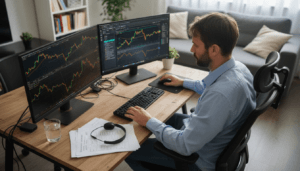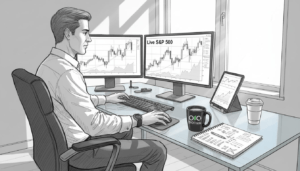












Trading signals promise to simplify market complexity, yet many traders struggle to interpret them correctly. According to industry data, even algorithmic signals carry overfitting risks that can undermine profitability. This guide demystifies trading signals, explaining how they work, their limitations, and practical ways to integrate them into your strategy for Forex, CFDs, and cryptocurrency markets.
สารบัญ
- Introduction To Trading Signals
- How Trading Signals Are Generated
- Manual Vs Automated Trading Signals
- Common Misconceptions About Trading Signals
- A Conceptual Framework For Understanding Trading Signals
- Practical Application And Integration Of Trading Signals
- Enhance Your Trading With Olla Trade
- What Are Trading Signals?
ประเด็นสำคัญ
| จุด | รายละเอียด |
|---|---|
| Signals translate data | Trading signals convert complex market data into actionable buy or sell recommendations. |
| Three main types | Technical, fundamental, and algorithmic signals each serve different trading approaches and market conditions. |
| Automation has limits | Automated signals execute faster and remove emotions but risk overfitting and struggle with sudden market shifts. |
| Never trade blindly | Always backtest signals, confirm with your own analysis, and apply strict risk management before executing trades. |
| Integration improves results | Combining signal types with disciplined strategy and proper position sizing reduces losses and enhances decision clarity. |
Introduction to trading signals
Trading signals are indicators that guide buy or sell decisions by filtering vast amounts of market data into actionable advice. They serve as decision support tools, not infallible predictions, helping traders identify potential entry and exit points in Forex, contracts for difference trading, and cryptocurrency markets.
Both retail and professional traders rely on signals to navigate price volatility and complex market movements. Retail traders often use signals to simplify analysis when time or expertise is limited. Professional traders integrate signals into sophisticated systems for faster execution and portfolio diversification.
Signals support strategy development by:
- Highlighting technical patterns like support and resistance levels
- Flagging fundamental events such as central bank announcements
- Automating repetitive analysis tasks to save time
- Reducing emotional decision making during volatile periods
Understanding the difference between forex vs CFDs differences helps traders select appropriate signal types. Forex signals often focus on currency pair momentum and interest rate differentials, while CFD signals may emphasize broader asset class movements across indices, commodities, or stocks.
Trading signals work best when aligned with your risk tolerance, market focus, and overall trading plan. They are tools for informed decision making, not replacements for sound judgment and discipline.
How trading signals are generated
Trading signals originate from three primary methodologies, each with distinct strengths suited to different market environments.
Technical analysis signals use price and volume data to identify patterns and momentum shifts. Common indicators include:
- Moving averages that smooth price trends and signal crossovers
- Relative Strength Index (RSI) to detect overbought or oversold conditions
- Moving Average Convergence Divergence (MACD) for momentum and trend reversals
- Bollinger Bands to measure volatility and potential breakouts
These signals excel in liquid markets with clear price trends but can generate false positives during choppy, range bound conditions.
Fundamental signals derive from economic news, earnings reports, central bank policies, and geopolitical events. Traders monitor releases like GDP figures, employment data, and inflation reports to anticipate market reactions. Fundamental signals work well for longer term positioning but require quick interpretation skills during high impact announcements.

Algorithmic signals leverage mathematical models and machine learning to identify patterns across massive datasets. Algorithmic trading systems generate automated signals that execute trades within milliseconds, removing emotional bias. However, these systems risk overfitting to historical data and may struggle when market dynamics shift abruptly.
Each signal generation method has situational advantages. Technical signals suit short term traders focused on price action. Fundamental signals benefit position traders with longer horizons. Algorithmic signals appeal to traders prioritizing speed and systematic execution.
The key is matching signal methodology to your trading style, market conditions, and risk parameters. Many successful traders combine multiple signal types to confirm trade setups and reduce false signals. Platforms like trading alerts deliver real time notifications across these methodologies, helping you stay informed without constant chart monitoring.
Manual vs automated trading signals
Manual signals rely on human analysis, intuition, and experience to interpret market data and generate trade recommendations. Traders analyze charts, news, and fundamentals before issuing signals. This approach allows for nuanced judgment and adaptability to unexpected events.
Automated signals use algorithms to scan markets, identify patterns, and execute trades without human intervention. These systems operate 24/7, process vast datasets instantly, and eliminate emotional decision making. Automated trading signals reduce emotional bias but carry risks of overfitting and limited adaptability.
| Factor | Manual Signals | Automated Signals |
|---|---|---|
| Execution speed | Slower, depends on human response time | Instant, millisecond execution |
| Emotional bias | Higher risk of fear and greed influencing decisions | Eliminates emotions, follows rules strictly |
| Adaptability | High, can adjust to sudden market shifts | Limited, struggles with unexpected events |
| เหมาะที่สุดสำหรับ | Experienced traders with market intuition | Traders seeking systematic, high frequency execution |
| Oversight required | Self regulating | Needs regular monitoring and adjustment |
Pro Tip: Combine automated signals with manual oversight for optimal results. Use algorithms to identify opportunities quickly, then apply your judgment to confirm setups and adjust for market context.
Manual signals suit traders who value flexibility and contextual interpretation. You can factor in breaking news, sentiment shifts, and market anomalies that algorithms might miss. However, manual analysis is time intensive and vulnerable to cognitive biases during stressful market periods.
Automated signals excel in fast moving markets where speed determines profitability. They enforce discipline by sticking to predefined rules regardless of market noise. The downside is that past performance optimization can create algorithmic trading risks when market conditions change.
Successful traders often use hybrid approaches. Automated systems handle routine scanning and execution while human oversight manages risk adjustments, position sizing, and strategic decisions. Understanding forex vs CFDs differences helps determine which signal type suits each market’s liquidity and volatility profile.
Common misconceptions about trading signals
Trading signals are powerful tools, but widespread misunderstandings lead many traders astray. Clarifying these misconceptions sets realistic expectations and prevents costly mistakes.
Signals do not guarantee profits. No system achieves 100% accuracy because markets are inherently unpredictable. Even highly regarded signals experience losing streaks. Success depends on risk management, discipline, and proper execution, not just signal accuracy.
Third party signals carry reliability risks. Many signal providers lack transparency about their track records or use cherry picked results to attract subscribers. Relying solely on unverified third party signals increases risk and can lead to significant losses, especially if the provider’s methods are opaque or untested.
Misinterpreting success rates is common. A signal service claiming 70% accuracy might sound impressive, but if the average loss exceeds average gains, overall profitability suffers. Always evaluate risk to reward ratios alongside win rates.
“The most dangerous misconception is treating signals as foolproof predictions rather than probabilistic assessments that require confirmation and risk controls.”
Key misconceptions to avoid:
- Believing signals eliminate the need for personal analysis
- Assuming higher priced signals are more accurate
- Ignoring the importance of backtesting before live trading
- Overestimating signal consistency across different market conditions
- Neglecting position sizing and stop loss placement
Overreliance on signals without understanding market context amplifies losses. Signals work best as part of a comprehensive strategy that includes risk management, market awareness, and continuous learning. Always verify signal providers’ credentials, test their recommendations on demo accounts, and maintain healthy skepticism about performance claims.
Understanding the risks of third party signals protects you from fraudulent schemes and sets appropriate expectations. Signals are decision support tools, not crystal balls.
A conceptual framework for understanding trading signals
Organizing trading signals into clear categories helps traders choose the right approach for different market conditions and objectives. Three main signal types dominate modern trading: technical, fundamental, and sentiment based.
| Signal Type | Source | Best Application | Market Effect |
|---|---|---|---|
| Technical | Price charts, volume, indicators | Pattern recognition, timing entries and exits | Reflects historical price behavior and momentum |
| Fundamental | Economic data, earnings, news | Longer term positioning, macro trend identification | Drives intrinsic value changes |
| Sentiment | Trader positioning, volume shifts, social trends | Contrarian plays, momentum confirmation | Reveals crowd psychology and potential reversals |
Technical signals analyze price and volume data using indicators like moving averages, RSI, and MACD. These signals identify patterns and momentum shifts, making them ideal for short to medium term trading. Technical signals work best in liquid markets with clear trends but generate more noise during range bound periods.
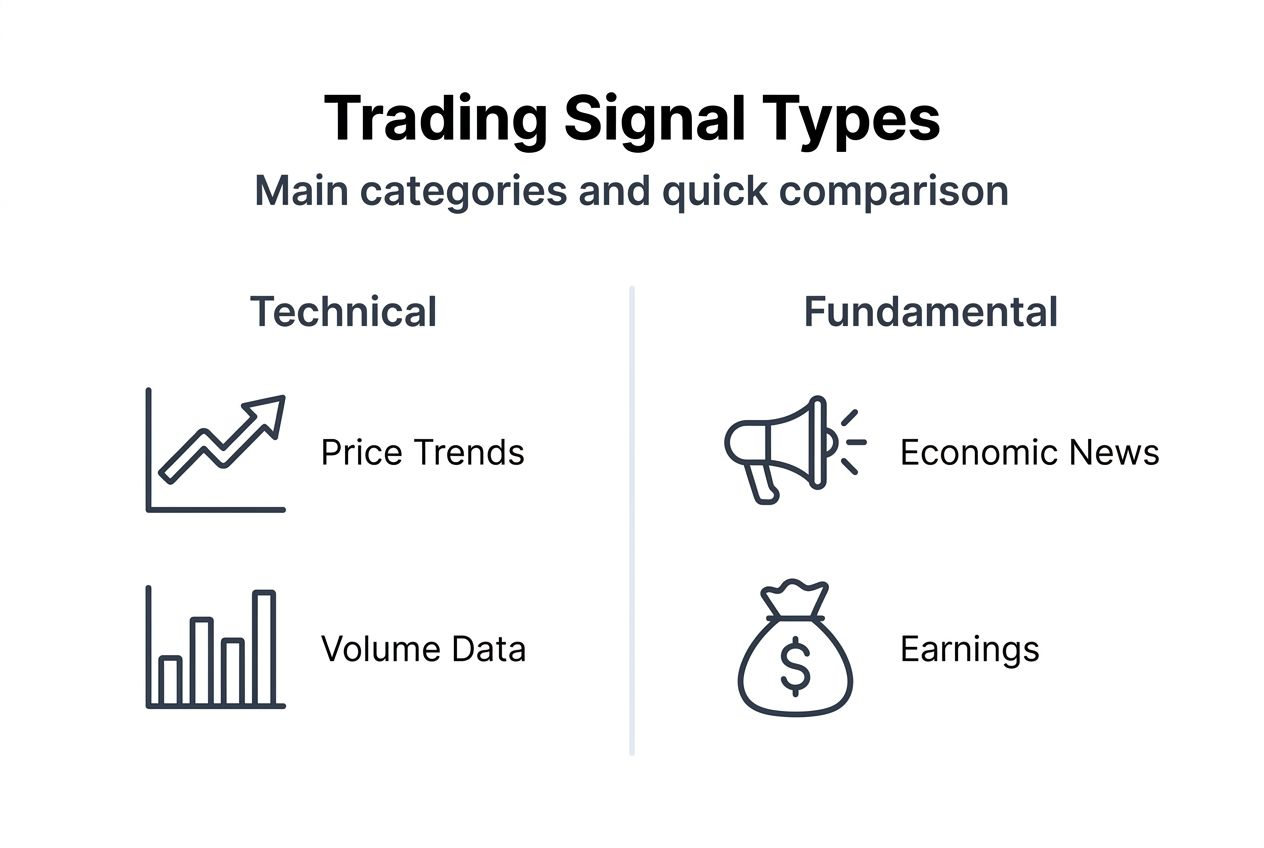
Fundamental signals interpret economic releases, corporate earnings, and policy changes that affect asset valuations. Central bank decisions, GDP reports, and employment data create fundamental signals. These signals suit position traders and investors focusing on weeks to months rather than hours or days.
Sentiment signals measure trader psychology through positioning data, volume analysis, and social media trends. Extreme sentiment often precedes reversals, making these signals valuable for contrarian strategies. Sentiment signals also confirm momentum when crowd behavior aligns with technical and fundamental trends.
Combining signal types increases reliability, especially in volatile markets. For example, a technical breakout confirmed by positive fundamental news and rising bullish sentiment creates higher probability setups. Exploring trading opportunities across multiple signal frameworks helps identify the strongest potential trades.
Matching signal types to your trading timeframe and style improves consistency. Day traders prioritize technical signals for quick decisions. Swing traders blend technical and sentiment analysis. Long term investors emphasize fundamental signals while using technical indicators for entry timing.
This framework simplifies signal selection and helps you build strategies that adapt to changing market conditions without getting overwhelmed by information overload.
Practical application and integration of trading signals
Applying trading signals effectively requires systematic validation, disciplined integration, and robust risk controls. Follow this step by step approach to incorporate signals into your trading strategy:
- Identify your market focus: Choose Forex, CFDs, or cryptocurrencies based on your experience, capital, and risk tolerance.
- Select appropriate signal types: Match technical, fundamental, or sentiment signals to your trading timeframe and style.
- Backtest rigorously: Test signals on historical data using platforms like MetaTrader 4 to evaluate performance across different market conditions.
- Start with demo accounts: Practice executing signals without real capital to refine your process and build confidence.
- Implement strict risk controls: Set stop losses, position sizes, and maximum daily loss limits before taking any live trades.
- Monitor and adjust: Review signal performance regularly and modify your approach as markets evolve.
Backtesting is critical before committing real capital. Use historical price data to simulate how signals would have performed over months or years. Look for consistent profitability across bull markets, bear markets, and sideways periods. Signals that only work in trending markets can devastate your account during consolidation.
Never blindly follow signals, even from reputable sources. Always confirm recommendations with your own analysis. Check if the signal aligns with broader market trends, key support and resistance levels, and upcoming economic events. Independent confirmation reduces false positives and builds your analytical skills.
Pro Tip: Use stop loss orders and proper position sizing to manage risk when trading signals. Risk no more than 1 to 2% of your account per trade, regardless of signal confidence. This approach keeps you solvent through inevitable losing streaks.
Integrate signals with broader market context. A bullish signal during a strong downtrend carries lower probability than the same signal in an uptrend. Consider timeframe alignment: ensure your signal timeframe matches your trading horizon. Day trading signals are irrelevant for swing traders holding positions for days or weeks.
Combine signals with trading discipline. Set rules for when to override signals based on unusual market conditions like major news events or extreme volatility. Document your decisions and review them regularly to identify patterns and improve judgment.
Resources like a smart forex trading strategy provide frameworks for integrating signals into comprehensive trading plans. The goal is turning signals into one component of a systematic approach that includes analysis, execution, and continuous improvement.
Enhance your trading with Olla Trade
Applying the trading signal insights from this guide becomes easier with the right platform and resources. Olla Trade offers tools designed to help you integrate signals effectively into your Forex, CFD, and cryptocurrency trading strategies.
Our platform provides real time market data, advanced charting capabilities, and MetaTrader 4 integration, allowing you to test and execute signal based strategies with precision. Whether you focus on technical patterns, fundamental events, or algorithmic approaches, Olla Trade’s infrastructure supports multiple signal types across diverse markets.
Explore trading platforms features that streamline signal validation and risk management. Access educational resources through การศึกษาด้านการซื้อขายระดับมืออาชีพ to deepen your understanding of signal interpretation and application. Start applying your knowledge with competitive spreads and fast execution on our แพลตฟอร์มการซื้อขายฟอเร็กซ์, where you can combine signals with robust analytical tools for more informed trading decisions.
What are trading signals?
What exactly are trading signals in simple terms?
Trading signals are indicators that suggest when to buy or sell an asset based on technical analysis, fundamental data, or algorithmic models. They translate complex market information into actionable recommendations. Signals don’t guarantee profits but help traders identify potential opportunities and time their entries and exits more effectively.
How do manual and automated trading signals differ?
Manual signals come from human analysts who interpret charts and news, offering flexibility but slower execution. Automated signals use algorithms to scan markets instantly and execute trades without emotions. Manual signals adapt better to unexpected events, while automated signals excel in speed and consistency but struggle with sudden market shifts.
How can I verify if a trading signal is reliable?
Backtest the signal on historical data to check consistency across different market conditions. Verify the provider’s track record with transparent, third party audited results. Test signals on a demo account before risking real capital. Reliable signals show steady performance over time, not just cherry picked winning trades.
Should beginners use trading signals right away?
Beginners should learn basic market analysis before relying on signals. Start by understanding how signals are generated and practice interpreting them on demo accounts. Use signals as learning tools, not autopilot systems. Combine signals with your own research and strict risk management as you build experience.
What are the main risks of relying only on third party signals?
Third party signal providers may lack transparency, use manipulated track records, or disappear after collecting fees. Relying solely on unverified third party signals increases loss risk because you don’t understand the underlying analysis. Always verify credentials, test signals independently, and maintain control over your risk management decisions.
ที่แนะนำ
- ข่าวสารตลาด – Olla Trade
- Trading Symbols Explained: A Quick Beginner’s Guide – Olla Trade
- ซอฟต์แวร์ซื้อขายที่ดีที่สุดสำหรับนักลงทุนรายย่อยและมืออาชีพในปี 2025 – Olla Trade
- วิธีเทรด Forex: 20% ทำกำไรได้มากขึ้นด้วยกลยุทธ์อัจฉริยะ 2026
- Why Silver Could Be the Smartest Investment of This Decade – blackwellonline