











Ringkasan singkat:
- Kecepatan eksekusi memengaruhi selip harga, penawaran ulang, dan kualitas eksekusi, terutama selama pasar yang bergejolak.
- Biaya tersembunyi seperti selisih harga dan pelebaran spread seringkali melebihi spread yang dikutip, sehingga berdampak pada profitabilitas.
- Eksekusi cepat sangat penting selama peristiwa dengan volatilitas tinggi, tetapi kualitas strategi tetaplah penting.
Kecepatan eksekusi yang cepat sering dipasarkan sebagai fitur premium, sesuatu yang hanya benar-benar dibutuhkan oleh divisi algoritmik dan hedge fund. Asumsi tersebut merugikan trader ritel secara finansial. Setiap milidetik keterlambatan antara pesanan Anda dan pasar dapat mengakibatkan slippage, requote, atau bahkan gagal terpenuhi, terutama selama sesi perdagangan yang volatil di mana harga bergeser lebih cepat daripada respons sebagian besar platform. Latensi meningkatkan penawaran ulang dan menurunkan kualitas pengisian untuk strategi otomatis bahkan sebelum pesanan mencapai mesin pencocokan. Panduan ini menguraikan secara detail bagaimana kecepatan eksekusi memengaruhi keuntungan Anda dan apa yang dapat Anda lakukan untuk mengatasinya.
Daftar isi
- Apa itu kecepatan eksekusi dan mengapa hal itu penting?
- Biaya perdagangan tersembunyi: di luar sekadar eksekusi cepat
- Bagaimana penundaan eksekusi dapat mengikis keuntungan Anda
- Saat eksekusi cepat sangat penting: volatilitas dan kasus-kasus ekstrem.
- Apakah kecepatan meningkatkan keterampilan—atau memperbesar kesalahan?
- Mengapa keunggulan trading sejati adalah strategi ditambah kecepatan—bukan hanya kecepatan saja?
- Tingkatkan performa trading Anda dengan platform yang tepat.
- Pertanyaan yang sering diajukan
Poin-Poin Penting
| Titik | Detail |
|---|---|
| Latensi memengaruhi keuntungan | Bahkan keterlambatan beberapa milidetik dapat meningkatkan selip harga dan peluang transaksi yang terlewat, sehingga mengurangi potensi keuntungan. |
| Ukur semua biaya pelaksanaan. | Evaluasi spread, slippage, requote, dan fill rate untuk benar-benar memahami biaya trading. |
| Kecepatan adalah yang terpenting dalam situasi yang penuh gejolak. | Saat terjadi berita atau pasar yang bergerak cepat, kecepatan eksekusi membantu menangkap peluang dan menghindari eksekusi yang mahal. |
| Strategi lebih penting daripada kecepatan semata. | Eksekusi cepat meningkatkan strategi yang kuat, tetapi tidak dapat menggantikan logika yang buruk atau manajemen risiko yang kurang baik. |
Apa itu kecepatan eksekusi dan mengapa hal itu penting?
Kecepatan eksekusi mengacu pada waktu antara saat Anda mengirimkan pesanan dan saat pesanan tersebut dikonfirmasi pada harga tertentu. Dalam istilah teknis, penundaan ini disebut latensi, diukur dalam milidetik. Latensi yang lebih rendah berarti eksekusi yang lebih cepat. Tetapi ini bukan hanya tentang merasakan kecepatan. Konsekuensi sebenarnya terlihat pada eksekusi order Anda, selisih harga, dan konsistensi Anda di ratusan transaksi.
Kelicinan Terjadi ketika harga yang Anda harapkan dan harga yang Anda terima berbeda. Ini hampir selalu disebabkan oleh penundaan. Pada saat pesanan Anda berpindah dari perangkat Anda ke server broker dan kemudian ke penyedia likuiditas, harga telah berubah. Pada pasangan Forex yang bergerak cepat seperti EUR/USD selama peristiwa berita, bahkan penundaan 50 milidetik dapat berarti perbedaan 2 hingga 5 pip dalam eksekusi pesanan Anda. Lebih dari 200 transaksi per bulan, itu akan bertambah dengan cepat.
Kutipan ulang Re-quote adalah cara broker untuk mengatakan, “Harga itu sudah tidak berlaku, apakah Anda menginginkan harga ini sebagai gantinya?” Hal ini terjadi ketika eksekusi terlalu lambat untuk mengunci harga yang Anda minta. Re-quote sangat merugikan scalper dan strategi frekuensi tinggi karena harga penggantinya hampir selalu lebih buruk.
“Lingkungan perdagangan profesional beroperasi dalam rentang latensi 2 hingga 3 milidetik; latensi yang lebih lambat memicu lebih banyak penawaran ulang dan eksekusi pesanan yang lebih buruk.”
Berikut tampilan latensi eksekusi di berbagai lingkungan:
| Lingkungan eksekusi | Latensi tipikal | Dampak umum |
|---|---|---|
| VPS yang berlokasi di dekat bursa. | 1 hingga 5 ms | Hampir tidak ada selip pada sebagian besar timbunan. |
| Pialang ritel standar | 30 hingga 100 ms | Selisih harga sedang, penawaran ulang sesekali. |
| Aplikasi seluler di jaringan 4G | 100 hingga 500 ms | Risiko selip harga tinggi, seringnya penawaran ulang harga. |
| VPN lambat atau internet buruk | 500 ms atau lebih | Kegagalan eksekusi dan transaksi yang terlewatkan |
Jika Anda menggunakan perdagangan multi-perangkat yang lebih cepat, Perangkat dan tumpukan konektivitas yang Anda pilih secara langsung membentuk dasar latensi Anda. Bagi para trader yang menggunakan Expert Advisor atau lainnya sistem perdagangan otomatis, Latensi bukan hanya masalah kenyamanan. Ini adalah perbedaan antara strategi Anda berhasil atau terus-menerus kehilangan modal dari transaksi ke transaksi.
Istilah-istilah penting yang harus dipahami setiap trader:
- Latensi: Jeda waktu antara pengajuan pesanan dan konfirmasi eksekusi
- Kelicinan: Selisih antara harga pengisian yang diharapkan dan harga pengisian sebenarnya.
- Kutipan ulang: Harga pengganti yang ditawarkan ketika barang asli sudah tidak tersedia lagi.
- Tingkat pengisian: Persentase pesanan yang terpenuhi pada atau mendekati harga target Anda
- Penolakan pesanan: Ketika broker tidak dapat memenuhi pesanan Anda dengan harga terdekat mana pun.
Biaya perdagangan tersembunyi: di luar sekadar eksekusi cepat
Memahami kecepatan mentah adalah hal mendasar, tetapi itu hanyalah satu bagian dari teka-teki biaya. Mari kita uraikan lapisan tersembunyi yang seringkali tidak disadari.
Kecepatan memang paling banyak mendapat perhatian pemasaran, tetapi kualitas eksekusi Kecepatan sebenarnya merupakan metrik gabungan. Ini mencakup spread, slippage, requote dan penolakan, serta lonjakan biaya selama volatilitas. Melihat kecepatan saja memberikan gambaran yang tidak lengkap dan seringkali menyesatkan tentang apa yang sebenarnya Anda bayarkan per transaksi.
Berikut perbandingan antara apa yang biasanya pedagang pikir mereka bayarkan dengan apa yang sebenarnya mereka bayarkan:
| Jenis biaya | Apa yang paling banyak dilacak oleh para trader | Apa yang mereka lewatkan |
|---|---|---|
| Menyebar | Selisih harga yang tertera pada tiket | Penyebarannya semakin meluas selama pemberitaan. |
| Kelicinan | Pengisian yang buruk sesekali | Pola selip negatif sistematis |
| Kutipan ulang | Peristiwa perdagangan manual yang langka | Lonjakan frekuensi selama sesi volume tinggi |
| Tingkat pengisian | “Pesanan saya terpenuhi” | % pengisian dalam jarak 1 pip dari target |
Bagian yang berbahaya adalah banyak trader melihat spread yang mereka dapatkan dan percaya bahwa itu adalah biaya penuh mereka. Untuk strategi trading EUR/USD dengan spread 0,5 pip, biaya eksekusi sebenarnya setelah slippage, requote sesekali, dan pelebaran spread selama berita bisa 2 hingga 3 kali lebih tinggi. Itu mengubah perhitungan pada strategi apa pun. strategi memaksimalkan keuntungan sangat.

Tips Pro: Ambil 50 eksekusi perdagangan terakhir Anda dan hitung rata-rata selisih antara harga masuk yang Anda harapkan dan harga eksekusi aktual Anda. Jika rata-rata tersebut lebih dari 1 pip pada pasangan mata uang utama, eksekusi Anda merugikan Anda lebih dari yang Anda sadari. Ini adalah salah satu teknik yang paling jarang digunakan. praktik kinerja pedagang tersedia untuk pedagang ritel.
Metrik yang sebenarnya harus Anda pantau meliputi:
- Tingkat pengisian: Berapa persentase pesanan Anda yang terisi pada atau dalam jarak 1 pip dari target?
- Distribusi selip: Apakah selip terjadi secara acak, ataukah selalu merugikan Anda?
- Frekuensi kutipan ulang: Seberapa sering Anda ditawari harga pengganti?
- Tingkat penolakan: Seberapa sering pesanan tidak dipenuhi sama sekali?
- Selisih rata-rata versus selisih harga yang dikutip: Apakah Anda selalu mendapatkan jumlah olesan yang diiklankan secara konsisten?
Dalam istilah pemasaran, hanya berfokus pada "eksekusi cepat" tanpa memeriksa angka-angka aktual sama seperti membeli mobil hanya berdasarkan kecepatan maksimal tanpa memperhatikan efisiensi bahan bakar, jarak pengereman, dan keausan ban.
Bagaimana penundaan eksekusi dapat mengikis keuntungan Anda
Setelah Anda mengetahui apa yang perlu diukur, saatnya untuk melihat bagaimana penundaan secara langsung mengurangi keuntungan aktual dibandingkan dengan prediksi pengujian historis Anda.
Di sinilah konsepnya kekurangan implementasi menjadi sangat penting. Kekurangan implementasi adalah kesenjangan antara pengembalian teoritis suatu strategi (seperti yang terlihat dalam backtest) dan pengembalian aktual yang dicapai dalam perdagangan langsung. Keterlambatan eksekusi adalah salah satu kontributor terbesar terhadap kesenjangan ini.
Berikut cara kekurangan implementasi menumpuk dalam praktiknya:
- Sinyalmu menyala. Strategi Anda mengidentifikasi peluang perdagangan pada harga tertentu.
- Pesanan telah dikirim. Pesanan tersebut meninggalkan platform Anda dan dikirim ke server broker.
- Latensi menimbulkan penundaan. Selama penundaan ini, harga dapat bergerak beberapa pip saja di pasar yang aktif.
- Anda menerima hasil pengisian yang lebih buruk. Titik masuk Anda sekarang berjarak 1 hingga 3 pip dari harga yang Anda inginkan.
- Senyawa anti selip. Hal yang sama terjadi saat Anda keluar dari posisi. Sekarang Anda tertinggal 2 hingga 6 pip dari model Anda.
- Kalikan di ratusan bidang perdagangan. Selisih antara hasil backtest dan performa langsung Anda akan berubah menjadi hambatan pengembalian yang signifikan.
“Keterlambatan eksekusi mengakibatkan selip harga, kegagalan pemenuhan pesanan, dan biaya peluang.” Hal itu mengurangi keuntungan dibandingkan dengan proyeksi hasil backtest.
Statistik utama: Strategi dengan tingkat kemenangan yang dimodelkan sebesar 54% dan rasio imbalan terhadap risiko rata-rata 1,5:1 dapat menjadi impas atau merugi jika slippage rata-rata secara konsisten mencapai 1,5 hingga 2 pip per perdagangan. Perhitungannya sangat ketat dalam skala besar.
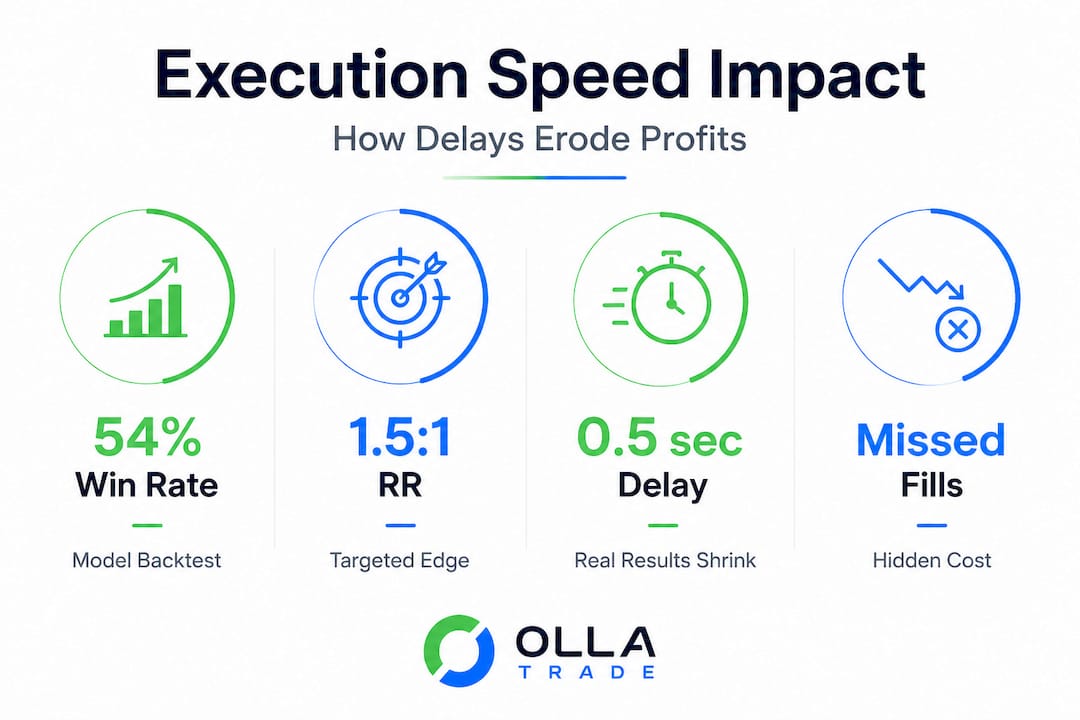
Kegagalan eksekusi order juga membawa biaya peluang tersembunyi yang diabaikan sepenuhnya oleh sebagian besar trader. Jika order Anda tidak dieksekusi karena harga melewati level Anda terlalu cepat, Anda tidak mencatat kerugian. Tetapi Anda juga tidak mencatat keuntungan yang diproyeksikan oleh model Anda. Seiring waktu, peluang yang terlewatkan tersebut menurunkan keuntungan aktual Anda jauh di bawah ekspektasi yang telah Anda uji sebelumnya.
Cara praktis untuk mengurangi kesenjangan ini meliputi: mengoptimalkan alur kerja perdagangan langsung Anda dengan meninjau jenis pesanan Anda, waktu sesi, dan infrastruktur platform. Beralih dari pesanan pasar ke pesanan batas dalam kondisi stabil mengurangi slippage. Menggunakan koneksi data yang lebih cepat atau server VPS secara signifikan mengurangi latensi.
Saat eksekusi cepat sangat penting: volatilitas dan kasus-kasus ekstrem.
Tidak setiap detik perdagangan itu sama: terkadang penundaan kecil dapat berdampak besar. Di sinilah eksekusi cepat benar-benar menjadi faktor penentu.
Ada kondisi pasar tertentu di mana kecepatan eksekusi berhenti menjadi pertimbangan sekunder dan menjadi variabel utama yang menentukan profitabilitas. Memahami kondisi-kondisi ini memungkinkan Anda untuk bersiap, bukan bereaksi.
| Acara pasar | Mengapa eksekusi itu penting? | Dampak umum dari penundaan |
|---|---|---|
| Siaran pers ekonomi | Selisih harga melebar dan harga melonjak dalam hitungan milidetik. | Kemungkinan terjadi selip 5 hingga 15 pip. |
| Sesi pasar dibuka | Kesenjangan likuiditas menciptakan dislokasi harga secara instan. | Penawaran ulang dan pengisian celah adalah hal yang umum. |
| Pengalihan semalam | Likuiditas yang tipis memperparah pelebaran spread. | Posisi terisi dengan harga yang jauh lebih rendah dari harga sebenarnya. |
| Peristiwa crash kilat | Kedalaman pasar lenyap seketika. | Pesanan dieksekusi pada harga ekstrem atau tidak dieksekusi sama sekali. |
Dalam kondisi volatilitas tinggi, spread melebar dan slippage serta requote menjadi biaya dominan. Saat itulah nilai eksekusi cepat meningkat tajam. Perbedaan 30 milidetik yang merugikan Anda setengah pip di pasar yang tenang mungkin merugikan Anda 5 hingga 10 pip selama pengumuman penting bank sentral.
Situasi-situasi penting yang menuntut eksekusi secepat mungkin dari Anda:
- Data Non-Farm Payroll dan keputusan suku bunga bank sentral: Peristiwa-peristiwa ini dapat menggerakkan pasangan mata uang utama sebanyak 50 hingga 150 pip dalam waktu kurang dari 30 detik.
- Sesi di London dan New York dibuka: Likuiditas meningkat, tetapi volatilitas juga meningkat, menciptakan peluang eksekusi yang cepat tertutup.
- Berita geopolitik yang muncul di luar jam kerja: Pasar yang tipis berarti selisih antara harga beli dan harga jual dapat meningkat tiga kali lipat secara instan.
- Rilis laporan keuangan saham CFD: Selisih harga saat pembukaan dapat menyebabkan pesanan yang telah ditempatkan sebelumnya dieksekusi jauh dari level yang diinginkan.
Tips Profesional: Sebelum acara besar yang dijadwalkan, tinjau platform Anda. kebijakan pelaksanaan pesanan Untuk memahami bagaimana broker Anda menangani aliran order selama volatilitas tinggi. Beberapa broker beralih ke eksekusi "market range" selama adanya berita, yang dapat melindungi Anda dari slippage ekstrem. Mengetahui hal ini sebelumnya memungkinkan Anda untuk menetapkan ekspektasi yang realistis dan memilih jenis order Anda dengan bijak.
Menguji kinerja eksekusi Anda cukup mudah. Tempatkan serangkaian order kecil secara langsung selama periode volatilitas yang diketahui, seperti 5 menit pertama setelah rilis data penting, dan bandingkan eksekusi order Anda dengan harga yang ditampilkan pada grafik Anda pada saat pengiriman. Jika slippage secara konsisten melebihi 2 pip pada pasangan mata uang utama, pengaturan Anda perlu diperbaiki.
Apakah kecepatan meningkatkan keterampilan—atau memperbesar kesalahan?
Terakhir, mari kita bahas sebuah godaan: kecepatan berpikir adalah obat mujarab. Sebaliknya, lihat bagaimana keterampilan dan strategi berinteraksi dengan eksekusi.
Kecepatan tanpa strategi hanyalah cara tercepat untuk mencapai hasil yang salah. Inilah wawasan yang diam-diam diabaikan oleh sebagian besar pemasaran yang berfokus pada kecepatan eksekusi. Alat-alat yang memaksimalkan keunggulan Anda di sekitar strategi perdagangan penting Kerangka strategi, model penentuan ukuran posisi, dan aturan risiko yang disiplin merupakan landasan utamanya. Kecepatan eksekusi dibangun di atas fondasi tersebut.
Apa artinya ini dalam praktiknya:
- Strategi scalping dengan keunggulan statistik yang nyata akan menjadi jauh lebih menguntungkan dengan eksekusi yang cepat.
- Strategi dengan logika sinyal yang lemah menjadi lebih cepat kalah bila dipasangkan dengan latensi rendah
- Sistem manajemen risiko yang memangkas transaksi yang merugi sejak dini lebih penting untuk keuntungan jangka panjang daripada mengurangi 20 milidetik dari waktu eksekusi rata-rata.
- Dengan baik mengelola posisi perdagangan Anda tetap menjadi aktivitas dengan daya ungkit tertinggi bagi sebagian besar pedagang ritel.
Anggaplah kecepatan eksekusi sebagai pengali kekuatan. Pengali kekuatan mengambil apa yang sudah Anda miliki dan meningkatkannya. Jika fondasi Anda kokoh, kecepatan akan melipatgandakan keunggulan Anda. Jika fondasi Anda retak, kecepatan akan memperlebar retakan tersebut. Para trader yang hanya berinvestasi pada eksekusi yang lebih cepat tanpa mengaudit logika strategi mereka yang sebenarnya sering menemukan bahwa mereka telah membangun mesin yang sangat efisien tetapi mengarah ke arah yang salah.
Pendekatan disiplin memperlakukan kecepatan sebagai prasyarat, bukan pengganti. Anda membutuhkan kualitas eksekusi yang memadai untuk bersaing. Tetapi di luar "cukup baik," peningkatan kecepatan tambahan menawarkan pengembalian yang semakin berkurang bagi sebagian besar pedagang diskresioner dan semi-otomatis. Pengungkit sebenarnya berasal dari memperketat aturan strategi Anda, meningkatkan kualitas sinyal Anda, dan membangun sistem risiko yang kuat.
Mengapa keunggulan trading sejati adalah strategi ditambah kecepatan—bukan hanya kecepatan saja?
Berikut pandangan yang jarang muncul di forum perdagangan dan kampanye iklan broker: obsesi terhadap milidetik sering kali menutupi ketidaknyamanan yang lebih dalam terhadap kerja keras dalam membangun keunggulan kompetitif.
Jauh lebih mudah untuk meningkatkan VPS Anda atau mengganti broker daripada menghabiskan 40 jam untuk mengaudit tingkat kemenangan aktual strategi Anda dan menyesuaikan parameter risiko Anda. Peningkatan kecepatan bersifat nyata dan langsung. Peningkatan strategi lambat, tidak nyaman, dan merendahkan hati. Jadi para trader memilih solusi cepat.
Kenyataan yang tidak menyenangkan adalah bahwa eksekusi tercepat di dunia pun tidak dapat menyelamatkan strategi tanpa keunggulan statistik yang nyata. Dan sebagian besar trader ritel belum pernah menguji secara ketat apakah pendekatan mereka memiliki keunggulan tersebut sama sekali. Sebelum berinvestasi dalam peningkatan eksekusi, ada baiknya untuk secara jujur memeriksa apakah Anda berdagang dengan disiplin atau berjudi berdasarkan intuisi.
Para trader yang sukses dalam jangka panjang menganggap kualitas eksekusi sebagai faktor kebersihan. Kualitas eksekusi harus berada pada level tertentu agar dapat beroperasi secara efektif. Setelah mencapai level tersebut, perhatian kembali tertuju pada tempat alpha sebenarnya berada: pengenalan pola, pemikiran pengembalian yang disesuaikan dengan risiko, dan konsistensi perilaku selama ratusan transaksi. Kecepatan itu penting. Tetapi kecepatan paling penting ketika semua hal lainnya sudah teratur.
Tingkatkan performa trading Anda dengan platform yang tepat.
Siap menerapkan wawasan ini dalam praktik? Platform yang tepat dapat menjadi sekutu Anda dalam mempercepat eksekusi, dan masih banyak lagi.
Di Olla Trade, eksekusi cepat terintegrasi ke dalam arsitektur platform, bukan ditambahkan sebagai tingkatan premium. Platform ini dirancang untuk para trader yang berorientasi strategi dan memahami bahwa kecepatan, spread, dan kualitas eksekusi semuanya bekerja bersama untuk menentukan profitabilitas sebenarnya.
Jelajahi fitur platform Dirancang untuk meminimalkan biaya perdagangan riil Anda di Forex, logam mulia, indeks, dan mata uang kripto. Jika Anda ingin memahami ekosistem secara keseluruhan sebelum berkomitmen, panduan lengkap platform perdagangan memandu Anda melalui setiap alat yang tersedia. Bagi para trader yang fokus khusus pada pasar mata uang, Olla Trade memiliki Alat perdagangan Forex Menawarkan spread ketat dan eksekusi cepat yang dirancang untuk strategi diskresioner maupun otomatis. Langkah selanjutnya menuju eksekusi yang lebih baik dimulai di sini.
Pertanyaan yang sering diajukan
Apakah eksekusi cepat selalu menghasilkan hasil perdagangan yang lebih baik?
Tidak selalu. Eksekusi cepat membantu mengurangi selip harga dan penawaran ulang, tetapi hasil yang menguntungkan bergantung pada kualitas strategi, jenis pesanan, dan total biaya perdagangan yang bekerja bersama-sama.
Bagaimana para trader dapat mengukur apakah kecepatan eksekusi mereka cukup cepat?
Pantau selisih harga, tingkat pengisian, dan frekuensi penawaran ulang di setidaknya 50 transaksi. Model kualitas eksekusi yang solid mencakup spread, selisih harga, dan biaya penolakan, bukan hanya waktu saja.
Mengapa hasil trading langsung sering mengecewakan dibandingkan dengan backtest?
Pengujian retrospektif biasanya meremehkan slippage, latensi, dan kegagalan pengisian data. Gesekan eksekusi tersembunyi ini secara konsisten mengurangi kinerja aktual di bawah proyeksi model.
Apakah ada saat-saat di mana eksekusi cepat menjadi sangat penting?
Ya. Selama rilis berita, pembukaan sesi, dan lonjakan volatilitas, spread melebar dan requote melonjak, menjadikan kecepatan eksekusi sebagai penentu utama apakah Anda menerima eksekusi yang wajar atau yang mahal.
Direkomendasikan
- Tips trading terbukti: tingkatkan hasil Anda lebih cepat di tahun 2026
- Mengapa menggunakan perdagangan multi-perangkat untuk transaksi yang lebih cepat di tahun 2026?
- Kuasai fitur-fitur utama platform perdagangan untuk hasil yang lebih baik.
- Apa itu scalping? Strategi kunci untuk kesuksesan trading cepat.