











Ringkasan singkat:
- Memiliki banyak saham tidak menjamin diversifikasi yang luas karena konsentrasi kapitalisasi pasar.
- Indeks seringkali memiliki risiko konsentrasi tersembunyi, dengan saham-saham unggulan mendominasi, sehingga mengurangi diversifikasi yang efektif.
- Pemantauan rutin, penyeimbangan ulang, dan pemahaman komposisi indeks meningkatkan manajemen risiko dan kinerja portofolio.
Memiliki 500 saham terdengar seperti diversifikasi yang solid, tetapi perhitungan matematisnya menunjukkan cerita yang lebih rumit. 10 saham teratas S&P 500 Saat ini, indeks tersebut memiliki bobot sekitar 371 TP3T dari keseluruhan indeks, sebuah angka tertinggi dalam sejarah dibandingkan dengan rata-rata jangka panjang sebesar 21,51 TP3T, yang berarti Anda secara efektif terpapar sekitar 59 posisi risiko unik, bukan 500. Data tunggal ini menantang salah satu keyakinan yang paling umum dalam investasi modern. Artikel ini menguraikan apa yang sebenarnya dilakukan indeks di dalam portofolio, di mana indeks benar-benar mengurangi risiko, di mana indeks menciptakan konsentrasi tersembunyi, dan bagaimana baik trader ritel maupun profesional dapat menggunakannya secara lebih cermat untuk membangun portofolio yang lebih kuat dan terkalibrasi dengan lebih baik.
Daftar isi
- Apa itu indeks dan mengapa indeks penting?
- Diversifikasi: Manfaat dan ilusi indeks
- Alat yang sangat diperlukan untuk manajemen dan alokasi risiko.
- Praktik terbaik untuk membangun portofolio berbasis indeks
- Hal yang paling sering dilewatkan oleh para trader tentang indeks dalam perancangan portofolio.
- Manfaatkan indeks untuk pergerakan portofolio yang lebih cerdas dengan Olla Trade.
- Pertanyaan yang sering diajukan
Poin-Poin Penting
| Titik | Detail |
|---|---|
| Indeks adalah alat inti. | Indeks berperan sebagai dasar manajemen risiko dan diversifikasi di sebagian besar portofolio. |
| Terdapat batasan diversifikasi. | Tidak semua indeks memberikan diversifikasi yang sama; risiko konsentrasi dapat merusak strategi Anda. |
| Peninjauan berkelanjutan sangat penting. | Pantau dan seimbangkan kembali portofolio berbasis indeks secara berkala untuk beradaptasi dengan perubahan pasar. |
| Strategi berbeda untuk trader yang berbeda. | Para trader ritel dan profesional harus menyesuaikan penggunaan indeks mereka berdasarkan tujuan, biaya, dan risiko benchmark. |
Apa itu indeks dan mengapa indeks penting?
Pada tingkat paling dasar, indeks keuangan adalah sekumpulan aset yang dipilih dan diberi bobot sesuai dengan seperangkat aturan tertentu. Beberapa melacak seluruh pasar. Lainnya berfokus pada sektor, geografi, atau faktor investasi seperti nilai atau momentum. Memahami Apa itu indeks pasar saham? Indeks merupakan titik awal bagi setiap keputusan portofolio yang serius, karena indeks membentuk bagaimana aliran modal, bagaimana kinerja diukur, dan bagaimana risiko dikategorikan di seluruh industri.
Indeks memiliki tiga fungsi yang saling tumpang tindih dalam portofolio perdagangan atau investasi:
- Pembandingan kinerja: Indeks memberikan titik acuan bagi para trader dan manajer dana untuk mengukur apakah keputusan aktif menambah atau mengurangi nilai. Tanpa tolok ukur, kinerja yang lebih baik tidak memiliki arti.
- Alokasi aset: Dengan mengkategorikan aset ke dalam kelompok yang terukur, indeks mempermudah penetapan dan penegakan alokasi target di berbagai kelas aset, wilayah, dan tingkat risiko.
- Penyusunan strategi secara sistematis: Strategi berbasis aturan, mulai dari ETF pasif hingga dana kuantitatif, bergantung pada metodologi indeks untuk menentukan ukuran posisi, kriteria masuk, dan pemicu penyeimbangan ulang.
Tiga metrik kunci selalu muncul ketika indeks pemahaman dalam konteks manajemen risiko. Yang Rasio Sharpe mengukur seberapa besar imbal hasil yang Anda peroleh per unit risiko, yang menjadikannya alat standar untuk membandingkan indeks atau portofolio yang memiliki tingkat volatilitas berbeda. Beta Beta menunjukkan seberapa sensitif portofolio Anda terhadap pergerakan pasar secara keseluruhan. Beta 1,2 berarti portofolio Anda biasanya bergerak 20% lebih banyak daripada tolok ukur ke arah mana pun. Alfa mengukur imbal hasil yang dihasilkan di luar apa yang diprediksi oleh beta saja, yang pada dasarnya adalah nilai tambah yang dihasilkan oleh pemilihan aktif atau keputusan pengaturan waktu.
Dana institusional besar, pengelola dana pensiun, dan pedagang ritel berpengalaman semuanya mengatur portofolio mereka berdasarkan eksposur indeks karena indeks menyediakan kerangka kerja yang terstruktur, transparan, dan dapat direplikasi. Indeks tidak terpengaruh emosi. Indeks tidak memberikan bobot berlebih pada satu saham karena seorang manajer yakin saham tersebut undervalued. Disiplin tersebut, yang tertanam dalam metodologi, adalah alasan utama mengapa indeks tetap menjadi pusat dalam membangun portofolio investasi yang terdiversifikasi untuk manajemen risiko, alokasi aset, dan tolok ukur di seluruh rasio Sharpe, beta, dan alpha.
Diversifikasi: Manfaat dan ilusi indeks
Setelah Anda memahami mekanisme intinya, penting untuk memeriksa apakah indeks menyebarkan risiko seluas yang umumnya diyakini.
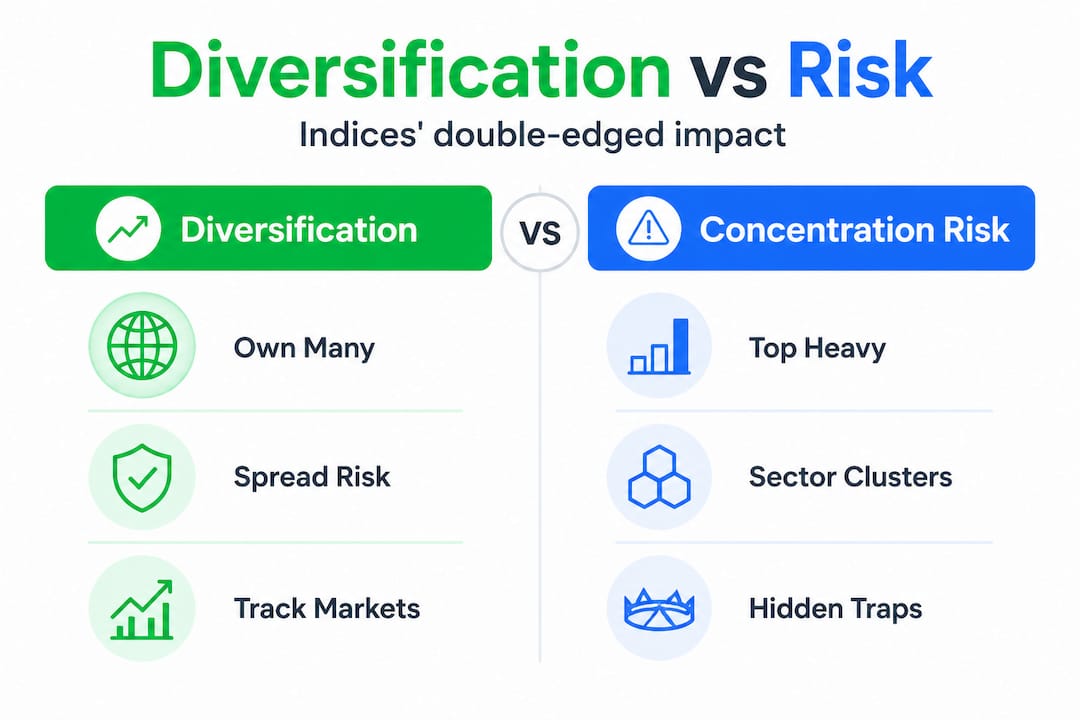
Janji investasi indeks itu sederhana: miliki semuanya, dan tidak ada satu pun taruhan buruk yang dapat merugikan Anda secara signifikan. Namun dalam praktiknya, pembobotan berdasarkan kapitalisasi pasar melemahkan janji tersebut. Pembobotan berdasarkan kapitalisasi pasar berarti saham-saham yang telah mengalami kenaikan paling besar akan menguasai porsi terbesar dalam indeks. Jadi, semakin mahal sekelompok kecil saham, semakin besar eksposur yang didapatkan setiap investor indeks terhadap kelompok saham tersebut, secara otomatis dan tanpa keputusan aktif apa pun.
Berikut gambaran sekilas tentang seperti apa konsentrasi di dalam indeks-indeks utama saat ini:
| Indeks | 10 Saham Teratas Berdasarkan Bobot | Jumlah kepemilikan efektif | Catatan |
|---|---|---|---|
| Indeks S&P 500 | ~37% | ~59 | Rekor tertinggi sepanjang sejarah; rata-rata jangka panjang 21,5% |
| MSCI Dunia | ~24% | ~180 | Masih didominasi oleh perusahaan-perusahaan mega-kapitalisasi AS. |
| Pasar Berkembang MSCI | ~18% | ~300+ | Penyebaran makro yang lebih baik, lebih banyak sektor. |
| Russell tahun 2000 | ~6% | ~1,400 | Luasnya cakupan saham berkapitalisasi kecil yang sesungguhnya. |
Data tersebut memperjelas satu hal. Diversifikasi yang luas memerlukan pertimbangan terhadap hal-hal berikut: efektif Jumlah posisi independen, bukan jumlah saham mentah. Seperti yang ditunjukkan data konsentrasi, 10 saham teratas S&P 500 sekarang memiliki bobot sekitar 37%, tertinggi dalam sejarah modern, sementara diversifikasi efektif turun menjadi sekitar 59 saham, bukan 500 seperti yang tersirat dalam namanya. Indeks pasar negara berkembang, sebaliknya, cenderung mendistribusikan bobot secara lebih merata di berbagai ekonomi, sektor, dan mata uang, menambahkan diversifikasi makro nyata yang seringkali kurang dimiliki oleh portofolio yang didominasi AS.
“Ilusi diversifikasi lebih berbahaya daripada tidak melakukan diversifikasi sama sekali, karena hal itu menumbuhkan kepercayaan diri palsu pada portofolio yang sebenarnya terkonsentrasi secara diam-diam.” Ini berlaku langsung untuk investor indeks yang berasumsi bahwa jumlah kepemilikan atas nama suatu reksa dana mencerminkan penyebaran risiko aktual mereka.
Tips Pro: Periksa "N efektif" atau indeks Herfindahl dari reksa dana indeks Anda. Banyak penyedia ETF mempublikasikan metrik ini dalam dokumentasi reksa dana mereka. Ini adalah ukuran diversifikasi nyata yang jauh lebih baik daripada jumlah saham yang tercantum di judul.
Apakah konsentrasi secara otomatis merugikan kinerja? Tidak selalu, dan itulah yang membuat hal ini rumit. Secara empiris, 10 saham S&P teratas sesuai dengan rasio Sharpe indeks penuh dari tahun 1979 hingga 2024 (0,43 vs. 0,42), tetapi dengan volatilitas yang jauh lebih tinggi. Kinerja unggul baru-baru ini oleh saham teknologi berkapitalisasi besar bersifat spesifik rezim, artinya hal itu berhasil dalam kondisi makro tertentu yang tidak akan selalu bertahan. Memadukan indeks saham berkapitalisasi besar AS dengan indeks pasar negara berkembang, dan idealnya indeks saham berkapitalisasi kecil, adalah salah satu cara untuk mengakses informasi yang lebih baik. strategi perdagangan indeks yang mengelola risiko konsentrasi struktural ini.

Alat yang sangat diperlukan untuk manajemen dan alokasi risiko.
Beralih dari gambaran diversifikasi, mari kita periksa di mana indeks memberikan nilai yang paling jelas dan terukur: dalam manajemen risiko yang disiplin dan berkelanjutan serta alokasi aset yang sistematis.
Indeks membuat penyeimbangan ulang menjadi lebih mudah dikelola. Tanpa tolok ukur indeks yang jelas, "penyeimbangan ulang" adalah konsep yang samar. Dengan adanya tolok ukur tersebut, prosesnya menjadi mekanis yang tepat. Ketika alokasi ekuitas Anda melampaui target karena pasar menguat, Anda tahu persis apa yang perlu dikurangi dan apa yang perlu dibeli untuk mengembalikan keseimbangan. Studi secara konsisten menunjukkan bahwa penyeimbangan ulang yang disiplin berdasarkan indeks menambahkan sekitar 0,5% hingga 1% dalam pengembalian tahunan yang disesuaikan dengan risiko dibandingkan dengan portofolio yang tidak dikelola, hanya dengan menerapkan perilaku beli rendah/jual tinggi secara sistematis.
Berikut perbandingan bagaimana trader ritel dan profesional biasanya menggunakan indeks dalam struktur portofolio mereka:
| Mendekati | Ritel (model 3 dana) | Profesional (inti-satelit) |
|---|---|---|
| Kepemilikan inti | Indeks pasar total + indeks internasional + indeks obligasi | ETF indeks luas sebagai inti 60-80% |
| Satelit | Taruhan sektor kecil atau tanpa taruhan sama sekali | Posisi aktif, alternatif, lapisan taktis |
| Pemicu penyeimbangan ulang | Berbasis waktu (tahunan atau setengah tahunan) | Berbasis pergeseran (misalnya, ambang batas 5%) |
| Fokus pada pembandingan kinerja | Kalahkan inflasi, samakan dengan indeks. | Melampaui tolok ukur, mengelola kesalahan pelacakan |
| Metrik risiko utama | Volatilitas portofolio vs. target | Beta, alfa, rasio informasi |
Prinsip-prinsip inti yang dimiliki kedua pendekatan tersebut meliputi:
- Pengambilan keputusan berdasarkan aturan: Indeks menghilangkan emosi dari alokasi. Anda tidak memberikan bobot lebih pada suatu sektor hanya karena terasa tepat untuk kuartal ini.
- Pengendalian biaya yang transparan: Instrumen pelacak indeks biasanya hanya membutuhkan sebagian kecil biaya dibandingkan pengelolaan aktif, sehingga lebih banyak keuntungan kotor Anda yang dapat dipertahankan.
- Pembandingan kinerja yang berkelanjutan: Membandingkan secara teratur indeks dalam perdagangan Perbandingan antara rasio Sharpe, beta, dan alpha yang terealisasi dalam portofolio Anda akan mengungkapkan apakah strategi investasi aktif Anda memberikan nilai tambah atau hanya menambah biaya.
- Pemantauan pergeseran indeks: Para profesional mengamati ketika komposisi dasar suatu indeks bergeser secara signifikan, misalnya ketika bobot suatu sektor berlipat ganda karena tren kenaikan pasar saham. Pergeseran tersebut mengubah eksposur risiko aktual Anda bahkan jika Anda belum melakukan satu pun transaksi perdagangan.
Salah satu aplikasi praktis dari pemantauan pergeseran (drift monitoring): ketika bobot sektor teknologi dalam S&P 500 melonjak antara tahun 2020 dan 2023, beta portofolio relatif terhadap indeks tersebut sebenarnya meremehkan risiko sektor teknologi. Para profesional yang menangkap pergeseran tersebut menambahkan penyesuaian defensif atau mengurangi eksposur indeks secara proaktif. Para pedagang ritel yang mengabaikannya terbangun pada tahun 2022 dengan penurunan nilai portofolio yang terasa lebih besar daripada yang diperkirakan oleh tolok ukur mereka.
Praktik terbaik untuk membangun portofolio berbasis indeks
Setelah mengeksplorasi bagaimana indeks membentuk manajemen risiko, berikut adalah kerangka kerja praktis untuk membangun portofolio yang kuat dan berbasis indeks baik di tingkat ritel maupun profesional.
Titik awal bagi investor ritel: portofolio global yang terdiri dari 3 reksa dana. Investor ritel sangat diuntungkan dengan menjaga segala sesuatunya tetap sederhana dan sistematis. Struktur tiga reksa dana yang dibangun dari indeks pasar AS secara keseluruhan, indeks pasar negara maju internasional, dan indeks obligasi yang luas mampu mencakup diversifikasi global dengan rasio biaya serendah 0,03%. Pada tingkat biaya tersebut, perhitungannya hampir selalu menguntungkan. strategi portofolio indeks seleksi aktif yang berlebihan untuk inti portofolio.
Pendekatan profesional: inti-satelit dengan disiplin tolok ukur. Para profesional menambahkan lapisan satelit di mana taruhan aktif, alternatif, atau perdagangan taktis diukur relatif terhadap kontribusi yang diharapkan terhadap alpha. Inti indeks menjadi jangkar beta portofolio dan menjaga kesalahan pelacakan terhadap tolok ukur klien dalam batas yang dapat diterima. Disiplin yang krusial adalah mengelola risiko konsentrasi yang ditimbulkan oleh tolok ukur itu sendiri, daripada menganggap tolok ukur tersebut secara inheren aman.
Berikut adalah daftar periksa langkah demi langkah untuk membangun dan memelihara portofolio berbasis indeks:
- Tentukan tolok ukur Anda terlebih dahulu. Pilihlah indeks yang benar-benar mencerminkan tujuan investasi Anda, jangka waktu investasi Anda, dan toleransi risiko Anda. Investor pertumbuhan berusia 30 tahun dan pensiunan yang mencari pendapatan sebaiknya tidak menggunakan indeks acuan yang sama.
- Periksa diversifikasi yang efektif. Sebelum menginvestasikan modal, verifikasi jumlah kepemilikan yang efektif, sebaran geografis, dan distribusi bobot sektor dalam indeks yang Anda pilih. Jangan hanya mengandalkan jumlah saham saja.
- Petakan target alokasi Anda. Tetapkan target persentase untuk setiap eksposur indeks: ekuitas domestik, ekuitas internasional, pendapatan tetap, dan alternatif. Catatlah target tersebut.
- Pilih instrumen dengan biaya rendah. Pilih ETF indeks atau reksa dana dengan rasio biaya di bawah 0,20% untuk kepemilikan inti. Biaya adalah satu-satunya faktor yang sepenuhnya dapat Anda kendalikan.
- Tetapkan aturan penyeimbangan ulang. Pilih salah satu, berdasarkan waktu (penyeimbangan ulang setiap 6 atau 12 bulan) atau berdasarkan pergeseran (penyeimbangan ulang ketika alokasi apa pun bergeser lebih dari 5% dari target). Patuhi aturan Anda terlepas dari sentimen pasar.
- Tinjau komposisi indeks setiap tahun. Periksa apakah indeks yang Anda ikuti telah mengalami perubahan signifikan dalam bobot sektor atau kepemilikan utama. Sesuaikan posisi aset pelengkap Anda atau tambahkan eksposur tambahan jika konsentrasi telah meningkat.
- Pantau metrik risiko Anda setiap kuartal. Ukurlah beta aktual, rasio Sharpe, dan penurunan maksimum portofolio Anda terhadap tolok ukur. Ini akan memberi tahu Anda apakah strategi Anda berhasil atau mengalami penurunan.
Tips Pro: Eksposur indeks yang tumpang tindih adalah jebakan konsentrasi tersembunyi. Jika Anda memegang ETF S&P 500 dan ETF pertumbuhan saham berkapitalisasi besar, eksposur Anda terhadap teknologi dan saham berkapitalisasi besar kemungkinan akan berlipat ganda. Gunakan alat tumpang tindih portofolio sebelum menambahkan instrumen indeks baru apa pun ke kepemilikan Anda yang sudah ada.
Secara empiris, konsentrasi 10 besar S&P sesuai dengan indeks Sharpe penuh dari tahun 1979 hingga 2024, tetapi kinerja yang lebih baik selama beberapa tahun terakhir bersifat spesifik rezim. Pasar berputar. Strategi yang dibangun hanya untuk rezim saat ini secara konsisten berkinerja buruk di seluruh siklus penuh. Menggabungkan eksposur saham berkapitalisasi besar AS dengan indeks internasional dan berkapitalisasi kecil adalah cara Anda membangun portofolio yang dirancang untuk berbagai kemungkinan masa depan, bukan hanya yang terbaru.
Selain itu, investor ritel menggunakan strategi perdagangan penting Di samping inti indeks mereka, mereka dapat menambahkan pendekatan terstruktur untuk mengelola risiko penurunan nilai aset selama periode yang bergejolak, seperti strategi penulisan opsi jual (put-writing) sistematis atau penyangga kas taktis yang diaktifkan pada ambang batas volatilitas yang telah ditentukan.
Hal yang paling sering dilewatkan oleh para trader tentang indeks dalam perancangan portofolio.
Berikut adalah sesuatu yang jarang dibahas dalam panduan investasi indeks standar. Strategi "atur dan lupakan" benar-benar berbahaya dalam lingkungan pasar saat ini, bukan karena indeksnya cacat, tetapi karena komposisi indeks berubah secara diam-diam dari waktu ke waktu sementara eksposur risiko Anda berubah secara drastis.
Ketika konsentrasi 10 perusahaan teratas di S&P 500 mencapai titik tertinggi sepanjang masa sekitar 37%, hanya dengan memegang indeks tersebut berarti Anda secara implisit telah bertaruh pada sejumlah kecil perusahaan teknologi dan platform konsumen. Itu bukan lagi keputusan pasif. Itu adalah keputusan aktif dan implisit.
Sebagian besar trader, termasuk para profesional berpengalaman, menganggap komposisi indeks sebagai fitur yang tetap dan stabil. Padahal tidak demikian. Indeks yang Anda beli tiga tahun lalu memiliki karakteristik risiko yang berbeda secara signifikan saat ini, bahkan jika Anda belum pernah melakukan penyeimbangan ulang. Perubahan rezim, yang berarti pergeseran lingkungan makro seperti kenaikan suku bunga, volatilitas mata uang, atau rotasi sektor, dapat mengubah struktur indeks mana yang berkinerja lebih baik tanpa peringatan.
Dalam rezim inflasi tinggi dan suku bunga yang meningkat, indeks saham besar AS yang dihitung berdasarkan kapitalisasi pasar memiliki sensitivitas suku bunga yang jauh lebih tinggi daripada yang disadari sebagian besar investor, karena saham pertumbuhan dengan durasi tinggi mendominasi bobot teratas. Indeks alternatif dengan bobot yang sama atau yang condong ke nilai berperilaku sangat berbeda dalam lingkungan tersebut. Melacak strategi perdagangan indeks tingkat lanjut mana yang selaras dengan rezim makro saat ini adalah jenis pemantauan aktif yang membedakan pedagang ulung dari investor pasif yang terkejut oleh penurunan nilai yang mereka kira akan dicegah oleh indeks "terdiversifikasi" mereka.
Poin penting yang dapat diterapkan di sini sederhana tetapi jarang dipraktikkan: perlakukan indeks sebagai instrumen yang Anda pilih secara aktif dan nilai ulang secara berkala, bukan sebagai solusi otomatis yang Anda gunakan sekali dan percayai selamanya. Periksa tumpang tindih indeks Anda. Uji ketahanan tolok ukur Anda. Tanyakan apakah konsentrasi dalam indeks pilihan Anda mencerminkan risiko yang bersedia Anda ambil secara sengaja.
Manfaatkan indeks untuk pergerakan portofolio yang lebih cerdas dengan Olla Trade.
Jika Anda siap menerapkan wawasan tentang indeks ke dalam tindakan, berikut cara Olla Trade dapat mendukung langkah Anda selanjutnya.
Olla Trade memberi trader ritel dan profesional akses langsung ke berbagai instrumen indeks global, mulai dari benchmark utama seperti S&P 500 dan FTSE 100 hingga indeks pasar negara berkembang, semuanya dengan spread ketat dan eksekusi cepat. Anda dapat menjelajahi peluang trading indeks di berbagai kelas aset melalui MetaTrader 4, dengan alat charting canggih dan expert advisor yang membuat trading sistematis berbasis aturan benar-benar mudah diakses. Platform ini juga menyediakan berita pasar, kalender ekonomi, dan alat riset untuk membantu Anda memantau pergeseran komposisi indeks dan bertindak atas perubahan makro sebelum memengaruhi portofolio Anda. Baik Anda membangun portofolio inti 3 dana atau menjalankan strategi profesional inti-satelit, Olla Trade memberi Anda infrastruktur untuk melakukannya dengan tepat.
Pertanyaan yang sering diajukan
Bagaimana indeks mengurangi risiko dalam portofolio investasi?
Indeks menyebarkan eksposur ke banyak aset, sehingga kinerja buruk satu perusahaan memiliki dampak terbatas pada total pengembalian. Indeks juga memfasilitasi alokasi aset terstruktur dan penyeimbangan ulang, yang menjaga tingkat risiko tetap konsisten dengan rencana awal Anda.
Apakah membeli reksa dana indeks selalu aman dari risiko konsentrasi?
Tidak. Indeks yang dihitung berdasarkan kapitalisasi pasar dapat sangat terkonsentrasi pada sejumlah kecil saham, dan 10 saham teratas S&P 500 saat ini menyumbang sekitar 37% dari total bobot indeks, yang berarti penyebaran risiko aktual Anda mungkin jauh lebih sempit daripada yang tersirat dari nama reksa dana tersebut.
Apa perbedaan antara indeks pasar luas dan indeks sektoral?
Indeks pasar luas mencakup perusahaan di berbagai sektor dan wilayah geografis, sementara indeks sektor berfokus secara eksklusif pada satu industri, seperti teknologi atau perawatan kesehatan, yang memusatkan potensi keuntungan dan risiko kerugian dalam tema spesifik tersebut.
Seberapa sering saya harus menyeimbangkan kembali portofolio dengan reksa dana indeks?
Sebagian besar pendekatan berbasis bukti menyarankan penyeimbangan ulang setidaknya satu atau dua kali per tahun, atau setiap kali alokasi menyimpang lebih dari 5% dari targetnya. Penyeimbangan ulang secara teratur mempertahankan tingkat risiko yang diinginkan dan secara sistematis menangkap keuntungan beli-rendah/jual-tinggi dari waktu ke waktu.