









সংক্ষেপে:
- লট সাইজ, কারেন্সি পেয়ার এবং অ্যাকাউন্ট কারেন্সির উপর ভিত্তি করে পিপ ভ্যালু পরিবর্তিত হয়, যা ঝুঁকি গণনাকে প্রভাবিত করে।.
- সঠিক ট্রেড সাইজিং, স্টপ-লস এবং প্রফিট টার্গেট নির্ধারণের জন্য নির্ভুল পিপ গণনা অপরিহার্য।.
- পিপ ব্যবস্থাপনায় দক্ষতা ধারাবাহিক ট্রেডারদেরকে ব্যয়বহুল ভুলপ্রবণ ট্রেডারদের থেকে আলাদা করে।.
অনেক ফরেক্স ট্রেডার মনে করেন যে, তারা যে পেয়ারেই ট্রেড করুন না কেন বা তাদের পজিশন যত বড়ই হোক না কেন, পিপ মানে পিপই। এই ধারণাটি নীরবে অ্যাকাউন্টের ব্যালেন্স ধ্বংস করে দেয়। বাস্তবতা হলো পিপ মূল্য আপনার লট সাইজ, কারেন্সি পেয়ার, এমনকি আপনার অ্যাকাউন্টের বেস কারেন্সির উপর নির্ভর করে এটি পরিবর্তিত হয়। এই একটি মাত্র চলককে ভুলভাবে বোঝার কারণে একটি পরিকল্পিত ঝুঁকি এবং একটি অনিচ্ছাকৃত অতিরিক্ত ঝুঁকির মধ্যে পার্থক্য তৈরি হতে পারে। এই নিবন্ধে বিস্তারিতভাবে আলোচনা করা হয়েছে যে পিপ আসলে কী, এর প্রকৃত ডলার মূল্য কীভাবে গণনা করতে হয়, পেশাদাররা ঝুঁকি ব্যবস্থাপনার জন্য কীভাবে পিপ ব্যবহার করেন এবং আপনার পরবর্তী ট্রেডের আগে কোন সাধারণ ভুলগুলো এড়িয়ে চলতে হবে।.
সুচিপত্র
- পিপ কী এবং ফরেক্সে এটি কেন গুরুত্বপূর্ণ?
- বিভিন্ন ট্রেড সাইজ এবং পেয়ারে পিপ ভ্যালু কীভাবে গণনা করবেন
- ব্যবহারিক ঝুঁকি ব্যবস্থাপনায় পিপস
- পিপ করার সাধারণ ভুল এবং বিশেষজ্ঞদের পরামর্শ
- পিপস বোঝা কেন সবচেয়ে অবমূল্যায়িত ফরেক্স দক্ষতা
- সঠিক সরঞ্জাম ব্যবহার করে আপনার ফরেক্স ট্রেডিংকে আরও এগিয়ে নিয়ে যান।
- সচরাচর জিজ্ঞাস্য
কী Takeaways
| বিন্দু | বিস্তারিত |
|---|---|
| পিপ বেসিকস | পিপ হলো ফরেক্সে মূল্যের পরিবর্তন পরিমাপের আদর্শ একক, যা সাধারণত দশমিকের চতুর্থ স্থান পর্যন্ত গণনা করা হয়।. |
| পিপ মান গণনা করা | লট সাইজ, কারেন্সি পেয়ার এবং অ্যাকাউন্টের ধরনের ওপর ভিত্তি করে পিপ ভ্যালু পরিবর্তিত হয়, তাই প্রতিটি ট্রেডের আগে তা পুনরায় যাচাই করে নিন।. |
| ঝুঁকি ব্যবস্থাপনা | সামঞ্জস্যপূর্ণ ঝুঁকি নিশ্চিত করার জন্য পিপ পরিমাপ ব্যবহার করে স্টপ-লস, টেক-প্রফিট এবং পজিশন সাইজিং নির্ধারণ করাই সর্বোত্তম।. |
| ভুল এড়ানো | পিপ গণনার সাধারণ ভুলের কারণে দ্রুত অপ্রত্যাশিত লোকসান হতে পারে—আপনার সেটআপগুলো কীভাবে যাচাই করতে হয় তা জেনে নিন।. |
পিপ কী এবং ফরেক্সে এটি কেন গুরুত্বপূর্ণ?
একটি পিপ মানে হলো পয়েন্টে শতাংশ, যদিও আপনি এটিকে অন্য নামেও শুনতে পাবেন মূল্যের আগ্রহের বিন্দু. উভয় ক্ষেত্রেই, এটি একটি কারেন্সি পেয়ারের সর্বনিম্ন প্রমিত মূল্য পরিবর্তনকে বোঝায়। EUR/USD বা GBP/USD-এর মতো বেশিরভাগ প্রধান পেয়ারের ক্ষেত্রে, এক পিপ সমান একটি পরিবর্তন। 0.0001, যা হলো চতুর্থ দশমিক স্থান। এর একমাত্র সাধারণ ব্যতিক্রম হলো জাপানি ইয়েন-সম্পর্কিত জোড়া, যেখানে এক পিপ সমান 0.01, যা দ্বিতীয় দশমিক স্থানে অবস্থিত।.
এই ক্ষুদ্র এককটি ফরেক্সের সার্বজনীন ভাষা। যখন একজন ট্রেডার বলেন যে EUR/USD ৫০ পিপস সরেছে, তখন অন্য সব ট্রেডার সঙ্গে সঙ্গে সেই পরিবর্তনের মাত্রা জেনে যায়। এই সাধারণ এককটি ছাড়া ট্রেডের পারফরম্যান্স তুলনা করা, স্টপ সেট করা বা ঝুঁকি সম্পর্কে জানানো বিশৃঙ্খল হয়ে পড়বে। যেমনটি সর্বত্র উল্লেখ করা হয়েছে ফরেক্স পরিভাষা সম্পদ, পিপ ধারাবাহিকভাবে সংজ্ঞায়িত শিল্পজুড়ে চতুর্থ দশমিক স্থান পর্যন্ত, আপনি একে পার্সেন্টেজ পয়েন্ট বলুন বা প্রাইস ইন্টারেস্ট পয়েন্ট বলুন।.
ব্যবসায়ীরা সাধারণত যে ভুল ধারণাগুলোর সম্মুখীন হন, সেগুলো নিচে দেওয়া হলো:
- পিপ ডলারের মূল্যের সমানপিপ হলো একটি নির্দিষ্ট মূল্যের পরিবর্তন, কোনো নির্দিষ্ট ডলারের পরিমাণ নয়। লট সাইজের সাথে এর ডলারের মূল্য পরিবর্তিত হয়।.
- সব জোড়া একই পিপ অবস্থান ব্যবহার করে।JPY পেয়ারে দশমিকের পর দ্বিতীয় ঘর ব্যবহার করা হয়, চতুর্থ ঘর নয়।.
- পিপ এবং পিপেট পরস্পর পরিবর্তনযোগ্য।পিপেট হলো এক পিপ-এর এক-দশমাংশ, যা পাঁচ-দশমিক পর্যন্ত মূল্য নির্ধারণে ব্যবহৃত হয়।.
- পিপ মান স্থির থাকেপেয়ার, লট সাইজ বা অ্যাকাউন্ট কারেন্সি পরিবর্তন করলে এটি পরিবর্তিত হয়।.
- পিপের বড় পরিবর্তন মানেই বড় মুনাফা।একটি মাইক্রো লটে ১০০-পিপ মুভ থেকে, একটি স্ট্যান্ডার্ড লটে ১০-পিপ মুভের তুলনায় অনেক কম লাভ হয়।.
“আপনার প্রতিটি ট্রেডে ঝুঁকি ভুলভাবে গণনা করা থেকে বাঁচার প্রথম উপায় হলো এটা বোঝা যে, একটি পিপ আসলে কী বোঝায়।”
এটা এত গুরুত্বপূর্ণ কেন? কারণ আপনার স্টপ-লস কোথায় সেট করবেন থেকে শুরু করে কত বড় পজিশন খুলবেন, ঝুঁকি ব্যবস্থাপনার প্রতিটি সিদ্ধান্তই পিপস-এ প্রকাশ করা হয়। আপনি যদি পিপ-এর মান ভুলভাবে বোঝেন, তাহলে আপনার প্রকৃত আর্থিক ঝুঁকির ব্যাপারে আপনি কার্যত অন্ধকারে থাকবেন। পিপ সম্পর্কে সঠিক জ্ঞান থাকাটা ঐচ্ছিক নয়। এটিই সেই ভিত্তি যার উপর অন্য সব ট্রেডিং সিদ্ধান্ত নির্মিত হয়।.
বিভিন্ন ট্রেড সাইজ এবং পেয়ারে পিপ ভ্যালু কীভাবে গণনা করবেন
পিপ কী তা জানলেই আপনার কাজ অর্ধেক হয়ে যাবে। আপনাকে এটাও জানতে হবে যে এটি আসলে কী। মূল্য আপনার অ্যাকাউন্টের মুদ্রায়। সূত্রটি খুবই সহজ:
পিপ ভ্যালু = (পিপ সাইজ x ট্রেড সাইজ) / বিনিময় হার
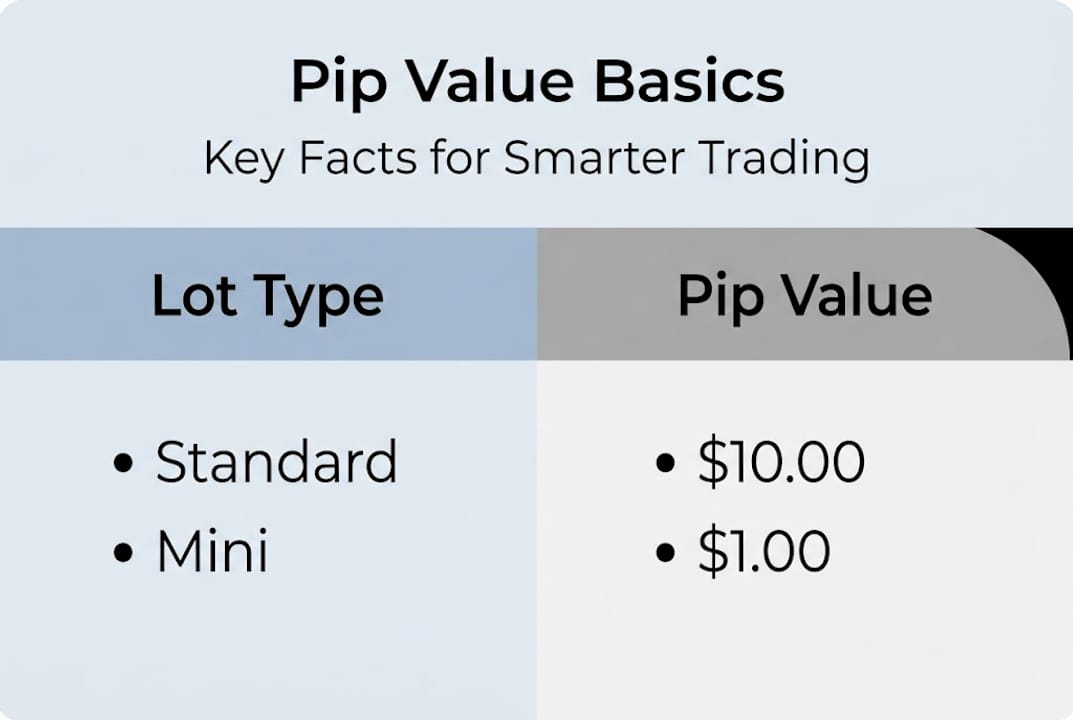
EUR/USD-এর মতো USD-তে উদ্ধৃত পেয়ারগুলোর ক্ষেত্রে হিসাবটি সহজ হয়ে যায়, কারণ যখন USD কোট কারেন্সি হয়, তখন হরের বিনিময় হার ১-এর সমান হয়। স্ট্যান্ডার্ড লট পিপ মান ১,০০,০০০ ইউনিটের জন্য প্রতি পিপে ১TP4T10 পাওয়া যায়, যেখানে একটি মিনি লট (১০,০০০ ইউনিট) আপনাকে প্রতি পিপে প্রায় ১TP4T1 দেয় এবং একটি মাইক্রো লট (১,০০০ ইউনিট) প্রতি পিপে প্রায় ১TP4T0.10 প্রদান করে।.
| লটের ধরন | ইউনিট | পিপ ভ্যালু (ইউএসডি পেয়ার) |
|---|---|---|
| স্ট্যান্ডার্ড | 100,000 | ~$10.00 |
| ক্ষুদ্র | 10,000 | ~$1.00 |
| মাইক্রো | 1,000 | ~$0.10 |
যখন আপনার অ্যাকাউন্টের মুদ্রা কোট কারেন্সি (quote currency) না হয়, তখন একটি অতিরিক্ত রূপান্তরের ধাপ প্রয়োজন হয়। উদাহরণস্বরূপ, যদি আপনার একটি USD অ্যাকাউন্ট থাকে এবং আপনি GBP/JPY ট্রেড করেন, তাহলে পিপ ভ্যালু (pip value) প্রথমে JPY-তে গণনা করা হয়, তারপর সেটিকে USD-তে রূপান্তর করার জন্য বিনিময় হার (exchange rate) দিয়ে ভাগ করা হয়। ক্রস-কারেন্সি ট্রেডিং-এ এই ধাপটি এড়িয়ে যাওয়া সবচেয়ে সাধারণ গণনাগত ভুলগুলোর মধ্যে একটি। ফরেক্সে লট সাইজিং পদোন্নতির প্রক্রিয়া শুরু করার আগে এটি অপরিহার্য।.
যেকোনো পরিস্থিতিতে পিপ ভ্যালু গণনা করার ধাপে ধাপে প্রক্রিয়াটি নিচে দেওয়া হলো:
- পিপ সাইজ চিহ্নিত করুন (বেশিরভাগ পেয়ারের জন্য ০.০০০১, JPY পেয়ারের জন্য ০.০১)।.
- পিপ সাইজকে আপনার ট্রেড সাইজ (ইউনিটের সংখ্যা) দিয়ে গুণ করুন।.
- জোড়াটির বর্তমান বিনিময় হার দিয়ে ভাগ করুন।.
- ফলাফলটি আপনার অ্যাকাউন্টের মুদ্রায় না হলে, প্রাসঙ্গিক বিনিময় হার দিয়ে আবার ভাগ করুন।.
- একটি ব্যবহার করে যাচাই করুন ফরেক্স ক্যালকুলেটর লেনদেনটি করার আগে।.
বিশেষ পরামর্শ: যখনই আপনি পেয়ার পরিবর্তন করেন বা লট সাইজ সমন্বয় করেন, তখনই পিপ ভ্যালু পুনরায় গণনা করুন। প্ল্যাটফর্মগুলো দাম প্রদর্শন করে, পিপ ভ্যালু নয়। একটি পিপ ক্যালকুলেটর ব্যবহার করে দ্রুত যাচাই করতে কয়েক সেকেন্ড সময় লাগে এবং এটি একটি ব্যয়বহুল ভুল গণনা প্রতিরোধ করতে পারে, বিশেষ করে এক্সোটিক পেয়ারগুলোর ক্ষেত্রে যেখানে স্প্রেড এবং ভোল্যাটিলিটি বেশি থাকে। আপনি আরও করতে পারেন অ্যাকাউন্টের প্রকারভেদ তুলনা করুন আপনার ট্রেডিং শৈলীর জন্য কোন লট কাঠামোটি উপযুক্ত তা খুঁজে বের করতে।.
ব্যবহারিক ঝুঁকি ব্যবস্থাপনায় পিপস
একবার আপনি পিপস গণনা করার পদ্ধতি জেনে গেলে, পরবর্তী ধাপ হলো এটি বোঝা যে আপনার মূলধন রক্ষা করার জন্য এটি কতটা গুরুত্বপূর্ণ। প্রতিটি পেশাদার ঝুঁকি ব্যবস্থাপনা কাঠামো ডলার দিয়ে নয়, পিপস দিয়েই শুরু হয়। কেন? কারণ, কোনো ট্রেড খোলার আগেই পিপস আপনাকে ঝুঁকি পরিমাপ করার একটি পেয়ার-নিরপেক্ষ ও সাইজ-নিরপেক্ষ উপায় দেয়।.

পিপসে স্টপ-লস সেট করার অর্থ হলো, আপনি আগে থেকেই ঠিক করে নেন যে ট্রেডিং থেকে বেরিয়ে যাওয়ার আগে দাম ঠিক কতটা আপনার বিপক্ষে যেতে পারে। পিপসে টেক-প্রফিট সেট করা আপনার লাভের লক্ষ্যমাত্রা নির্ধারণ করে। এই দুটি সংখ্যা একত্রে আপনার ট্রেডের ফলাফল তৈরি করে। ঝুঁকি-পুরস্কার অনুপাত, যা দীর্ঘমেয়াদী ট্রেডিং পারফরম্যান্সের জন্য সবচেয়ে গুরুত্বপূর্ণ পরিমাপক।. স্টপ-লস এবং টেক-প্রফিট পিপস-এ নির্ধারিত লেভেলগুলো আপনাকে আপনার পজিশনের আকার এমনভাবে নির্ধারণ করতে সাহায্য করে, যাতে অ্যাকাউন্টের জন্য ১ থেকে ২ শতাংশ ঝুঁকির নিয়মটি ধারাবাহিকভাবে প্রয়োগ করা হয়।.
বিভিন্ন আকারের অ্যাকাউন্টের ক্ষেত্রে পিআইপি-ভিত্তিক ঝুঁকি ব্যবস্থাপনা কীভাবে কাজ করে তার একটি বাস্তব উদাহরণ এখানে দেওয়া হলো:
| অ্যাকাউন্টের আকার | প্রতি ট্রেডে ঝুঁকি (1%) | স্টপ-লস (পিপস) | অনুমোদিত সর্বোচ্চ পিপ মান |
|---|---|---|---|
| $1,000 | $10 | 20 | $0.50/pip |
| $5,000 | $50 | 20 | $2.50/pip |
| $10,000 | $100 | 20 | $5.00/pip |
ঝুঁকি না সঠিকভাবে পিপস গণনা করার মধ্যে অন্তর্ভুক্ত রয়েছে:
- অতিরিক্ত বড় পজিশন নেওয়া এবং আপনার উদ্দিষ্ট ঝুঁকির শতাংশ অতিক্রম করে যাওয়া।.
- আপনার লট সাইজে পিপ ভ্যালু বিবেচনা না করার কারণে স্টপ লস খুব বেশি টাইট হয়ে যাচ্ছে।.
- আপনার মুনাফার লক্ষ্যমাত্রা বুঝতে ভুল করা এবং খুব তাড়াতাড়ি বা খুব দেরিতে ট্রেড বন্ধ করা।.
- অবস্থানের আকারের অসামঞ্জস্যতার কারণে পারফরম্যান্স ট্র্যাক করা অসম্ভব হয়ে পড়ে।.
বিশেষ পরামর্শ: প্রতিটি ট্রেডের ঝুঁকি প্রথমে পিপস-এ প্রকাশ করুন, তারপর ডলারে রূপান্তর করুন। এই অভ্যাসটি আপনাকে অর্থের আগে বাজারের কাঠামো নিয়ে ভাবতে বাধ্য করে, যা আরও ভালো এন্ট্রি এবং এক্সিট সিদ্ধান্ত নিতে সাহায্য করে। পর্যালোচনা ফরেক্স ঝুঁকি ব্যবস্থাপনার পদক্ষেপ পাশাপাশি হেজিং কৌশল লাইভ মার্কেটে এটি প্রয়োগ করার পদ্ধতিকে আরও উন্নত করতে পারেন। সর্বদা নিশ্চিত করুন যে আপনি আপনার ট্রেডিং মূলধন সুরক্ষিত রাখুন প্রতিটি ট্রেড প্ল্যানের একটি অলঙ্ঘনীয় অংশ হিসেবে পিপ নির্ভুলতাকে বিবেচনা করার মাধ্যমে।.
পিপ করার সাধারণ ভুল এবং বিশেষজ্ঞদের পরামর্শ
ব্যবহারিক দিকটি শেষ করতে, আসুন সাধারণ ভুলগুলো চিহ্নিত করি এবং বিশেষজ্ঞ ট্রেডারদের কার্যপ্রণালী থেকে শিখি। এমনকি অভিজ্ঞ ট্রেডাররাও পিপ-সংক্রান্ত ভুল করেন, কারণ কয়েকটি সফল ট্রেডের পর তারা প্রায়শই তাদের চিন্তাভাবনাকে স্বয়ংক্রিয় করে ফেলেন। আত্মতুষ্টি থেকেই পিপ ভুলের জন্ম হয়।.
বাস্তব ট্রেডিং ফলাফলের উপর এগুলোর প্রভাবের হার অনুসারে সাজানো, সবচেয়ে সাধারণ পিপ ভুলগুলো নিচে দেওয়া হলো:
- পিপ এবং পিপেটের মধ্যে বিভ্রান্তিপাঁচ-দশমিক ব্রোকাররা 1.10523-এর মতো দাম দেখায়। পঞ্চম অঙ্কটি একটি পিপেট, পিপ নয়। এটিকে পিপ হিসেবে ব্যবহার করলে নির্ভুলতা বাড়িয়ে দেখানো হয় এবং প্রকৃত মুভ সাইজ কমিয়ে দেখানো হয়।.
- অ্যাকাউন্টের মুদ্রা রূপান্তর উপেক্ষা করাপিপ ভ্যালু রূপান্তর না করে ইউরো-ভিত্তিক অ্যাকাউন্ট থেকে জিবিপি/সিএইচএফ ট্রেড করলে প্রতিবারই পজিশন সাইজিং ভুল হয়।.
- লট সাইজ জুড়ে একই পিপ মান প্রয়োগ করাপুনরায় গণনা না করে মিনি লট থেকে স্ট্যান্ডার্ড লটে পরিবর্তন করলে আপনার ঝুঁকি তাৎক্ষণিকভাবে দশগুণ বেড়ে যায়।.
- JPY পেয়ারগুলির জন্য সমন্বয় করা হচ্ছে নাএকই লট সাইজে USD/JPY-তে একটি ৫০-পিপ স্টপ এবং EUR/USD-তে একটি ৫০-পিপ স্টপের ডলার ঝুঁকি একই নয়।.
- পিপ ম্যাথ পরীক্ষা না করে প্ল্যাটফর্মের লাভ-ক্ষতির হিসাব বিশ্বাস করাপ্ল্যাটফর্মগুলো অ্যাকাউন্ট কারেন্সিতে পরিবর্তনশীল মুনাফা দেখায়, কিন্তু এই সংখ্যাটি আড়াল করতে পারে যে আপনার পিপ এক্সপোজার আপনার পরিকল্পনার সাথে মিলছে কি না।.
পিপের আকার এবং মানের ভুলগুলো ক্রমাগত ঝুঁকি ও ফলাফলের মধ্যে অসামঞ্জস্য তৈরি করে, যা এমনকি শৃঙ্খলাবদ্ধ ট্রেডারদেরও অবাক করে দেয়। পর্যালোচনা করা হচ্ছে ফরেক্সের যে ঝুঁকিগুলো এড়িয়ে চলতে হবে আপনার ট্রেডিং প্রসারিত করার আগে এটি একটি বুদ্ধিমানের কাজ।.
বিশেষ পরামর্শ: ট্রেডের আগে একটি চেকলিস্ট তৈরি করুন, যাতে পিপ ভ্যালু যাচাই করার একটি ধাপ অন্তর্ভুক্ত থাকে। প্রতিটি ট্রেডের আগে নিশ্চিত করুন: কোন পেয়ার? লট সাইজ কত? আমার অ্যাকাউন্টের মুদ্রায় পিপ ভ্যালু কত? এই ৩০-সেকেন্ডের যাচাইকরণটি পিপ-সম্পর্কিত বেশিরভাগ ভুল প্রতিরোধ করে, যা রিটেইল ট্রেডারদের আসল অর্থ ক্ষতির কারণ হয়।.
পিপস বোঝা কেন সবচেয়ে অবমূল্যায়িত ফরেক্স দক্ষতা
বেশিরভাগ ট্রেডিং শিক্ষা চার্ট প্যাটার্ন, ইন্ডিকেটর এবং এন্ট্রি সিগন্যালের উপর আলোকপাত করে। পিপ-এর উপর দক্ষতা খুব কমই একই মনোযোগ পায়, এবং এটি একটি গুরুতর ঘাটতি। আমরা যা পর্যবেক্ষণ করেছি তা হলো: যে ট্রেডাররা প্রতিটি ট্রেড শুধু ডলারে নয়, পিপ-এ ট্র্যাক করেন, তারা সময়ের সাথে সাথে বাজারের আচরণ সম্পর্কে অনেক বেশি সঠিক ধারণা তৈরি করেন। তারা লক্ষ্য করেন কখন একটি পেয়ার অস্বাভাবিকভাবে অস্থির, কখন বর্তমান পরিস্থিতির জন্য তাদের সাধারণ স্টপ ডিসটেন্স খুব বেশি প্রশস্ত, এবং কখন একটি স্ট্র্যাটেজি তার ঐতিহাসিক প্রান্ত থেকে বিচ্যুত হচ্ছে।.
প্রচলিত ধারণা অনুযায়ী, পিপ গণনা হলো এমন এক সাধারণ গণিত যা একবার শিখলে ভুলে যাওয়া যায়। কিন্তু পেশাদার ট্রেডাররা এটিকে একটি জীবন্ত চলক হিসেবে বিবেচনা করেন, যা তাঁরা প্রতিটি ট্রেডে যাচাই করে দেখেন। এই পার্থক্যটি শুধু একক ট্রেডেই নয়, বরং অ্যাকাউন্টের ধারাবাহিকতার ক্ষেত্রেও প্রতিফলিত হয়। স্মার্ট ফরেক্স কৌশল দাম এক টিকও নড়ার আগে, প্রতিটি পিপের জন্য আপনার ঠিক কত খরচ হচ্ছে তা সঠিকভাবে জানার মাধ্যমেই সর্বদা শুরু হয়।.
অস্বস্তিকর সত্যটি হলো, বেশিরভাগ খুচরা লোকসানের কারণ ভুল এন্ট্রি নয়। এর মূলে রয়েছে ভুল পিপ ভ্যালু গণনার ওপর ভিত্তি করে করা দুর্বল সাইজিং। পিপ আয়ত্ত করা আকর্ষণীয় কিছু নয়, কিন্তু এটিই সেই দক্ষতা যা নীরবে সফল ট্রেডারদের ব্যর্থদের থেকে আলাদা করে দেয়।.
সঠিক সরঞ্জাম ব্যবহার করে আপনার ফরেক্স ট্রেডিংকে আরও এগিয়ে নিয়ে যান।
পিপ জ্ঞান শক্তিশালী, কিন্তু নির্ভুল ট্রেডিংয়ের জন্য নির্মিত একটি প্ল্যাটফর্মের সাথে যুক্ত হলে এটি সত্যিকারের কার্যকর হয়ে ওঠে। ওলা ট্রেডে, আমরা আপনাকে তত্ত্ব থেকে আত্মবিশ্বাসী বাস্তবায়নে যাওয়ার সরঞ্জাম সরবরাহ করি।.
অন্বেষণ করুন ওলা ট্রেড ফরেক্স প্ল্যাটফর্ম সকল প্রধান ও অপ্রধান পেয়ার জুড়ে রিয়েল-টাইম পিপ ক্যালকুলেটর, টাইট স্প্রেড এবং দ্রুত এক্সিকিউশন অ্যাক্সেস করুন। আপনার প্রথম ট্রেড থেকেই পিপ-ভিত্তিক ঝুঁকি ব্যবস্থাপনা প্রয়োগ করতে আমাদের ধাপে ধাপে ট্রেডিং গাইড ব্যবহার করুন। এবং আপনি যদি আপনার ট্রেডিং পরিবেশ থেকে সর্বাধিক সুবিধা পেতে চান, তাহলে আমাদের গাইডটি দেখুন। মাস্টার ট্রেডিং প্ল্যাটফর্মের বৈশিষ্ট্য এটি আপনাকে স্পষ্টভাবে দেখায় কোন টুলগুলো সবচেয়ে বেশি গুরুত্বপূর্ণ। আপনার পিআইপি (PIP) বোঝার জন্য এমন একটি প্ল্যাটফর্ম প্রয়োজন যা এর সাথে মানানসই।.
সচরাচর জিজ্ঞাস্য
একটি সাধারণ ফরেক্স ট্রেডে কত পিপস থাকে?
বেশিরভাগ স্বল্পমেয়াদী ফরেক্স ট্রেডের লক্ষ্য থাকে ১০ থেকে ৩০ পিপস লাভ করা, কিন্তু পিপসের সঠিক লক্ষ্যমাত্রা ট্রেডিং কৌশল এবং বাজারের অস্থিরতার উপর নির্ভর করে। সুইং ট্রেডাররা প্রতি ট্রেডে ৫০ থেকে ১০০ পিপস বা তারও বেশি লাভের লক্ষ্য রাখতে পারেন।.
পিপ এবং পিপেটের মধ্যে পার্থক্য কী?
বেশিরভাগ ফরেক্স কোটেশনে পিপ হলো চতুর্থ দশমিক স্থান, যেখানে পিপেট হলো একটি পিপের দশ ভাগের এক ভাগ, যা পাঁচ-অঙ্কের মূল্যায়নে পঞ্চম দশমিক স্থানে প্রদর্শিত হয়।.
অ্যাকাউন্টের মুদ্রা পরিবর্তনের সাথে সাথে পিআইপি (PIP) মান কি পরিবর্তিত হয়?
হ্যাঁ, কোনো ফরেক্স পেয়ারে আপনার অ্যাকাউন্টের মুদ্রা এবং কোট মুদ্রা ভিন্ন হলে পিপ ভ্যালু অবশ্যই রূপান্তর করতে হবে। এই ধাপটি এড়িয়ে গেলে পজিশন সাইজিং ভুল হয়।.
স্টপ-লস অর্ডার সেট করার জন্য আমি কীভাবে পিপস ব্যবহার করব?
আপনার অ্যাকাউন্ট ব্যালেন্স এবং লক্ষ্যমাত্রা ঝুঁকি শতাংশের (সাধারণত প্রতি ট্রেডে ১ থেকে ২ শতাংশ) উপর ভিত্তি করে, আপনি প্রতি ট্রেডে কত পিপস ঝুঁকি নিতে পারবেন তা গণনা করে একটি স্টপ-লস সেট করেন।.