











সংক্ষেপে:
- An economic calendar lists scheduled economic data releases and central bank events that influence financial markets. Traders use it to anticipate volatility, time trades, and manage risk based on forecast versus actual results, especially surprises. Monitoring the calendar consistently enables proactive planning and better risk control, essential for successful trading.
An economic calendar is a scheduled list of upcoming economic data releases and central bank announcements that influence financial markets and guide trading decisions across Forex, indices, commodities, and equities. Every serious trader, from a retail Forex participant to a professional fund manager, uses this tool to anticipate volatility, time entries and exits, and protect capital from surprise price swings. Platforms like Investing.com, FXStreet, and Ollatrade publish live economic calendars that cover hundreds of events weekly, including Non-Farm Payrolls, CPI releases, GDP reports, and Federal Reserve interest rate decisions. Understanding how to read and act on this data separates reactive traders from prepared ones.
What is an economic calendar and how does it work?
An economic calendar is a real-time, streaming schedule that lists scheduled economic events by date, time, country, and expected market impact. Think of it as a flight departure board for financial markets. Each row represents an event that has the potential to move prices, and the board updates automatically as new data hits.
The calendar covers a broad range of event types. Central bank interest rate decisions from the Federal Reserve, European Central Bank, and Bank of England sit at the top of the impact hierarchy. Below those are labor market reports like Non-Farm Payrolls, inflation readings like CPI and PPI, growth data like GDP, and consumer sentiment surveys. These high-impact events produce the largest volatility spikes across Forex pairs, equity indices, gold, and oil.
What makes the calendar genuinely useful is the combination of three data points displayed for each event: the consensus forecast, the previous reading, and the actual result once released. Traders use the forecast to understand what the market has already priced in. The actual result, compared against that forecast, determines whether a surprise has occurred. Surprises move markets. Confirmations rarely do.
Key components every trader needs to understand
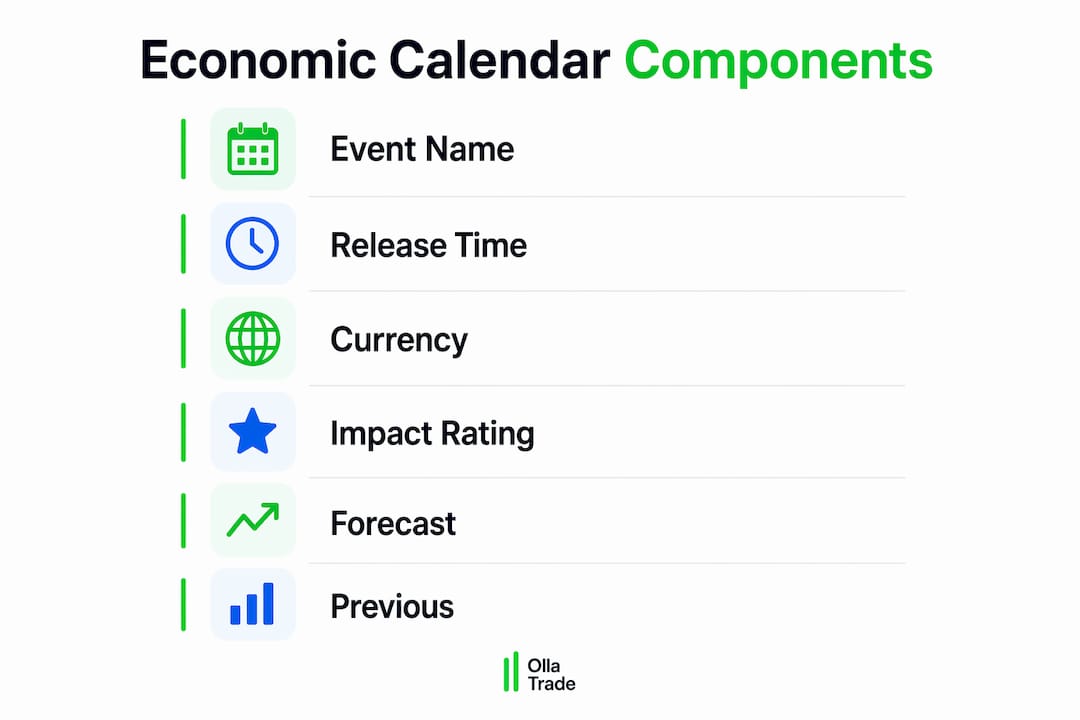
Economic calendar entries follow a consistent structure across major providers. Standard calendar fields include the event name, release date and time, the affected currency or country, an impact rating, the consensus forecast, the previous reading, and the actual result after release.
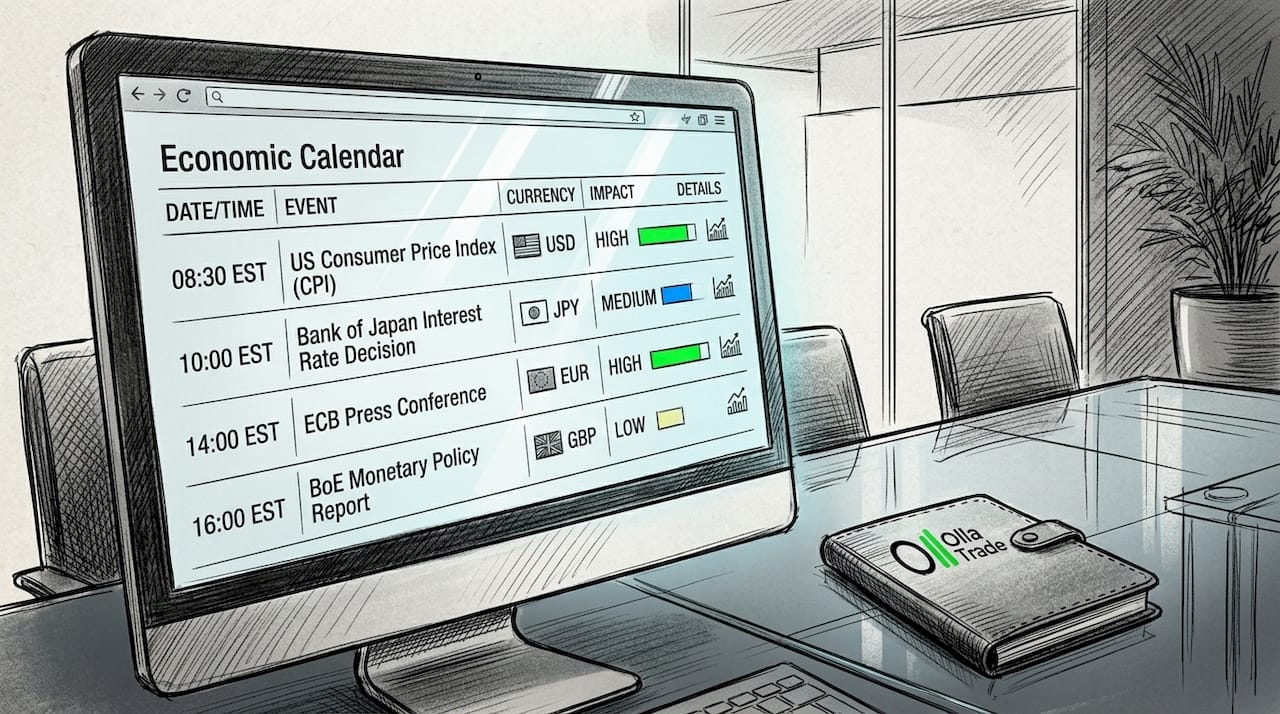
The impact rating is color-coded on most platforms. Red signals high impact, orange or yellow signals medium impact, and gray or green signals low impact. This visual system lets you scan a week’s worth of events in seconds and identify the sessions that require active risk management.
প্রো টিপ: Do not treat impact ratings as binary triggers. A “high impact” label means the event has historically moved markets. It does not guarantee a big move on any given release. Focus on the size of the forecast versus actual surprise instead.
Here is how the core data fields compare across three major platforms:
| বৈশিষ্ট্য | Investing.com | FXStreet | Trading Economics |
|---|---|---|---|
| Real-time updates | হাঁ | হাঁ | হাঁ |
| Impact color coding | Red/Orange/Gray | Red/Orange/Yellow | Red/Orange/Green |
| Forecast vs actual display | হাঁ | হাঁ | হাঁ |
| Countdown timer | হাঁ | হাঁ | না |
| Mobile notifications | হাঁ | হাঁ | সীমিত |
| Custom country filter | হাঁ | হাঁ | হাঁ |
| News integration | হাঁ | হাঁ | আংশিক |
Real-time auto-refresh and countdown timers are features that separate professional-grade calendars from basic ones. A countdown timer showing 4 minutes to a Fed rate decision is operationally different from a static timestamp. It lets you finalize your position sizing and stop placement before the release window opens.
How to read and interpret an economic calendar for trading
The core skill in using an economic calendar is understanding the relationship between forecast and actual values. Price moves most when actual data differs materially from the consensus forecast, because the forecast represents what traders have already priced into the market. A result that matches the forecast produces little reaction. A result that beats or misses it by a meaningful margin creates rapid repricing.
Consider a practical example. If the consensus forecast for U.S. Non-Farm Payrolls is 180,000 jobs and the actual release shows 280,000, the U.S. dollar typically strengthens sharply across major pairs. Equity indices may also rally on the growth signal. The reverse is equally true. A significant miss triggers selling pressure on dollar-denominated assets.
The previous reading adds a third dimension that most traders underuse. Previous data reveals trend direction, not just a single data point. If CPI has printed above forecast for three consecutive months, the previous reading tells you the market may already be adjusting its expectations upward. That context changes how you interpret the next release.
Risk management around event times is non-negotiable. Reducing position sizes or tightening stops before high-impact releases protects capital against gap moves and spread widening that occur in the seconds after data hits. Here are five practical rules for trading around economic releases:
- করুন check the calendar at the start of every trading session to identify scheduled events.
- করুন reduce position size before high-impact releases if you plan to hold through the event.
- করুন use the previous reading as a trend baseline, not just a comparison point against forecast.
- Don’t enter new positions in the two minutes immediately before a major release.
- Don’t assume a “high impact” badge guarantees a large price move if the actual result matches the forecast closely.
প্রো টিপ: Set your calendar platform to your local time zone before each session. Misreading a release time by one hour is one of the most common and costly mistakes retail traders make.
Comparing popular economic calendar platforms
Four platforms dominate the economic calendar space for active traders: Investing.com, FXStreet, TradersAgency, and Ollatrade. Each serves a slightly different use case, and understanding their differences helps you pick the right tool for your workflow.
Investing.com offers the broadest event coverage globally, with filters for country, impact level, and event category. Its calendar integrates directly with news articles and analyst commentary, which adds context to raw data. FXStreet’s calendar is built specifically for Forex traders, with tight integration into currency pair analysis and a clean countdown interface. Auto-refresh and countdown features make it a strong choice for traders who need precision timing.
TradersAgency positions its calendar as a trade planning resource, pairing event data with educational guidance on how to act on each release type. Ollatrade’s economic calendar is embedded directly within its trading platform, meaning you can monitor upcoming events and execute trades from the same interface without switching between tools.
| প্ল্যাটফর্ম | এর জন্য সেরা | Filtering options | Mobile alerts | Platform integration |
|---|---|---|---|---|
| Investing.com | Broad market coverage | Country, impact, category | হাঁ | সীমিত |
| FXStreet | Forex-focused traders | Currency, impact, time | হাঁ | সীমিত |
| TradersAgency | Educational context | Impact, region | আংশিক | না |
| ওলাট্রেড | Active trade execution | Impact, currency | হাঁ | Full |
The most underrated feature across all platforms is the time zone setting. A trader in New York and a trader in Singapore are watching the same events, but a misconfigured time zone creates confusion about when to act. Always verify this setting when you first set up any calendar tool.
Why you need to monitor the economic calendar consistently
Consistent calendar monitoring gives traders a risk management edge that no technical indicator can replicate. Technical analysis tells you where price has been. The economic calendar tells you when the next scheduled catalyst arrives. Both are necessary. Neither is sufficient alone.
Traders who skip the calendar expose themselves to avoidable losses. A position that looks technically sound at 8:00 AM can be stopped out by a 8:30 AM CPI release the trader never checked. That is not bad luck. It is a process failure. Economic calendars function like a weather forecast for markets, giving you advance notice of conditions that require preparation.
Beyond risk avoidance, calendar awareness supports proactive trade planning. Knowing that a Federal Reserve rate decision arrives on Wednesday gives you the opportunity to anticipate portfolio reallocations and chart pattern setups that tend to form ahead of major events. Institutional traders position themselves before releases, and those positioning flows show up in price action.
The four core benefits of actively following an economic calendar are:
- Volatility anticipation: Identify high-risk windows before they arrive and adjust exposure accordingly.
- Entry and exit timing: Align trade entries with post-release momentum rather than fighting pre-release chop.
- ঝুঁকি নিয়ন্ত্রণ: Reduce position sizes or close trades ahead of events that could invalidate your thesis.
- Market context: Understand why price is moving, not just that it is moving, which improves decision quality over time.
কী গ্রহণযোগ্যতা
An economic calendar is the single most reliable tool for connecting scheduled macroeconomic data to real-time market volatility, and every trader who ignores it trades blind.
| বিন্দু | বিস্তারিত |
|---|---|
| Core definition | An economic calendar lists scheduled data releases and central bank events that move financial markets. |
| Forecast vs actual | Price moves when actual data surprises the consensus forecast, not when it confirms it. |
| Previous reading value | Use prior data as a trend baseline to detect momentum shifts before they fully develop. |
| Risk management rule | Reduce position size or tighten stops before high-impact releases to protect capital. |
| Platform choice | Choose a calendar with real-time updates, countdown timers, and time zone settings for precision trading. |
The habit that separates prepared traders from reactive ones
Most traders treat the economic calendar as a reactive tool. They check it after a position moves against them and realize, too late, that a major data release just printed. That is the wrong relationship with this data.
The traders I respect most treat the calendar as a pre-session ritual. Before the market opens, they know exactly which events are scheduled, what the consensus forecast is, and whether the previous reading suggests any trend context worth noting. That 10-minute review changes the entire character of their trading day.
What I have found genuinely useful, and what most articles skip over, is the combination of calendar data with technical structure. If price is sitting at a key support level and a high-impact event is 30 minutes away, that is not a setup. That is a trap. The calendar tells you to wait. The chart tells you where to act once the dust settles.
The other mistake I see constantly is overreacting to impact badges. A red “high impact” label does not mean you should close everything and hide. It means you should know the event is coming and have a plan. Many high-impact events produce minimal moves when the actual result lands close to forecast. The surprise magnitude is what drives price, not the badge color.
My weekly routine involves reviewing the full calendar every Sunday evening, flagging the three to five events with the highest surprise potential, and setting alerts for those specific releases. That structure removes the emotional scramble of reacting to news in real time and replaces it with a prepared response.
The economic calendar is not a prediction tool. It is a preparation tool. Traders who understand that distinction use it correctly.
— এফএক্স
Start trading with Ollatrade’s live economic calendar
Ollatrade integrates a live অর্থনৈতিক ক্যালেন্ডার directly into its trading platform, so you never need to switch between tools to monitor upcoming events and execute trades. The calendar updates in real time, displays impact ratings, forecast and actual values, and supports filtering by currency and event type.
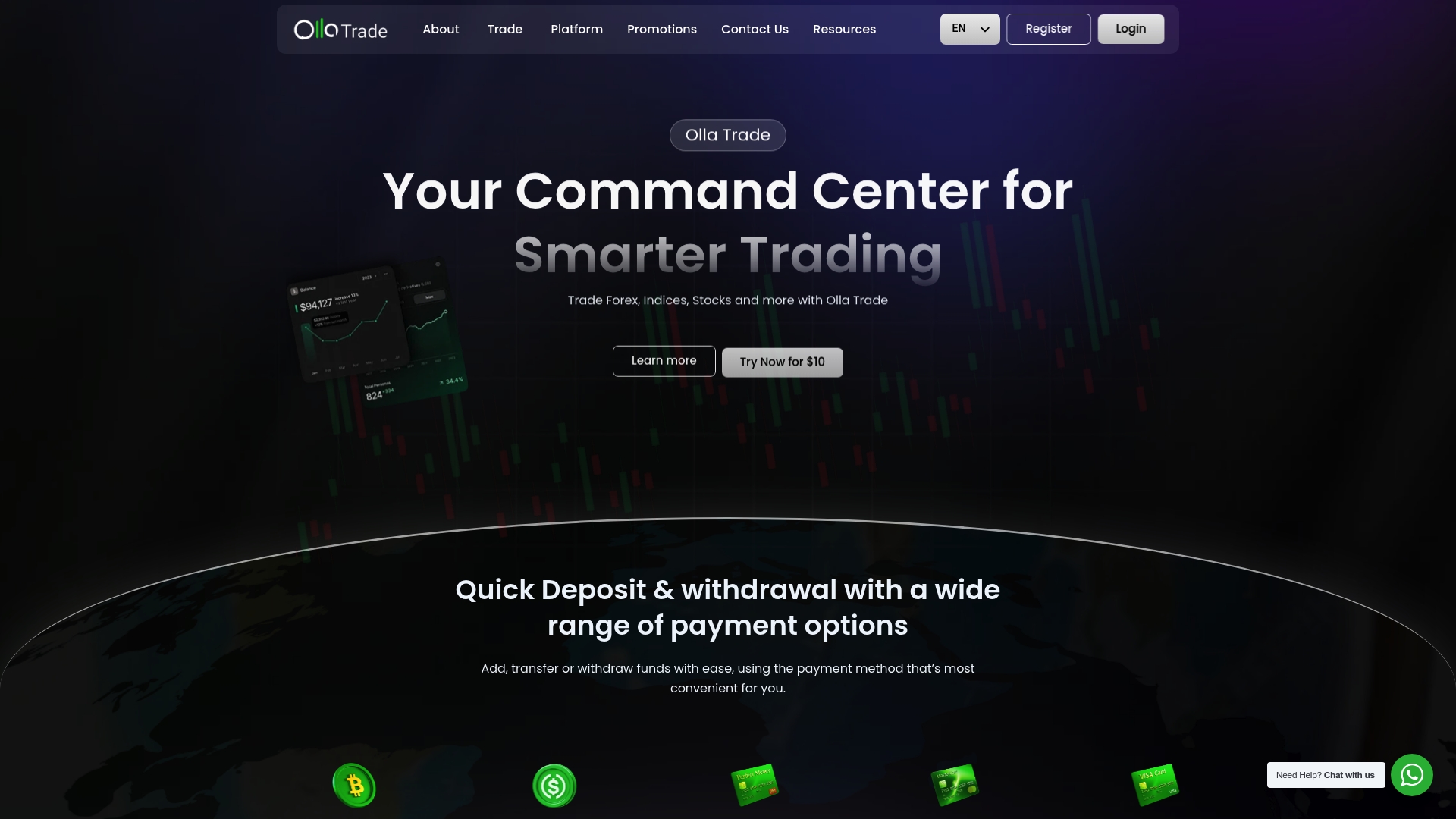
Beyond the calendar itself, Ollatrade provides advanced charting, MetaTrader 4 integration, and tight spreads across Forex, metals, indices, and cryptocurrencies. You can align your platform workspace with calendar alerts to build a disciplined pre-session routine from day one. Whether you are managing your first Forex trade or running a multi-instrument portfolio, Ollatrade gives you the infrastructure to act on economic data with speed and precision. Open your account and access the full calendar feed today.
প্রায়শই জিজ্ঞাসিত প্রশ্নাবলী
What is an economic calendar in trading?
An economic calendar is a scheduled list of upcoming economic data releases and central bank announcements that affect financial markets. Traders use it to anticipate volatility, plan entries and exits, and manage risk around scheduled events.
How do you read an economic calendar?
Each entry shows the event name, release time, affected currency, impact rating, consensus forecast, previous reading, and actual result. The key signal is the gap between forecast and actual: a large surprise drives price movement, while a result that matches the forecast typically produces little reaction.
Why should traders monitor the economic calendar consistently?
Consistent monitoring prevents traders from being caught off guard by scheduled volatility. Treating the calendar like a market forecast allows for proactive position sizing, stop placement, and trade timing rather than reactive damage control.
What are the most important events on an economic calendar?
The highest-impact events include Federal Reserve interest rate decisions, Non-Farm Payrolls, CPI, GDP releases, and major central bank press conferences. These events consistently produce the largest price moves across Forex, equities, and commodities.
Which economic calendar platform is best for active traders?
The best platform depends on your trading style. Investing.com offers the broadest global coverage, FXStreet specializes in Forex with countdown timers, and Ollatrade’s integrated calendar tool connects event monitoring directly to trade execution within a single platform.