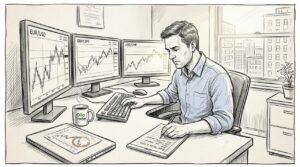











Between 90 and 97% of retail day traders lose money over the long term. That number stops most people cold, and it should. Day trading is not a shortcut to financial freedom, and it is not a skill you pick up over a weekend. It is a discipline built on strategy, real-time analysis, and iron-clad risk management. Yet the market keeps pulling in new participants, many of whom walk in with confidence and walk out with losses. This article breaks down exactly what day trading is, which rules govern it, which tools give you an edge, and what separates the rare profitable trader from the overwhelming majority who quit within months.
Table of Contents
- Day trading essentials: Definition, mechanics, and markets
- Critical rules and regulations: Pattern Day Trader (PDT) and account types
- Strategies, tools, and real-time analysis: How day traders gain an edge
- Success rates, pitfalls, and best practices: What statistics reveal
- The uncomfortable truths most guides overlook about day trading
- Take your day trading skills further with proven tools and guides
- Frequently asked questions
Key Takeaways
| Point | Details |
|---|---|
| Day trading definition | Day trading means buying and selling financial instruments within the same day to avoid overnight risk. |
| Regulatory restrictions | US day traders are subject to PDT rules requiring $25,000 minimum equity, but futures and forex provide workarounds for small accounts. |
| Strategy and discipline | Successful day traders rely on proven strategies, advanced tools, and disciplined risk management rather than emotional trading. |
| Success odds | Only a small percent of day traders are consistently profitable, so understanding pitfalls and best practices is critical. |
| Practical resources | Leverage educational guides and trusted trading platforms to improve effectiveness and stay informed. |
Day trading essentials: Definition, mechanics, and markets
Day trading means buying and selling a financial instrument within the same trading session, closing every position before the market closes. No overnight exposure. No waking up to gap risk from after-hours news. Every trade lives and dies within hours, sometimes minutes. That simplicity is also what makes it brutally demanding.
Intraday traders rely on technical analysis, real-time charts, volume data, and breaking news to make fast decisions, deliberately avoiding overnight risk that can wipe out gains before the next session opens. The speed of execution is everything. A signal that is valid at 9:32 AM can be worthless by 9:34 AM.
Day trading happens across several markets. Stocks are the most popular entry point for retail traders in the US. Forex runs 24 hours across global sessions and offers tight spreads on major pairs. Futures contracts on commodities and indices are favored by professionals. Crypto markets never close, which adds both opportunity and exhaustion. CFDs (contracts for difference) let traders speculate on price movement without owning the underlying asset, making them flexible for both long and short positions. You can explore CFD and swing trading strategies to understand how these instruments behave differently across timeframes.
Day trading vs. other trading styles
| Feature | Day trading | Swing trading | Long-term investing |
|---|---|---|---|
| Holding period | Minutes to hours | Days to weeks | Months to years |
| Overnight risk | None | Yes | Yes |
| Analysis type | Technical, real-time | Technical and fundamental | Primarily fundamental |
| Trade frequency | High | Moderate | Low |
| Capital requirement | High (PDT rules apply) | Moderate | Flexible |
Commonly traded instruments by day traders include:
- Forex pairs: EUR/USD, GBP/USD, USD/JPY
- Stock CFDs: Apple, Tesla, Amazon
- Index CFDs: S&P 500, NASDAQ, DAX
- Commodities: Gold, crude oil
- Crypto: Bitcoin, Ethereum
If you are just getting started, reviewing trading basics will help you build the vocabulary and mental framework you need before placing your first trade. For those ready to move into forex specifically, a step-by-step Forex trading guide walks through entry, management, and exit in practical terms.
Critical rules and regulations: Pattern Day Trader (PDT) and account types
Knowing what day trading is gets you started. Knowing the rules that govern it keeps you in the game. In the United States, the most impactful regulation for retail traders is the Pattern Day Trader rule.
FINRA designates a trader as a PDT when they execute four or more day trades within five business days in a margin account, provided those trades represent more than 6% of total trading activity. Once flagged, the account must maintain a minimum equity of $25,000 to continue day trading without restriction. Drop below that threshold and your account gets locked for 90 days or until you deposit enough to meet the minimum.
This rule hits small accounts hard. A trader with $10,000 who wants to trade actively every day runs directly into this wall.
Cash vs. margin accounts
| Feature | Cash account | Margin account |
|---|---|---|
| PDT rule applies | No | Yes |
| Leverage available | No | Yes (up to 4:1 intraday) |
| Settlement time | T+1 (stocks) | Immediate buying power |
| Flexibility | Limited by settled funds | High, with PDT restrictions |
The good news is that PDT restrictions have workarounds. Futures and forex markets are not subject to the PDT rule, making them popular choices for undercapitalized traders who want frequent activity. Cash accounts also bypass the rule entirely, though the trade-off is slower settlement and no leverage.
Pro Tip: If you are approaching the PDT threshold, track your day trade count carefully each week. Many brokers display this in your account dashboard. Staying at three or fewer day trades in a rolling five-day window keeps you clear of restrictions without requiring a $25,000 balance.
If you are flagged as a PDT, here is what to do:
- Stop placing day trades immediately to avoid further violations.
- Contact your broker to understand the specific restriction on your account.
- Deposit funds to bring equity above $25,000 if you want unrestricted margin day trading.
- Switch to a cash account or move to futures/forex to continue trading without the equity requirement.
- Use the restriction period to review your strategy and trading plan.
Understanding your trading account options before you start can save you from hitting these walls unexpectedly.
Strategies, tools, and real-time analysis: How day traders gain an edge
Rules define what you can do. Strategy and tools determine whether you profit. The best day traders are not guessing. They are executing repeatable, rule-based setups with predefined risk parameters.
The four most common day trading strategies are scalping, momentum trading, reversal trading, and news-based trading. Scalping targets tiny price moves dozens of times per day, requiring very fast execution and tight spreads. Momentum trading rides strong directional moves triggered by volume surges or breakouts. Reversal trading looks for overextended price action and bets on a snap back to the mean. News-based trading exploits the volatility that follows earnings releases, economic data, or geopolitical events.
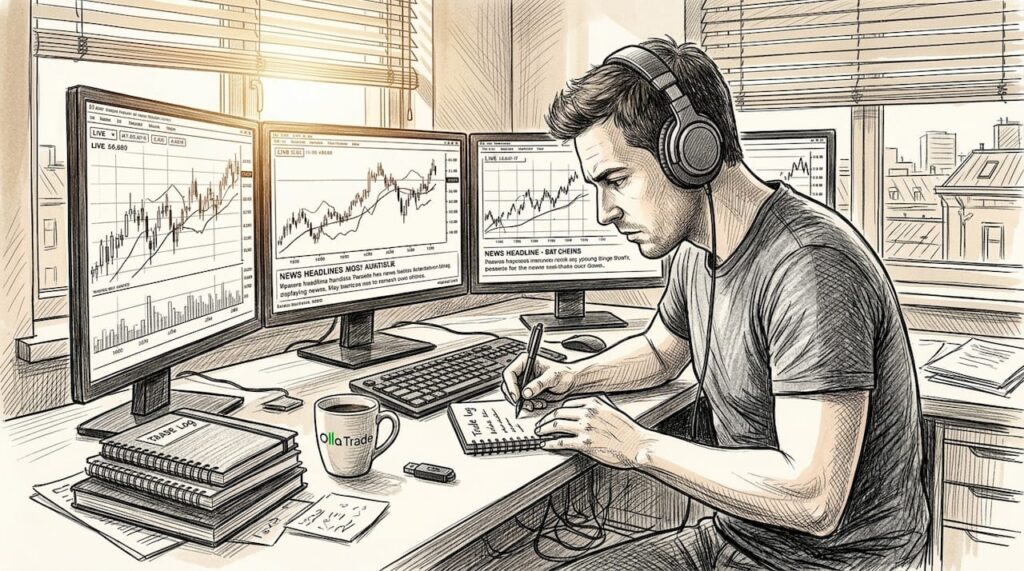
Intraday traders use technical analysis, real-time charts, volume, and news feeds as their primary decision-making inputs. The timeframe you trade on matters enormously. Scalpers work on 1-minute and 5-minute charts. Momentum traders often use 15-minute to 1-hour charts. Choosing the wrong timeframe for your strategy is one of the fastest ways to generate false signals.
Must-have tools for day traders:
- Advanced charting platform with customizable indicators (RSI, MACD, Bollinger Bands)
- Level 2 quotes to see the order book and gauge buying/selling pressure
- Real-time news feed for macro events and earnings surprises
- Volume scanner to identify unusual activity before a move develops
- Risk/reward calculator to size positions and set stop-loss levels before entry
- Trade journal to track performance patterns over time
You can find best day trading tools reviewed in detail, along with platform comparisons that matter for execution speed. Staying current with market news updates is equally important, since macro events can invalidate a perfectly valid technical setup in seconds.
Pro Tip: The biggest edge most retail traders ignore is position sizing. Professionals calculate risk per trade as a fixed percentage of account equity, typically 1 to 2%, before they ever look at a chart. This one habit separates disciplined trading from what amounts to gambling vs. trading.
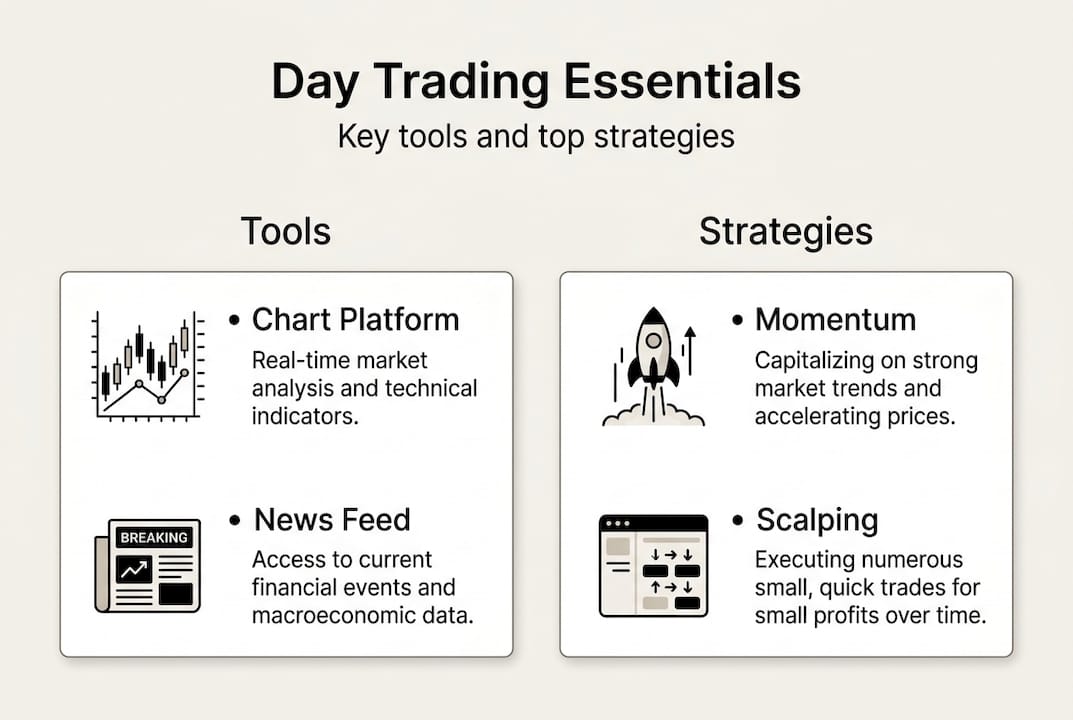
Retail traders lose primarily due to emotional decision-making and overtrading, while professionals use real-time risk calculations and strict rules to stay consistent. That gap is not about intelligence. It is about process.
Success rates, pitfalls, and best practices: What statistics reveal
The numbers on day trading profitability are not encouraging, but they are instructive. Only 1 to 13% of retail day traders are profitable in any given year, and the top 1% earn roughly 0.4% of account value per day on average. The remaining 87 to 99% either break even or lose money, with a large portion quitting within the first year.
“Between 90 and 97% of retail day traders lose money over the long term. Only 1 to 13% are profitable annually. The top 1% of performers average approximately 0.4% return per day.”
Fees are a silent killer that most new traders underestimate. Commissions, spreads, and platform fees compound across dozens of daily trades. A trader making 20 round-trip trades per day at $1 commission each loses $20 before a single profitable trade is counted. Monitoring your trading fees is not optional. It is a core part of your P&L management.
Common pitfalls that destroy accounts:
- Overtrading: Taking low-quality setups out of boredom or frustration
- Revenge trading: Doubling down after a loss to recover quickly
- Ignoring fees: Failing to account for spreads and commissions in profit calculations
- No stop-loss: Letting losing trades run in hope of a reversal
- Emotional trading: Deviating from the plan based on fear or greed
- Insufficient capital: Starting with too little to absorb normal drawdowns
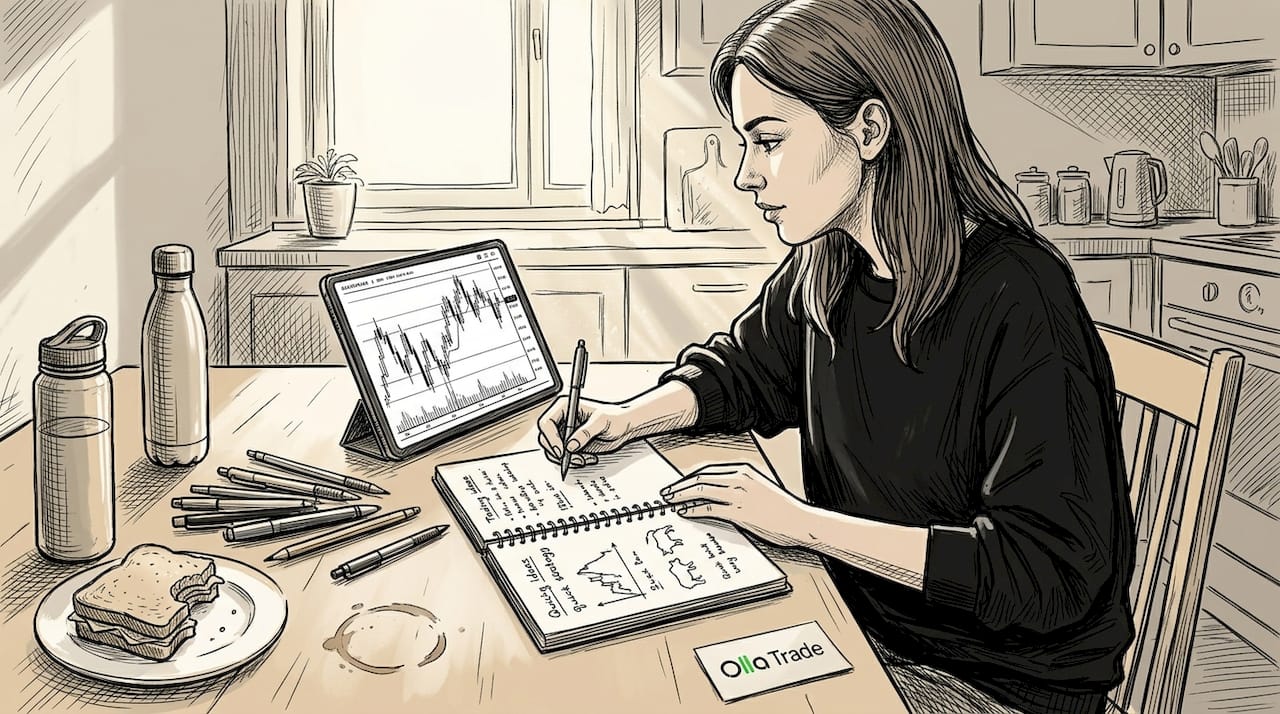
Best practices that actually move the needle include keeping a detailed trading journal, reviewing every trade for execution quality, setting a daily loss limit and stopping when you hit it, and treating your trading plan as a non-negotiable document. Education is not a one-time event. The markets evolve, and so must your approach.
The uncomfortable truths most guides overlook about day trading
Most articles on day trading spend their energy on strategies and tools. What they skip is the psychological and structural reality that makes those strategies so hard to execute consistently.
The majority of new traders leave within six months. Not because they lacked the right indicator or the right broker. They leave because they underestimated the emotional weight of real-money losses and overestimated how quickly skill develops. A strategy that looks clean on a backtest feels completely different when $500 is evaporating in real time.
The professional vs. retail divide is not primarily about access to better tools. Retail traders lose because they overtrade, ignore risk calculations, and let emotions override process. Professionals win because they treat trading like a business with repeatable systems, not a game of prediction.
The distinction between trading versus gambling comes down to process. Gambling is outcome-focused. Trading is process-focused. If you are judging your decisions by whether they made money rather than whether they followed your rules, you are gambling regardless of the instrument.
Building real trading skill takes time, capital, and honest self-assessment. Set realistic expectations, start with a demo account, and graduate to live trading only when your process is documented and repeatable.
Take your day trading skills further with proven tools and guides
Understanding the mechanics, rules, and statistics of day trading is the foundation. The next step is putting that knowledge into practice with the right platform and resources behind you.
Olla Trade gives you access to day trading tool recommendations built for both retail and professional traders, including advanced charting, tight spreads, and fast execution across forex, CFDs, indices, metals, and crypto. Whether you are working through step-by-step trading guides or ready to explore live Forex trading opportunities, the platform is designed to support your growth at every stage. Start with the tools and education that match where you are right now.
Frequently asked questions
What is day trading and how does it differ from other trading styles?
Day trading involves buying and selling financial instruments within the same trading session, closing all positions before the market closes. Unlike swing or long-term investing, day traders avoid overnight risk entirely by design.
What is the Pattern Day Trader (PDT) rule?
The PDT rule requires a minimum $25,000 account equity for unlimited day trading in a US margin account. FINRA’s PDT designation applies to traders who execute four or more day trades within five business days.
What are common mistakes new day traders make?
The most damaging mistakes are overtrading, skipping stop-losses, ignoring fees, and making emotional decisions after losses. 90 to 97% of retail traders lose money long-term, largely due to these preventable errors.
How can small traders bypass the PDT rule?
Trading futures or forex sidesteps the PDT rule entirely since it only applies to equity margin accounts. Cash accounts and futures are the two most practical workarounds for traders below the $25,000 threshold.
What are the best tools for day trading?
Effective day traders use advanced charting platforms, real-time news feeds, volume scanners, and position sizing calculators. Real-time charts and volume are the non-negotiable baseline for any intraday strategy.