











Choosing the right trading platform feels overwhelming when hundreds of options promise similar features but deliver vastly different experiences. You need a clear framework to evaluate what truly matters for your trading strategy, risk tolerance, and goals. This article breaks down the critical features of trading platforms, from execution speed to security protocols, helping you make confident, informed decisions that align with your specific trading style and needs.
目次
- How To Choose The Right Trading Platform: Key Selection Criteria
- Execution Speed And Reliability
- Analytical And Charting Tools
- Multi-Asset Instrument Access
- Security And Regulatory Compliance
- Pricing And Spread Comparison
- Customization And Automation Options
- Summary Comparison And Use-Case Recommendations
- Frequently Asked Questions
Key takeaways
| ポイント | 詳細 |
|---|---|
| Execution speed matters | Speeds below 100 ms can reduce slippage by up to 25%, critical for active traders. |
| Multi-asset access supports diversification | Platforms offering forex, CFDs, crypto, and stocks enable broader strategy options. |
| Security and compliance build trust | Regulatory oversight and data protection like GDPR safeguard funds and personal information. |
| Pricing structure impacts profitability | Tight spreads under 1 pip benefit high-frequency traders by minimizing transaction costs. |
| Customization enhances efficiency | Automation tools and personalized indicators optimize workflow for professional traders. |
How to choose the right trading platform: key selection criteria
Selecting a trading platform requires evaluating multiple factors that directly impact your trading performance and experience. The most important criteria include execution speed, asset variety, analytical tools, security measures, pricing structures, and customization options. Each factor plays a distinct role depending on your trading frequency, strategy complexity, and risk management approach.
Data privacy has become increasingly critical for global traders. Over 80% of EU-based traders prefer platforms fully GDPR-compliant for data privacy assurance, reflecting growing awareness of regulatory protection. When you compare trading platforms effectively, you should prioritize features that match your specific trading style rather than chasing every available tool.
Customization and automation capabilities help tailor platforms to your personal workflow, especially if you trade systematically or manage multiple strategies simultaneously. Price structures vary significantly between brokers, affecting your net profitability based on trading frequency and position sizes. Understanding these core criteria creates a foundation for making platform decisions that support long-term trading success rather than short-term convenience.
Execution speed and reliability
Execution speed determines how quickly your orders reach the market and get filled, directly impacting slippage and trading costs. Execution speeds below 100 ms can reduce trading slippage by up to 25%, particularly valuable during volatile market conditions when prices move rapidly. For scalpers and day traders who execute dozens or hundreds of trades daily, even milliseconds matter for profitability.

Proprietary trading interfaces typically deliver faster performance than third-party platforms, with studies showing 52% faster load times on average. This speed advantage becomes critical when you need to enter or exit positions during major economic announcements or market gaps. Reliable execution also means your stop-loss and take-profit orders trigger at expected levels rather than experiencing unexpected delays.
Several factors influence execution quality beyond raw speed:
- Server location and proximity to exchange infrastructure reduce latency
- Order routing technology determines how efficiently trades reach liquidity providers
- Platform stability during high-traffic periods prevents crashes when you need access most
- Backup systems ensure continuity if primary servers experience issues
Professional traders often test fast trading platform execution by placing small orders during volatile sessions to measure actual fill rates versus advertised speeds. You should verify execution performance during your typical trading hours rather than relying solely on marketing claims, since server load varies throughout the trading day.
Analytical and charting tools
Analytical capabilities separate basic platforms from professional-grade systems that support complex strategy development and testing. MetaTrader 4 integration provides over 200 customizable indicators supporting automated trading features, giving you flexibility to build and refine technical analysis approaches. The variety and quality of charting tools directly affect your ability to identify patterns, test hypotheses, and execute strategies with precision.
Automation tools like expert advisors allow you to program trading logic that executes without constant manual intervention, reducing emotional decision-making and enabling 24/7 strategy deployment. Integration with established platforms such as MetaTrader 4 delivers stability and community support, including thousands of pre-built indicators and custom scripts you can adapt to your needs.
Key analytical features to evaluate include:
- Drawing tools for trend lines, Fibonacci retracements, and pattern recognition
- Multi-timeframe analysis capabilities that display correlations across different periods
- Backtesting functionality to validate strategies against historical data
- Alert systems that notify you of specific price levels or technical conditions
- Screen sharing and chart templates for consistent analysis across sessions
When comparing top trading analytical tools, consider whether the interface supports your preferred analysis method, whether that’s pure price action, indicator-heavy approaches, or fundamental analysis combined with technical triggers. Access to comprehensive market analysis tools helps you contextualize price movements within broader economic trends and sentiment shifts.
Multi-asset instrument access
Platforms offering diverse asset classes enable you to diversify risk and capitalize on opportunities across different markets simultaneously. Multi-asset access supports various trading approaches, from correlation strategies that exploit relationships between forex pairs and commodities to portfolio diversification that spreads capital across uncorrelated instruments.
Typical asset categories include:
- Forex pairs covering majors, minors, and exotics
- CFDs on indices tracking global equity markets
- Commodities including metals, energies, and agricultural products
- Cryptocurrencies for digital asset exposure
- Individual stocks and ETFs for equity trading
- Bonds and interest rate products for fixed income strategies
The table below shows typical asset availability across platform types:
| Platform Type | Forex Pairs | CFD Indices | 暗号 | 株式 | 商品 |
|---|---|---|---|---|---|
| Forex-Only | 40-60 | 0 | 0-5 | 0 | 0-10 |
| Multi-Asset | 50-80 | 15-30 | 10-50 | 100-500 | 15-25 |
| Stock-Focused | 0-20 | 5-15 | 5-20 | 2000+ | 5-15 |
Broader instrument access attracts professional traders who want adaptable portfolios responsive to changing market conditions. When global equity volatility spikes, you might shift focus to safe-haven metals or stable currency pairs without changing platforms. Multi-asset trading platforms eliminate the friction of managing multiple accounts and consolidate your trading capital for more efficient margin utilization.
Security and regulatory compliance
Security features protect your capital and personal information from unauthorized access, fraud, and platform failures. Two-factor authentication (2FA) adds a critical verification layer beyond passwords, significantly reducing account takeover risks. Encryption protocols ensure that your trading activity, account details, and payment information remain private during transmission and storage.
Regulatory oversight by authorities like the FCA and compliance with frameworks such as MiFID II and GDPR provide structural safeguards that go beyond technical security. Platforms compliant with data protection laws like GDPR provide crucial privacy assurances impacting traders globally, limiting how brokers collect, store, and share your personal data. Regulation also typically requires segregated client accounts, ensuring your funds stay separate from broker operating capital.
Essential security considerations include:
- License verification through official regulatory databases
- Client fund insurance or compensation schemes
- Withdrawal authentication processes that prevent unauthorized transfers
- Activity monitoring systems that flag unusual account behavior
- Secure payment gateways for deposits and withdrawals
Pro Tip: Always verify regulatory licenses directly on the regulator’s website before depositing funds, as fraudulent platforms sometimes display fake credentials or reference expired registrations.
Failure to prioritize security exposes you to hacking, identity theft, and potential loss of trading capital with limited recourse. When you compare security features across platforms, look for transparency about insurance coverage, regulatory status, and historical security incidents rather than vague assurances about safety.
Pricing and spread comparison
Pricing structures directly affect your net trading profitability, especially if you trade frequently or hold positions briefly. Tight spreads reduce the cost of entering and exiting trades, critical for scalpers who profit from small price movements. Average forex spreads ideally remain under 1 pip for scalpers optimizing cost efficiency, though spreads widen during low liquidity periods or major news events.
Some platforms charge commissions in addition to spreads, creating different cost structures that favor certain trading styles. Commission-based pricing often provides tighter spreads with a fixed per-lot fee, benefiting high-volume traders who can amortize the commission cost across larger position sizes. Spread-only models simplify cost calculations but may charge wider spreads to compensate for the lack of explicit commissions.
The comparison below illustrates typical pricing across platform types:
| Platform Type | EUR/USD Spread | Commission per Lot | Typical Total Cost |
|---|---|---|---|
| ECN/Raw Spread | 0.1-0.3 pips | $3-$7 | ~0.4-1.0 pips |
| Standard Spread | 0.8-1.5 pips | $0 | 0.8-1.5 pips |
| Market Maker | 1.5-3.0 pips | $0 | 1.5-3.0 pips |
Understanding pricing helps you match platform choice to your trading frequency and position holding period. Day traders benefit most from ECN pricing with raw spreads, while swing traders holding positions for days or weeks find standard spreads more cost-effective since they pay the spread once rather than multiple times. Calculate your expected monthly trading volume and compare total costs across different pricing models to identify the most economical option for your specific trading spreads and fees profile.
Customization and automation options
Advanced customization extends platform functionality to match your specific trading workflow and technical requirements. Personalized indicators, custom scripts, and programmable alerts let you build a trading environment optimized for your strategy rather than adapting your approach to platform limitations. Automation supports hands-free strategy execution, reducing emotional interference and enabling consistent rule-based trading.
Popular automation features include:
- Expert advisors that execute trades based on programmed logic
- Custom indicators built from proprietary formulas or signal combinations
- Scripting languages like MQL4/MQL5 for developing unique tools
- API access for connecting third-party analytics or risk management systems
- Template saving and workspace management for quick environment switching
Professional traders value customization for enhancing efficiency and maintaining consistent execution across different market conditions. Automation eliminates manual order placement delays and ensures precise entry and exit at predefined levels. Not all platforms offer deep customization capabilities, so your choice depends partly on your technical skills and willingness to invest time in setup and testing.
Pro Tip: Test automation tools thoroughly in demo accounts before deploying them live, since coding errors or logic flaws can generate unexpected losses rapidly in real markets.
When evaluating customization and automation features, consider the learning curve, community support, and documentation quality. Platforms with active user communities provide valuable resources, including pre-built tools you can modify rather than coding from scratch. Balance automation sophistication with reliability, since overly complex systems may fail unpredictably during unusual market conditions.
Summary comparison and use-case recommendations
Different platform types offer distinct advantages suited to specific trader profiles and priorities. The table below summarizes key features across common platform categories:
| 特徴 | Proprietary Platforms | MT4-Dominant Platforms | Multi-Asset Platforms |
|---|---|---|---|
| Execution Speed | Excellent (proprietary optimization) | Good (third-party infrastructure) | Variable (depends on integration) |
| Customization | Limited to moderate | Excellent (extensive scripting) | Moderate (preset tools) |
| Asset Variety | Focused (forex/CFD typically) | Focused (forex/CFD typically) | Extensive (all asset classes) |
| Automation Support | Basic to moderate | Excellent (expert advisors) | Moderate (varies by platform) |
| Pricing Competitiveness | Very competitive (direct control) | Competitive | Variable (wider spreads common) |
Beginners benefit most from platforms offering educational resources, intuitive interfaces, and responsive customer support like those available at Olla Trade. If you’re starting out, prioritize simplicity and learning tools over advanced features you won’t immediately use. Professional traders require platforms emphasizing speed, automation capabilities, and deep analytical tools that support complex strategies and high-frequency execution.
Diversified traders who trade across multiple asset classes should prioritize multi-asset platforms with flexible margin requirements and unified account management. Each platform category involves tradeoffs between specialization and breadth, cost and features, or simplicity and power. Matching features to your current trading strategy and experience level matters more than choosing the platform with the most capabilities on paper.
When you compare platforms and selection options, test each platform’s demo account during your typical trading hours to assess real-world performance, interface usability, and customer service responsiveness before committing capital.
Explore top trading platforms and tools at Olla Trade
Now that you understand the critical features separating ordinary platforms from exceptional ones, it’s time to explore options built around trader success. Olla Trade delivers fast execution speeds, comprehensive multi-asset access, and advanced analytical tools designed for both developing and experienced traders. The platform emphasizes security through regulatory compliance and tight spreads that optimize cost efficiency across trading styles.
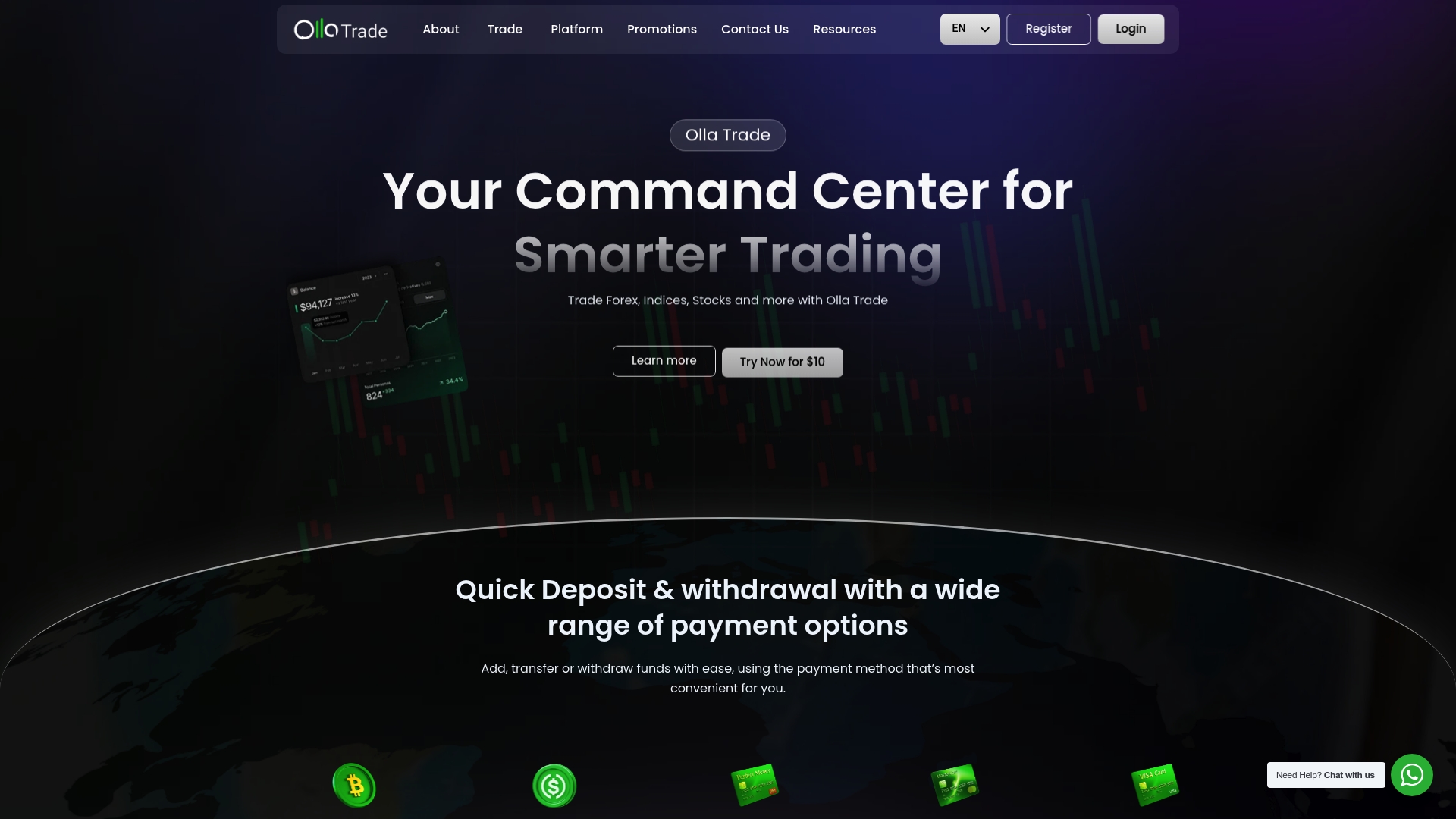
Whether you’re focused on forex, interested in cryptocurrency opportunities, or building diversified portfolios across asset classes, Olla Trade provides the infrastructure and educational support to maximize your platform features. Explore the Olla Trade platform features to see how execution speed and reliability support your strategies, review forex trading options at Olla Trade for competitive spreads and deep liquidity, or access professional trading education to enhance your skills while learning to leverage platform capabilities effectively.
Frequently asked questions
What are the key features to prioritize in a trading platform?
Focus on execution speed, asset variety, security measures, pricing transparency, and customization based on your trading style and frequency. Beginners should emphasize educational resources and interface simplicity, while professionals need automation support and advanced analytical tools.
How does execution speed affect my trading results?
Faster execution reduces slippage by ensuring your orders fill closer to intended prices, particularly during volatile markets. Speeds below 100 milliseconds minimize the price gap between order placement and execution, directly improving profitability for active traders and scalpers.
Are mobile platforms as capable as desktop versions?
Many modern platforms offer full multi-device synchronization with essential trading, analysis, and account management tools accessible on mobile. However, complex charting, backtesting, and automation typically work better on desktop due to screen size and processing power limitations on mobile devices.
Can too many features hurt my trading performance?
Excessive platform complexity can overwhelm you with information and choices, leading to analysis paralysis or distraction from core strategy execution. Prioritize features relevant to your specific approach and hide or disable tools you don’t actively use to maintain focus and efficiency.
How can I verify a trading platform’s security?
Check regulatory licenses directly on official regulator websites, confirm the platform uses two-factor authentication and encryption, and research the broker’s history for security incidents or regulatory actions. Look for segregated client accounts and compensation schemes that protect your funds if the broker faces financial difficulties.