




Ringkasan singkat:
- Komoditas menawarkan korelasi rendah atau negatif dengan saham dan obligasi, sehingga meningkatkan diversifikasi portofolio.
- Obligasi tersebut bertindak sebagai lindung nilai yang efektif terhadap inflasi, terutama di sektor energi, logam, dan pertanian.
- Perdagangan melibatkan kontrak berjangka, ETF, opsi, dan spread, tetapi memiliki volatilitas dan risiko leverage yang signifikan.
Perdagangan komoditas memiliki reputasi sebagai ranah para pedagang lantai bursa, dana lindung nilai, dan orang dalam industri. Persepsi tersebut membuat banyak pedagang ritel enggan untuk menjelajahi kelas aset ini, dan itu merupakan peluang yang terlewatkan. Komoditas menawarkan diversifikasi yang nyata. Karena harga komoditas dipengaruhi oleh kekuatan yang sama sekali berbeda dari saham atau obligasi. Baik Anda sedang membangun portofolio jangka panjang atau secara aktif berspekulasi pada fluktuasi harga, memahami cara kerja komoditas dapat mempertajam keunggulan Anda. Panduan ini membahas manfaat inti, bagaimana mekanisme pasar sebenarnya berfungsi, risiko nyata yang perlu Anda perhatikan, dan strategi praktis yang dapat Anda terapkan sekarang juga.
Daftar isi
- Keunggulan diversifikasi: Mengapa komoditas layak masuk dalam portofolio Anda
- Melindungi dari inflasi: Komoditas sebagai lindung nilai yang efektif
- Cara kerja perdagangan komoditas: Kontrak, biaya, dan pendorong pasar
- Menimbang risiko: Volatilitas, leverage, dan apa yang dilakukan oleh trader cerdas.
- Strategi praktis: Dari titik masuk ritel hingga taktik tingkat profesional
- Perspektif seorang praktisi: Nilai sebenarnya dan kebenaran yang terabaikan dalam perdagangan komoditas
- Jelajahi solusi perdagangan dengan Olla Trade.
- Pertanyaan yang sering diajukan
Poin-Poin Penting
| Titik | Detail |
|---|---|
| Diversifikasi portofolio | Komoditas membantu mengurangi risiko karena harganya seringkali bergerak secara independen dari saham dan obligasi. |
| Perlindungan terhadap inflasi | Investasi komoditas biasanya mempertahankan nilainya ketika inflasi melemahkan mata uang dan aset tradisional. |
| Keseimbangan risiko dan imbalan | Meskipun potensi keuntungannya bisa besar, perdagangan komoditas membutuhkan pemahaman tentang risiko dan volatilitas pasar yang unik. |
| Berbagai pilihan perdagangan | Para pedagang ritel dapat mengakses komoditas melalui ETF dan reksa dana, bukan hanya kontrak berjangka yang kompleks. |
| Alokasi portofolio strategis | Alokasi yang cerdas dan manajemen risiko adalah kunci untuk menggunakan komoditas secara efektif untuk diversifikasi. |
Keunggulan diversifikasi: Mengapa komoditas layak masuk dalam portofolio Anda
Diversifikasi adalah salah satu kata yang sering didengar oleh para trader, tetapi apa sebenarnya artinya dalam praktiknya? Pada intinya, diversifikasi berarti memegang aset yang tidak semuanya bergerak ke arah yang sama pada waktu yang bersamaan. Ketika satu posisi turun, posisi lain tetap stabil atau naik, sehingga meratakan keuntungan keseluruhan Anda.
Komoditas memberikan hal ini dengan cara yang tidak dapat dilakukan oleh sebagian besar kelas aset lainnya. Komoditas menunjukkan korelasi rendah atau negatif. Jika dibandingkan dengan saham dan obligasi, artinya ketika pasar ekuitas mengalami penurunan, harga komoditas seringkali bergerak secara independen atau bahkan berlawanan arah. Itu bukan kebetulan. Harga komoditas merespons guncangan pasokan, peristiwa cuaca, ketegangan geopolitik, dan siklus permintaan bahan baku. Tak satu pun dari kekuatan tersebut peduli dengan laporan pendapatan atau keputusan suku bunga bank sentral seperti halnya pasar ekuitas.
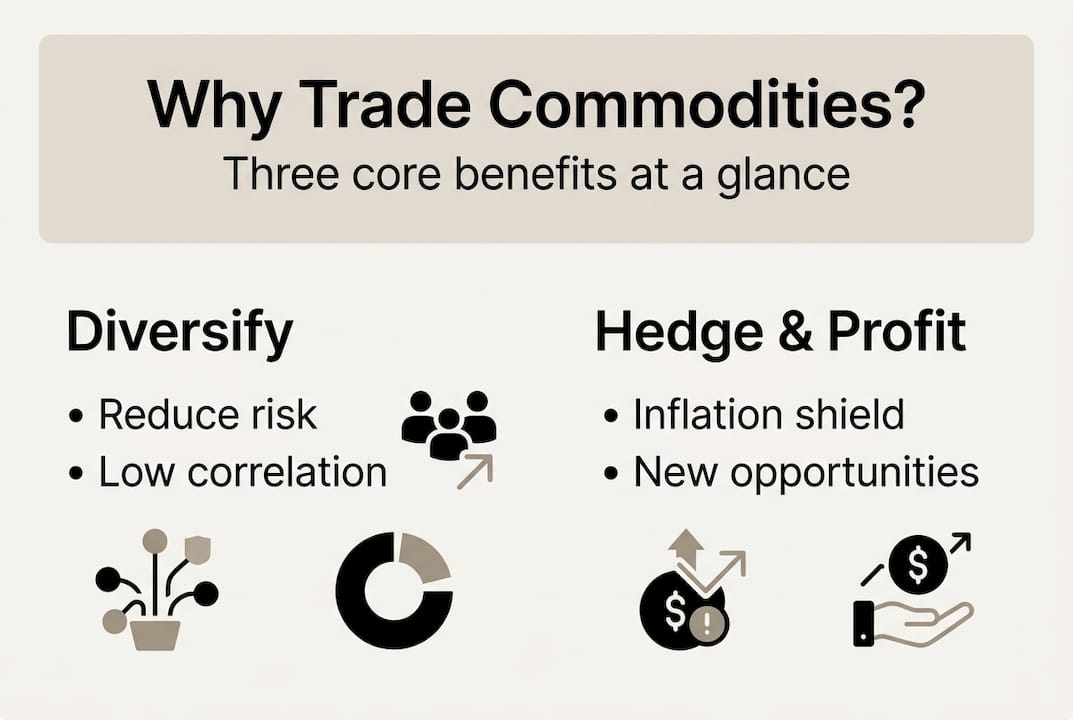
Berikut adalah gambaran sederhana perbandingan korelasi historis:
| Pasangan aset | Korelasi perkiraan |
|---|---|
| Komoditas vs. ekuitas | -0,10 hingga +0,15 |
| Komoditas vs. obligasi | -0,20 hingga +0,10 |
| Saham vs. obligasi | -0,30 hingga +0,60 |
Angka-angka tersebut menceritakan kisah yang jelas. Menambahkan komoditas ke dalam portofolio yang dibangun di atas saham dan obligasi menghadirkan pendorong pengembalian yang benar-benar berbeda.
Beberapa faktor mendorong harga komoditas ke arah yang tidak diikuti oleh harga saham:
- Peristiwa geopolitikKonflik di wilayah penghasil minyak dapat menyebabkan harga energi melonjak dalam hitungan jam.
- Pola cuacaKekeringan di wilayah Midwest AS dapat menyebabkan harga jagung dan kedelai melonjak tajam.
- Ketidakseimbangan penawaran dan permintaanMogok kerja di sektor pertambangan di Chili berdampak pada pasokan tembaga secara global.
- Pergerakan mata uangKarena sebagian besar komoditas dihargai dalam dolar AS, dolar yang lebih lemah seringkali menaikkan harga komoditas.
- Siklus musimanKomoditas pertanian mengikuti ritme penanaman dan panen yang menciptakan jendela volatilitas yang dapat diprediksi.
Memahami bagaimana pertukaran dalam perdagangan komoditas Upaya ini juga sepadan dengan waktu Anda, karena biaya swap memengaruhi pengembalian bersih Anda atas posisi yang dipegang. Dan seiring Anda membangun eksposur komoditas Anda, mengelola biaya perdagangan menjadi semakin penting untuk melindungi profitabilitas Anda.
Tips Profesional: Bahkan alokasi komoditas yang moderat sebesar 5% hingga 10% dalam portofolio yang secara tradisional didominasi saham dapat secara signifikan mengurangi penurunan nilai selama pasar saham mengalami penurunan tanpa mengorbankan potensi pengembalian jangka panjang.
Melindungi dari inflasi: Komoditas sebagai lindung nilai yang efektif
Selain diversifikasi, komoditas bersinar ketika inflasi melanda, menawarkan manfaat besar lainnya.
Inflasi mengikis daya beli. Ketika tingkat harga umum naik, jumlah uang yang sama dapat membeli lebih sedikit barang. Untuk portofolio yang banyak diisi dengan uang tunai, instrumen pendapatan tetap, atau bahkan saham, inflasi yang berkelanjutan dapat secara diam-diam menghancurkan imbal hasil riil dari waktu ke waktu.
Komoditas memiliki perilaku yang berbeda. Harga komoditas cenderung naik seiring dengan inflasi. Karena bahan baku itulah yang pada dasarnya mendorong harga konsumen. Ketika biaya energi naik, biaya transportasi dan manufaktur pun ikut naik. Ketika harga pertanian melonjak, harga makanan di toko bahan makanan pun naik. Komoditas itu sendiri secara langsung mencerminkan kenaikan harga tersebut.

Data historis memperkuat hubungan ini:
| Lingkungan inflasi | Kinerja komoditas |
|---|---|
| Inflasi tinggi (di atas 4%) | Secara rata-rata, komoditas mengungguli saham. |
| Inflasi moderat (2-4%) | Beragam, tergantung sektornya |
| Lingkungan rendah/deflasi | Komoditas seringkali berkinerja buruk. |
Strategi lindung nilai paling efektif diterapkan pada kategori-kategori tertentu. Panduan investasi komoditas dari TrendInquirer menyoroti tiga sektor yang secara historis memimpin selama periode inflasi:
- EnergiHarga minyak dan gas alam merupakan komponen langsung dari indeks inflasi.
- LogamEmas memiliki rekam jejak selama berabad-abad sebagai penyimpan nilai selama penurunan nilai mata uang.
- PertanianKomoditas pangan seperti gandum, jagung, dan kedelai bergerak erat dengan indeks harga konsumen.
Namun, ada nuansa yang sering diabaikan oleh sebagian besar panduan. Strategi lindung nilai tidak selalu bekerja sempurna dalam jangka pendek. Kelebihan pasokan, penurunan permintaan, atau pengetatan kebijakan moneter yang cepat dari bank sentral dapat mendorong harga komoditas lebih rendah bahkan selama periode inflasi. Strategi lindung nilai inflasi paling kuat dalam jangka waktu multi-tahun, bukan sebagai perdagangan taktis jangka pendek. Memperlakukan komoditas sebagai alokasi portofolio permanen daripada sebagai langkah reaktif cenderung menghasilkan hasil yang lebih baik.
Cara kerja perdagangan komoditas: Kontrak, biaya, dan pendorong pasar
Untuk memahami keuntungan lindung nilai inflasi, mari kita uraikan bagaimana perdagangan komoditas sebenarnya bekerja dalam praktiknya.
Sebagian besar perdagangan komoditas terjadi melalui kontrak standar di bursa yang teregulasi. CME Group memfasilitasi kontrak berjangka untuk segala hal mulai dari minyak mentah hingga ternak hidup, menetapkan ukuran kontrak, jangka waktu pengiriman, dan jadwal kedaluwarsa. Berikut adalah alur perdagangan komoditas pada umumnya:
- Buka akunAnda memerlukan perusahaan pialang atau platform perdagangan yang menyediakan akses ke pasar komoditas.
- Pilih instrumen AndaPilih antara harga spot, kontrak berjangka, atau opsi berdasarkan strategi dan jangka waktu Anda.
- Analisis pasarTinjau data penawaran dan permintaan, prakiraan cuaca, berita geopolitik, dan grafik teknis.
- Lakukan transaksi AndaLakukan transaksi pada harga pasar atau harga limit, dengan ukuran posisi yang sesuai dengan toleransi risiko Anda.
- Kelola posisi tersebutPantau persyaratan margin, tanggal rollover jika memegang kontrak berjangka, dan titik keluar.
Ketiga instrumen utama tersebut masing-masing berperilaku berbeda. Kontrak spot diselesaikan segera pada harga pasar saat ini. Kontrak berjangka mengunci harga untuk pengiriman pada tanggal di masa mendatang, yang memperkenalkan konsep penetapan harga berjangka komoditas Dinamika seperti contango dan backwardation. Dalam contango, harga berjangka lebih tinggi daripada harga spot, artinya pemegang membayar premi dari waktu ke waktu. Dalam backwardation, harga berjangka diperdagangkan di bawah harga spot, yang dapat menguntungkan pemegang posisi beli. Opsi memberi Anda hak tetapi bukan kewajiban untuk membeli atau menjual, membatasi kerugian sambil mempertahankan potensi keuntungan.
Tiga kelompok menggerakkan pasar komoditas:
Produsen Gunakan kontrak berjangka untuk mengunci harga jual dan melindungi pendapatan. Hedgers (maskapai penerbangan, perusahaan makanan) membeli kontrak berjangka untuk mengendalikan biaya input. Spekulan mengambil posisi semata-mata untuk mencari keuntungan, menyediakan likuiditas yang membuat pasar berfungsi.
Tips Profesional: Jika Anda baru mengenal pasar komoditas, memulai dengan dana yang diperdagangkan di bursa (ETF) yang melacak indeks komoditas akan menghilangkan kerumitan rollover berjangka dan manajemen margin, sekaligus tetap memberi Anda eksposur harga yang berarti.
Menimbang risiko: Volatilitas, leverage, dan apa yang dilakukan oleh trader cerdas.
Setelah mekanismenya jelas, sangat penting untuk mempertimbangkan risiko dalam perdagangan komoditas agar Anda menghindari kesalahan yang merugikan.
Komoditas bukanlah kelas aset yang mudah diperlakukan dengan lembut. Risiko utama meliputi volatilitas tinggi, amplifikasi leverage, biaya rollover dalam kondisi contango, dan risiko basis., dan masing-masing dapat merusak portofolio jika disalahpahami.
Berikut yang perlu Anda tonton:
- Volatilitas hargaHarga minyak mentah secara historis dapat bergerak sebesar 30% hingga 50% dalam satu tahun. Komoditas pertanian dapat mengalami lonjakan tajam hanya karena satu laporan cuaca.
- Risiko leverageKontrak berjangka hanya membutuhkan sebagian kecil dari nilai kontrak sebagai margin. Pergerakan 10% yang berlawanan dengan posisi Anda dapat menghapus seluruh deposit margin Anda. Memahami risiko leverage dalam perdagangan merupakan hal yang tidak dapat dinegosiasikan sebelum memasuki pasar berjangka.
- Biaya gulunganJika Anda memegang posisi berjangka melewati tanggal kadaluarsa, Anda harus melakukan rollover ke kontrak berikutnya. Di pasar contango, setiap rollover membutuhkan biaya, yang secara diam-diam mengikis keuntungan.
- Risiko basisHarga kontrak berjangka tidak selalu bergerak selaras sempurna dengan harga spot yang ingin Anda lindungi, sehingga menciptakan celah dalam perlindungan.
- Risiko likuiditasPasar komoditas yang lebih kecil dapat memiliki selisih harga beli dan jual yang lebar, sehingga membuat proses masuk dan keluar menjadi mahal.
Perak adalah contoh yang tepat. Volatilitas perak Secara teratur, harga emas jauh lebih tinggi, menciptakan peluang yang lebih besar sekaligus potensi kerugian yang lebih besar dalam jangka waktu singkat.
“Volatilitas di pasar komoditas bukanlah sebuah kekurangan. Ini adalah fitur yang menciptakan peluang dan risiko secara bersamaan. Pedagang yang menghargainya akan mendapat keuntungan; sedangkan yang mengabaikannya akan menanggung konsekuensinya.”
Tips Profesional: Para trader profesional tidak pernah melewatkan tiga langkah: menetapkan stop-loss yang ketat sebelum memasuki posisi, menentukan ukuran posisi agar risiko total modal per transaksi tidak melebihi 1% hingga 2%, dan meninjau level margin setiap hari. Melindungi modal perdagangan Anda adalah fondasi yang menjadi dasar setiap strategi lainnya.
Strategi praktis: Dari titik masuk ritel hingga taktik tingkat profesional
Dengan mempertimbangkan risikonya, mari kita terjemahkan manfaat utama komoditas ke dalam tindakan nyata yang dapat Anda lakukan sekarang.
Para pedagang ritel dan profesional memiliki pendekatan yang berbeda terhadap komoditas, dan itu wajar. Strategi Anda harus sesuai dengan pengalaman, modal, dan komitmen waktu Anda.
Para pedagang ritel biasanya mengikuti jalur ini:
- Mulailah dengan ETF komoditas atau reksa dana untuk membangun pemahaman tentang perilaku harga.
- Beralihlah ke CFD komoditas untuk mendapatkan eksposur yang lebih besar dengan parameter risiko yang terdefinisi.
- Secara bertahap memperkenalkan posisi komoditas tunggal seiring dengan pendalaman pengetahuan.
- Gunakan opsi untuk spekulasi dengan risiko terbatas atau lindung nilai terhadap posisi yang sudah ada.
Para trader profesional sering beroperasi pada level yang berbeda:
- Perdagangkan kontrak berjangka secara langsung di bursa seperti CME atau ICE untuk mendapatkan eksposur pasar penuh.
- Gunakan spread trading untuk mendapatkan keuntungan dari perbedaan harga antara kontrak-kontrak terkait.
- Terapkan model kuantitatif dan pembelajaran mesin untuk mengidentifikasi sinyal penawaran dan permintaan.
- Lindungi risiko paparan komoditas fisik menggunakan derivatif.
Kendaraan yang paling umum di kedua kelompok tersebut meliputi:
- ETF dan dana indeks: Biaya rendah, likuid, tanpa kerumitan kontrak berjangka.
- CFD (Kontrak Perdagangan Berjangka)Fleksibel, tersedia di sebagian besar platform online, memungkinkan posisi jangka panjang dan jangka pendek.
- Kontrak berjangkaEksposur maksimum, tetapi memerlukan manajemen margin dan disiplin rollover.
- OpsiRisiko yang terdefinisi, berguna untuk spekulasi dan lindung nilai.
- Perdagangan spread: Perdagangan spread berjangka Melibatkan pembelian dan penjualan kontrak terkait secara bersamaan untuk mendapatkan keuntungan dari pergerakan harga relatif, bukan dari arah pergerakan harga secara langsung.
Untuk alokasi, para ahli secara konsisten merekomendasikan 2% hingga 10% dari total nilai portofolio dalam komoditas, yang disesuaikan dengan toleransi risiko dan jangka waktu investasi. Panduan investasi strategis menegaskan bahwa penyeimbangan sektor dalam komoditas juga penting. Konsentrasi sepenuhnya pada energi, misalnya, menciptakan profil risiko yang berbeda dibandingkan dengan penyebaran di berbagai sektor seperti energi, logam, dan pertanian.
Selalu periksa peraturan perdagangan Hal ini relevan dengan yurisdiksi Anda sebelum memasuki pasar komoditas, dan selalu ikuti perkembangan terkini. pembaruan perdagangan terbaru yang dapat memengaruhi kondisi pasar.
Tips Profesional: Mulailah dengan ukuran posisi yang terasa hampir terlalu kecil. Kurva pembelajaran dalam komoditas sangat curam, dan biaya pendidikan tersebut harus diminimalkan sampai Anda membuktikan bahwa pendekatan Anda berhasil.
Perspektif seorang praktisi: Nilai sebenarnya dan kebenaran yang terabaikan dalam perdagangan komoditas
Strategi-strategi di atas hanyalah permulaan. Ada baiknya kita berhenti sejenak untuk melihat secara jujur apa yang diungkapkan oleh pengalaman tentang perdagangan komoditas yang sebagian besar panduan abaikan.
Pertama, volatilitas adalah alat, bukan hanya ancaman. Para trader yang takut akan volatilitas komoditas cenderung melakukan alokasi yang kurang dan melewatkan peluang di mana komoditas menghasilkan keuntungan yang luar biasa. Belajar menggunakan volatilitas daripada menghindarinya adalah hal yang membedakan para pelaku pasar yang konsisten dari mereka yang hanya mencoba-coba dan kemudian berhenti.
Kedua, data historis memiliki keterbatasan. Tabel korelasi dan statistik lindung nilai inflasi dibangun berdasarkan siklus masa lalu. Pasar berevolusi. Hubungan antara komoditas dan inflasi bergeser selama siklus pengetatan tahun 2022 hingga 2023 dengan cara yang mengejutkan bahkan para manajer portofolio berpengalaman. Kemampuan beradaptasi lebih unggul daripada kepatuhan kaku terhadap model historis apa pun.
Ketiga, sebagian besar portofolio tidak hanya kurang mengalokasikan dana ke komoditas, tetapi juga salah mengalokasikan. Berinvestasi hanya pada emas bukanlah diversifikasi komoditas. Integrasi yang sebenarnya berarti menyebar ke sektor energi, logam, dan pertanian dengan tesis yang jelas untuk setiap posisi. Memahami risiko leverage yang sebenarnya dalam setiap sektor komoditas adalah bagian dari proses tersebut.
Pada akhirnya, disiplin dan pembelajaran berkelanjutan adalah keunggulan sebenarnya di pasar ini. Komoditas memberi penghargaan kepada para pedagang yang mempelajari rantai pasokan, mengikuti perkembangan geopolitik, dan tetap ingin tahu tentang struktur pasar. Komitmen itulah, lebih dari strategi tunggal apa pun, yang akan menghasilkan keuntungan berlipat ganda seiring waktu.
Jelajahi solusi perdagangan dengan Olla Trade.
Pengetahuan dalam panduan ini memberi Anda fondasi yang kuat, tetapi menerapkannya membutuhkan alat yang tepat dan akses pasar.
Olla Trade menyediakan akses ke berbagai instrumen yang terkait dengan komoditas, termasuk Perdagangan CFD pada logam, energi, dan indeks, bersama dengan serangkaian lengkap solusi perdagangan forex. Platform ini mengintegrasikan MetaTrader 4 untuk pembuatan grafik tingkat lanjut, penasihat ahli, dan eksekusi cepat, memberikan infrastruktur kepada pedagang ritel dan profesional untuk bertindak berdasarkan strategi komoditas dengan percaya diri. Baik Anda sedang menjajaki posisi komoditas pertama Anda atau menyempurnakan pendekatan multi-aset, Olla Trade Menawarkan instrumen, spread, dan dukungan untuk membantu Anda beralih dari strategi ke eksekusi secara efisien.
Pertanyaan yang sering diajukan
Apa saja jenis komoditas utama yang diperdagangkan orang?
Kategori utamanya adalah energi (seperti minyak dan gas alam), logam (seperti emas dan tembaga), dan produk pertanian (seperti gandum dan kopi). Setiap kategori merespons pendorong penawaran dan permintaan yang berbeda, itulah sebabnya pasar komoditas menawarkan diversifikasi yang nyata di berbagai sektor.
Seberapa berisiko perdagangan komoditas dibandingkan dengan saham?
Perdagangan komoditas umumnya lebih berisiko karena volatilitas harga yang lebih tinggi, efek leverage, dan dampak dari peristiwa yang tidak dapat diprediksi seperti cuaca atau guncangan geopolitik. Volatilitas tinggi dan amplifikasi leverage berarti kerugian dapat terakumulasi lebih cepat daripada di pasar ekuitas tradisional.
Bisakah saya memperdagangkan komoditas tanpa menggunakan kontrak berjangka?
Ya, Anda bisa mendapatkan eksposur melalui ETF, reksa dana, atau reksa dana indeks yang berfokus pada komoditas tanpa harus melakukan perdagangan berjangka secara langsung. Para pedagang ritel sering menggunakan ETF untuk menghindari kerumitan rollover berjangka dan persyaratan margin.
Berapakah alokasi yang direkomendasikan untuk komoditas dalam sebuah portofolio?
Para ahli sering menyarankan untuk mengalokasikan 2-10% dari portofolio untuk komoditas, yang diimbangi dengan tujuan investasi dan toleransi risiko Anda, dengan diversifikasi sektor di bidang energi, logam, dan pertanian.
Bagaimana harga komoditas memengaruhi inflasi?
Kenaikan harga komoditas biasanya menyebabkan inflasi secara keseluruhan yang lebih tinggi karena secara langsung memengaruhi biaya produksi barang dan jasa. Harga komoditas naik seiring dengan inflasi, menjadikannya salah satu dari sedikit kelas aset yang dapat mempertahankan daya beli selama siklus inflasi.
Direkomendasikan
- Memahami swap dalam perdagangan: Dampaknya pada forex dan komoditas
- Praktik terbaik untuk para trader: tingkatkan performa di tahun 2026
- Mengapa keamanan penting dalam perdagangan: lindungi modal Anda
- Untuk memulai perdagangan transformasi investasi pada tahun 2026
- Membangun Portofolio yang Terdiversifikasi dalam Perdagangan Forex | Trade Copier untuk MT4 & MT5