











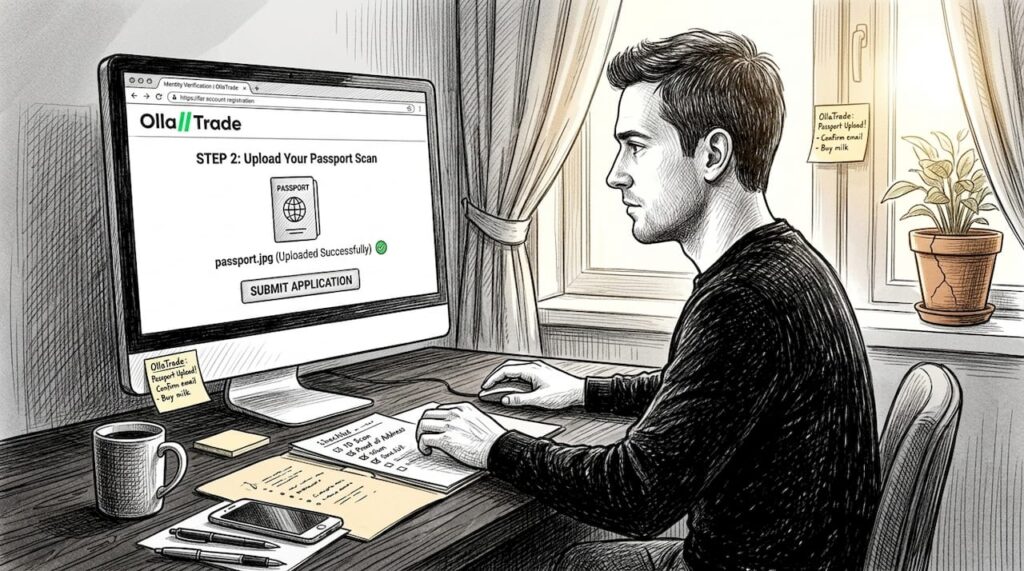
Opening your first trading account can feel overwhelming when you’re staring at registration forms and verification requirements. Many traders abandon the process halfway through because they’re unsure what documents to prepare, which account type suits their goals, or how to fund their account securely. This guide walks you through every step of creating a trading account on an online platform, from gathering your documents to executing your first trade. You’ll learn exactly what brokers require, how to avoid common setup mistakes, and how to verify your account is ready for market access.
Table of Contents
- Key takeaways
- What you need before opening a trading account
- Step-by-step process to open and fund your trading account
- How to avoid common mistakes during account setup
- Verifying your trading account and accessing financial markets
- Start trading with Olla Trade today
- How to set up a trading account: frequently asked questions
Key Takeaways
| Point | Details |
|---|---|
| Prepare before opening | Setting up the right broker and gathering documents ahead of time saves effort and prevents delays. |
| Registration and verification | The process typically starts with registering on the broker site and submitting government issued photo ID and proof of address for verification. |
| Funding the account | After approval, you fund the account to meet minimums and enable trading according to the broker rules. |
| Avoid setup mistakes | Mistakes such as using old addresses or missing documents can delay verification, so organize a dedicated folder of required items. |
What you need before opening a trading account
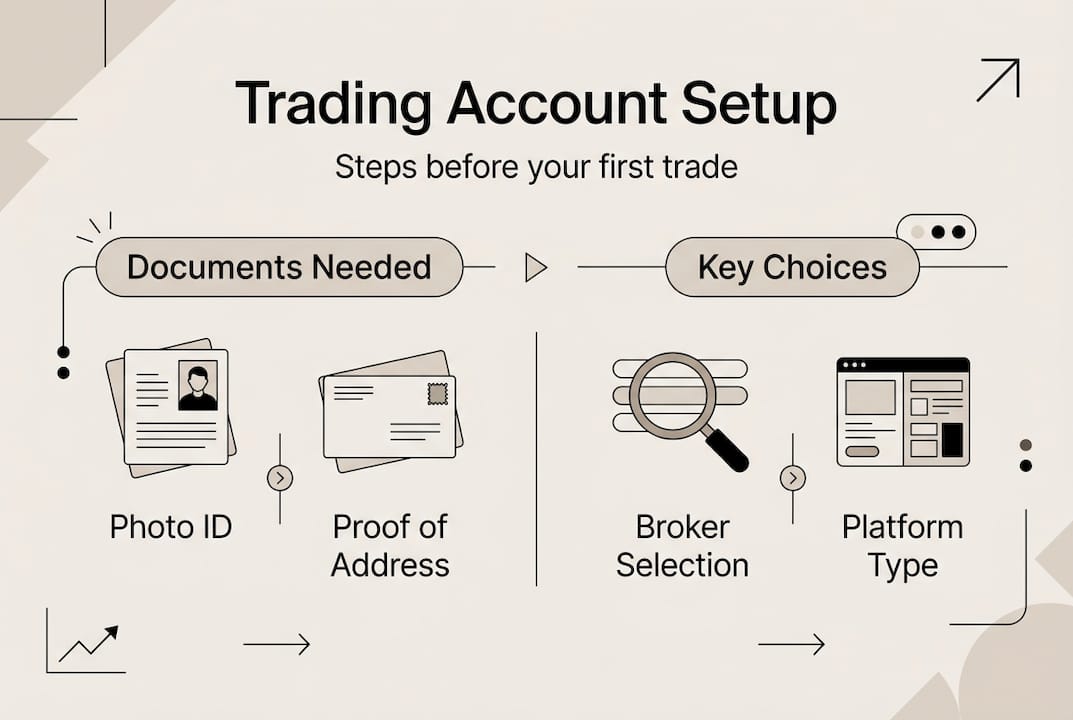
Before you click that registration button, you need to gather specific documents and make informed decisions about your trading setup. Brokers require identity verification to comply with KYC/AML policies, which protect both you and the platform from fraud. Most platforms ask for a government-issued photo ID such as a passport, driver’s license, or national identity card. The document must be current and show your full name, date of birth, and photograph clearly.
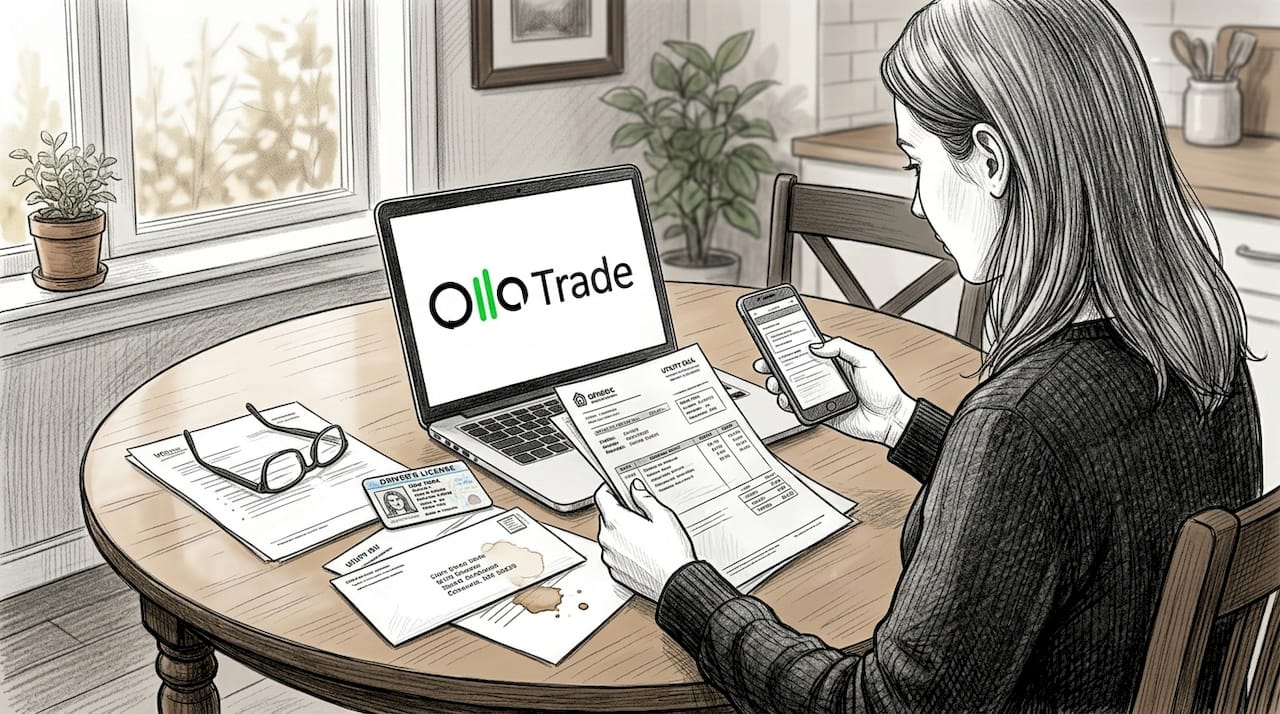
Proof of address comes next. Brokers typically accept utility bills, bank statements, or government correspondence dated within the last three months. The address on this document must match what you enter during registration. Some traders get rejected because they submit documents with old addresses or PO boxes instead of residential addresses.
Understanding deposit minimums helps you choose the right account type. Standard accounts might require $100 to $500 to start, while professional accounts often need $5,000 or more. Research what each account tier offers in terms of leverage, spreads, and market access before committing your capital.
Selecting a reputable broker matters more than finding the lowest fees. Check for regulatory licenses from recognized authorities, read independent reviews from actual traders, and verify the platform offers the instruments you want to trade. A broker licensed in multiple jurisdictions typically follows stricter compliance standards.
Familiarize yourself with trading platform options before registration. Some brokers offer proprietary platforms while others integrate MetaTrader 4 or MetaTrader 5. Knowing which platform you prefer helps you choose a broker that supports your trading tools and analytical needs.
Pro Tip: Create a dedicated folder on your device with scanned copies of all required documents before starting registration. This lets you upload files quickly without searching through emails or filing cabinets during the verification process.
| Document Type | Accepted Forms | Common Rejections |
|---|---|---|
| Photo ID | Passport, driver’s license, national ID card | Expired documents, unclear photos, cropped images |
| Proof of Address | Utility bill, bank statement, tax document | Documents older than 3 months, PO box addresses |
| Payment Method | Bank account details, credit card, e-wallet | Accounts not in your name, prepaid cards |
Step-by-step process to open and fund your trading account
The account opening process follows a consistent pattern across most online trading platforms, though specific requirements vary by broker and jurisdiction. Start by visiting the broker’s website and locating the account registration page. You’ll enter personal information including your full legal name, date of birth, residential address, phone number, and email address. Double-check every field for typos because errors here cause verification delays later.
Complete the online application form with accurate personal and financial information. Most platforms ask about your employment status, annual income, net worth, and trading experience. Answer honestly because brokers use this data to determine appropriate account types and leverage limits. Misrepresenting your financial situation can lead to account restrictions or closure.
Upload your verification documents immediately after submitting the application. Use clear, color scans or photos where all four corners of the document are visible. The text must be readable without zooming. Most platforms accept JPEG, PNG, or PDF formats under 5MB per file. Upload both sides of your ID if it contains information on the back.
Select your account type based on your trading goals and available capital. Standard accounts suit most retail traders with basic features and moderate leverage. Professional accounts offer higher leverage and lower spreads but require demonstrating significant trading experience or financial resources. Some brokers let you open multiple account types simultaneously.
Choose your base currency for the account. This determines how your deposits, withdrawals, and profit/loss calculations display. Select the currency you’ll use most often for deposits to minimize conversion fees. Common options include USD, EUR, GBP, and AUD.
Fund your account using approved payment methods. Bank wire transfers typically take 2-5 business days but support larger deposits. Credit and debit cards process faster, often within 24 hours, but may have lower limits. E-wallets like Skrill or Neteller offer instant deposits but sometimes charge processing fees. Your first deposit must meet the minimum requirement for your chosen account type.
Confirm account activation by checking your email for a verification message or logging into your trading dashboard. Most brokers send a welcome email with your account number, login credentials, and next steps. Some platforms require you to verify your email address by clicking a confirmation link before full account access activates.
Pro Tip: Take screenshots of each completed step, including confirmation pages and transaction receipts. These records help resolve any disputes about verification status or deposit timing if issues arise.
How to avoid common mistakes during account setup
Incomplete or unclear documentation causes most account approval delays. Proper document preparation prevents weeks of back-and-forth with broker support teams. Scan or photograph your documents in good lighting against a contrasting background. Avoid shadows, glare, or reflections that obscure text. If your ID has a laminated surface, angle it slightly to prevent light reflection from making details unreadable.
Choosing the wrong account type wastes time and capital. New traders often select professional accounts attracted by higher leverage, only to discover they don’t meet experience requirements. Start with a standard account until you understand platform features and market behavior. You can always upgrade later once you’ve built a track record.
Rushing deposits before verification completes creates unnecessary complications. Wait for email confirmation that your account is fully verified before transferring significant funds. Some brokers hold deposits in a pending state until document review finishes, meaning you can’t trade even though money has left your bank account.
“Protecting your trading account starts with secure identity verification and careful document handling. Never share login credentials via email or respond to unsolicited messages requesting account information. Legitimate brokers never ask for passwords or verification codes through unofficial channels.”
Using payment methods not registered in your name triggers automatic rejection. Brokers cannot accept third-party deposits due to anti-money laundering regulations. If you’re funding from a joint bank account, ensure your name appears as an account holder. Credit cards must match the name on your trading account exactly, including middle initials.
Ignoring email notifications leads to missed verification requests. Brokers often need additional documentation or clarification about submitted files. Check your inbox and spam folder daily during the setup process. Responding quickly to verification requests can reduce approval time from weeks to days.
- Submit documents showing all four corners and edges clearly visible
- Verify that file formats match broker requirements before uploading
- Use payment methods registered in your legal name only
- Respond to broker emails within 24 hours to maintain momentum
- Keep original documents accessible in case brokers request resubmission
Verifying your trading account and accessing financial markets
Once your documents are approved, you need to confirm your account is fully operational before placing trades. Log into your trading dashboard and locate the account status section. Most platforms display verification status with clear indicators like “Verified,” “Pending,” or “Action Required.” A fully verified account shows green checkmarks next to identity verification, address verification, and payment method confirmation.
Understanding account features helps you maximize platform capabilities. Standard accounts typically offer access to major forex pairs, popular indices, and common commodities with moderate spreads. Professional accounts may include exotic currency pairs, individual stocks, and cryptocurrency CFDs with tighter spreads and higher leverage. Review the instruments list in your account dashboard to see exactly what markets you can trade.
Confirm your deposit has settled and appears in your account balance. Bank transfers sometimes take several business days to clear completely. Your dashboard should show available balance, used margin, and free margin. Only the free margin amount is available for opening new positions. If you deposited $1,000 but only see $950 available, check for deposit fees or currency conversion charges.
Accessing your trading platform requires downloading software or using a web-based interface. MetaTrader 4 and MetaTrader 5 users need to download the application and log in using credentials provided by the broker. Web-based platforms work through your browser without installation. Mobile apps let you trade from smartphones or tablets. Test your login on each device you plan to use.
Learning basic order types prevents costly mistakes when you start trading. Market orders execute immediately at the current price. Limit orders only execute when the price reaches your specified level. Stop-loss orders automatically close positions to limit losses. Take-profit orders lock in gains when price targets are reached. Practice placing orders in a demo account if your broker offers one.
| Account Type | Market Access | Typical Spreads | Minimum Deposit | Leverage |
|---|---|---|---|---|
| Standard | Major forex pairs, popular indices, metals | 1.5-3.0 pips | $100-$500 | Up to 1:100 |
| Pro | All forex pairs, indices, commodities, some stocks | 0.8-1.5 pips | $1,000-$5,000 | Up to 1:200 |
| Elite | Full instrument range including cryptocurrencies | 0.3-0.8 pips | $10,000+ | Up to 1:400 |
Verifying account status and compliance ensures uninterrupted access to market data and instruments. Check that your account dashboard displays real-time quotes, charts load properly, and you can place test orders without errors. Some brokers restrict certain instruments until additional verification steps complete.
- Confirm all verification checkmarks show green or completed status
- Verify your deposit appears in available balance, not pending
- Test platform login on all devices you’ll use for trading
- Review the complete list of tradable instruments in your account
- Place a small test trade to confirm order execution works properly
- Set up two-factor authentication for additional account security
Start trading with Olla Trade today
Now that you understand the complete account setup process, you’re ready to start your trading journey on a platform built for both new and experienced traders. Olla Trade offers a straightforward registration process with clear verification steps, so you spend less time on paperwork and more time analyzing markets. The platform provides access to forex trading with tight spreads, plus CFDs on metals, indices, and cryptocurrencies through an intuitive interface.
Your account setup follows the same proven steps outlined in this guide, with dedicated support available if you need assistance during verification. Olla Trade maintains strict KYC/AML compliance to protect your funds and personal information throughout the trading process. Once verified, you’ll access advanced charting tools, MetaTrader 4 integration, and educational resources designed to improve your trading skills. Whether you’re interested in learning forex fundamentals or ready to trade immediately, the platform adapts to your experience level and goals.
How to set up a trading account: frequently asked questions
What documents are needed for verification?
You’ll need a government-issued photo ID like a passport or driver’s license, plus proof of address dated within the last three months such as a utility bill or bank statement. Some brokers also request payment method verification like a bank statement or credit card photo. All documents must show your full legal name matching your registration details exactly.
How long does the account setup process take?
Most traders complete registration in 10-15 minutes, but verification typically takes 1-3 business days depending on document quality and broker workload. Submitting clear, complete documents on your first attempt speeds up approval significantly. Some platforms offer instant verification for certain document types using automated systems.
Can I open multiple types of trading accounts?
Yes, most brokers let you maintain several accounts simultaneously with different base currencies or account types. This helps you separate trading strategies, test different approaches, or manage risk across multiple portfolios. You’ll need to fund each account separately and track them individually in your dashboard. Compare account options to find the best combination for your needs.
What should I do if my account verification is delayed?
Contact broker support immediately to identify the specific issue causing the delay. Common problems include unclear document photos, mismatched addresses, or expired identification. Resubmit any requested documents within 24 hours to maintain your place in the verification queue. Check your spam folder for emails from the broker that might contain verification requests.
Is it safe to store funds on an online trading account?
Reputable brokers use segregated accounts to keep client funds separate from company operating capital, protecting your money if the broker faces financial difficulties. Look for brokers regulated by recognized authorities and offering investor compensation schemes. Enable two-factor authentication and use strong passwords to protect against unauthorized access. Review the broker’s security policies before depositing significant amounts.