










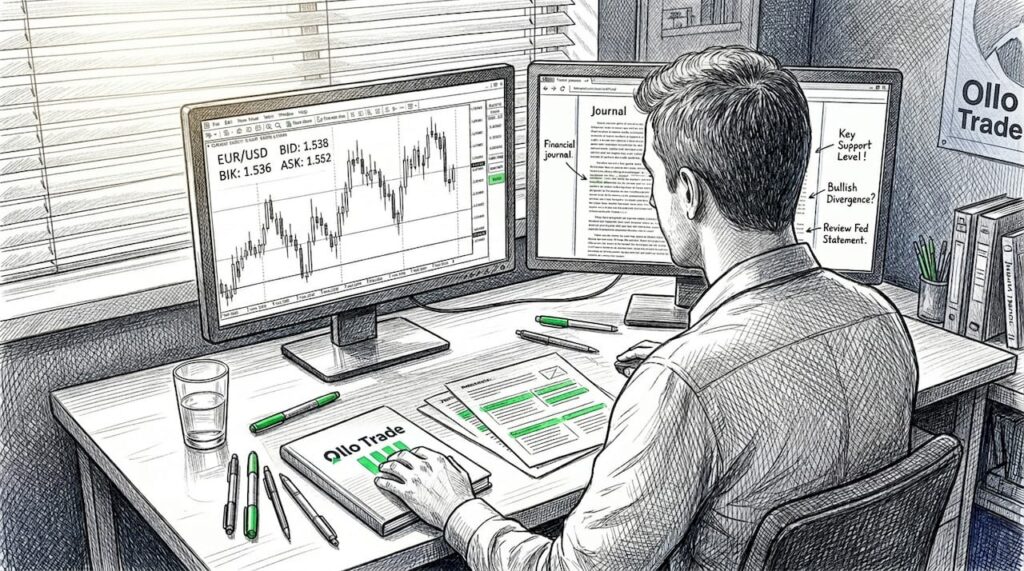
TL;DR:
- The bid-ask spread is a hidden cost that erodes profitability on every trade, whether trading Forex, CFDs, or stocks. Understanding how spreads form, vary with market liquidity, and selecting brokers wisely can significantly improve trading efficiency and reduce costs. Mastering spread management through timing, order types, and cost tracking provides traders with a real competitive advantage over those overlooking this continuous expense.
Most retail traders obsess over commission fees while completely ignoring a cost that hits them on every single trade they place. The bid-ask spread is quietly working against your profitability, whether you trade Forex, CFDs, or stocks. Understanding this cost, how it forms, how it changes, and how to minimize it, is one of the most practical upgrades you can make to your trading approach. This article breaks it all down so you can trade smarter, not just harder.
目录
- What is bid-ask spread and why does it matter?
- How bid-ask spreads reflect market liquidity and trading conditions
- Factors influencing bid-ask spread: Broker, session, and instruments
- Practical strategies to manage bid-ask spread costs
- Our take: Why mastering bid-ask spreads gives retail traders a real edge
- Take your trading to the next level: Useful resources
- 常见问题解答
要点总结
| 观点 | 细节 |
|---|---|
| Bid-ask spread basics | The spread is a key trading cost, representing the difference between buyer and seller prices. |
| Liquidity’s impact | Narrow spreads mean high liquidity and lower costs; wide spreads signal risk and expensive trades. |
| Minimizing spread costs | Trade liquid pairs, use limit orders, and compare broker fees to keep spread expenses low. |
| Strategic trading sessions | Trading during high-liquidity sessions reduces spread and transaction costs. |
| Cumulative cost awareness | Actively tracking spread costs can significantly improve your trading performance. |
What is bid-ask spread and why does it matter?
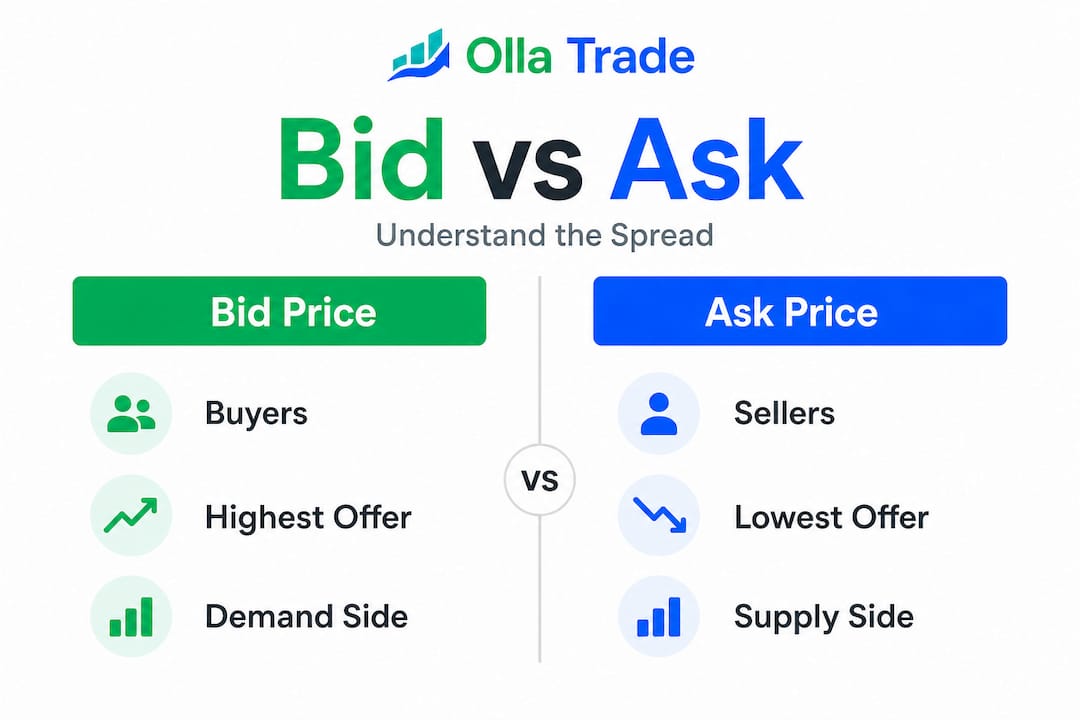
Every financial market operates with two prices displayed simultaneously: the bid and the ask. The bid is the highest price a buyer is willing to pay. The ask is the lowest price a seller is willing to accept. The gap between these two numbers is the spread, and it’s the first obstacle standing between you and profit the moment you open a trade.
作为 defined by Investopedia, the bid-ask spread is the difference between the highest price a buyer is willing to pay and the lowest price a seller is willing to accept for a financial instrument. This definition sounds simple, but its implications run deep for active traders.

Here’s a real-world example. Say you’re trading EUR/USD. The broker quotes a bid of 1.1000 and an ask of 1.1002. The 交易价差 is 2 pips. That means the moment you buy at 1.1002, your position is already sitting at a 2-pip loss because you’d have to sell back at the bid price of 1.1000. You need the market to move at least 2 pips in your favor just to break even.
The formula is straightforward. The bid-ask spread equals Ask Price minus Bid Price, representing the primary transaction cost for retail traders who buy at the ask and sell at the bid. This cost is automatic. It applies every time, on every instrument, with every broker.
What makes the spread so tricky is that it doesn’t show up as a line item on your statement the way a commission does. Commissions are transparent. Spreads are embedded in the price you receive, making them easy to overlook when reviewing your brokerage account fees and trading costs.
“The spread is the broker’s built-in compensation. It’s not a penalty or a surprise. It’s the price of market access, and the sooner you treat it as a real cost, the better your edge becomes.”
Here’s a quick comparison of how commissions and spreads differ:
| 成本类型 | Visibility | When it applies | Who pays it |
|---|---|---|---|
| 委员会 | Explicit, line item | Per trade or per lot | 所有交易者 |
| 传播 | Embedded in price | Every open and close | 所有交易者 |
| Swap/overnight | Visible on statement | Positions held overnight | Positions not closed |
The key takeaway here: commissions are predictable, but spreads can vary dramatically depending on conditions. That variability is where the real risk lies.
Key differences between spread and commission costs:
- Spreads vary in real time based on market conditions
- Commissions are fixed or percentage-based and don’t change with volatility
- Spread-only brokers bundle everything into the price quote
- ECN brokers often charge low spreads plus a separate commission
- Spread costs apply to every trade, including those you open and immediately close
How bid-ask spreads reflect market liquidity and trading conditions
The size of the spread at any given moment tells you a lot about what’s happening in the market. Think of it as a real-time health indicator. Tight spreads mean plenty of buyers and sellers are active. Wide spreads signal the opposite.
Narrow spreads indicate high liquidity and low transaction costs, while wide spreads signal low liquidity, often in illiquid assets or off-peak hours. For Forex traders, liquidity is not constant. It peaks during session overlaps and drops sharply during Asian session quiet periods or around major holidays.

理解 market liquidity insights helps you anticipate when spreads will be favorable and when they’ll eat into your margins. Here’s a practical data view:
| Currency pair | Typical spread (London/NY overlap) | Typical spread (off-hours) |
|---|---|---|
| 欧元/美元 | 0.5 to 1.2 pips | 2 to 5 pips |
| 英镑/美元 | 0.8 to 1.5 pips | 3 to 7 pips |
| 美元/日元 | 0.6 to 1.0 pips | 2 to 4 pips |
| 欧元/英镑 | 1.0 to 2.0 pips | 4 to 8 pips |
| USD/ZAR (exotic) | 30 to 60 pips | 80 to 150 pips |
The contrast between major pairs and exotics is stark. A trader jumping into USD/ZAR might not realize they’re starting each trade with a cost 50 to 100 times higher than EUR/USD.
Signs that you’re trading in a high-liquidity environment:
- Spreads are tight and stable
- Order fills happen almost instantly with minimal slippage
- Market depth shows many orders clustered near the current price
- You’re trading during London or New York session hours
- Instrument is a major Forex pair, major index, or large-cap stock
Signs that you’re in a low-liquidity environment:
- Spreads have noticeably widened compared to your normal baseline
- Orders are filling with unexpected slippage
- Price action is choppy and erratic
- It’s the Asian session, a public holiday, or right before a major news release
- You’re trading exotic currency pairs or thinly traded instruments
News events deserve special attention. When a central bank rate decision drops or a non-farm payroll report hits, brokers widen spreads immediately because their risk exposure spikes. Even experienced traders get caught off guard by a 10-pip spread on EUR/USD during a Federal Reserve announcement when they expected 1 pip. Timing your entries around these events is not optional; it’s a core part of cost management.
Factors influencing bid-ask spread: Broker, session, and instruments
Understanding what drives spread changes gives you control. The three biggest levers are your broker’s model, the trading session you choose, and the instrument you’re trading.
Broker model matters enormously. Market maker brokers set their own spreads, often keeping them fixed during normal conditions but widening them when risk increases. ECN (Electronic Communication Network) brokers route your orders directly to liquidity providers, resulting in tighter, more variable spreads plus a small commission. For active traders, retail traders enhance strategies by selecting brokers with low all-in costs, which means spread plus commission combined, avoiding news events or using limit orders, and focusing on high-liquidity sessions and pairs where spreads are tightest.
Knowing this distinction helps you 监控交易费用 with precision, rather than just glancing at the advertised spread and assuming it reflects your actual cost.
Trading session timing is the second major factor. The Forex market runs 24 hours, but not all hours are equal. The London/New York overlap (roughly 8 AM to 12 PM Eastern Time) is when global liquidity peaks and spreads narrow. The Asian session, particularly in early Sydney hours, is the quietest period, and spreads can nearly double on some pairs.
Instrument choice completes the picture. Major Forex pairs are the most liquid instruments in the world, trading trillions of dollars daily. Their spreads are consistently tight. Minor pairs (EUR/GBP, AUD/JPY) are a step behind. Exotic pairs (USD/TRY, USD/MXN) carry significantly wider spreads due to lower volume and higher volatility. CFDs on popular indices like the S&P 500 or DAX tend to have narrow spreads too, while less-traded CFDs on small-cap stocks or niche commodities carry wider ones.
Steps to minimize your spread impact:
- Compare brokers using all-in cost (spread plus commission), not just the headline spread figure
- Prioritize trading during the London/New York overlap for the tightest Forex spreads
- Focus on major currency pairs (EUR/USD, USD/JPY, GBP/USD) for routine trading
- Use limit orders instead of market orders to control the price you execute at
- Avoid opening new trades in the 30 minutes before and after major economic releases
- Review your broker’s spread history to understand how they behave during volatile events
Pro Tip: Ask your broker for a spread history report or check if they publish average spread data by session. Brokers who offer this level of fast execution benefits transparency are usually more reliable partners for active trading.
Practical strategies to manage bid-ask spread costs
Here’s where theory meets your trading account. Spread costs compound fast. For scalpers, this is not just a small inconvenience. It’s a serious headwind. Spread compounds quickly for scalpers; for example, 20 trades per day at 1.5 pips each totals 30 pips in pure transaction costs daily. Over 20 trading days, that’s 600 pips just to stay even. That’s a number that demands your respect.
Active traders and scalpers need to treat spread costs with the same rigor they apply to stop-loss levels and position sizing. The trading profits strategies that actually work long-term factor in all costs, not just commissions.
Top strategies for managing spread-related costs in practice:
- Trade during peak hours. The London/New York overlap offers the tightest spreads consistently. Schedule your highest-frequency trading activity around this window.
- Use limit orders. A limit order lets you specify the exact price you want to buy or sell at. This avoids paying more than necessary on entry and reduces the immediate spread impact on your position.
- Compare all-in costs across brokers. A broker advertising a 0 pip spread but charging a $10 per lot commission may actually be cheaper or more expensive than one charging a 1.2 pip spread with no commission. Always do the math.
- Avoid exotic pairs unless the setup is exceptional. The wider spread means the trade needs to move much further before you’re in profit. Your risk-to-reward ratio gets squeezed before you even start.
- Scale back during news. If you’re a scalper or day trader, simply stepping away from the screen during major news releases eliminates one of the most unpredictable sources of spread widening.
- Track spread costs in your trading journal. Most traders track wins and losses but ignore cumulative spread costs. Adding this column to your journal will show you exactly how much you’re paying for market access each week.
Pro Tip: Focus on 关键交易策略 that align your trade frequency with the spread environment. A 5-pip target strategy makes no sense in a 3-pip spread environment. Your minimum target must always exceed your spread cost by a meaningful margin.
Our take: Why mastering bid-ask spreads gives retail traders a real edge
Most trading guides treat the bid-ask spread as a footnote. Define it, show the formula, move on. But in our experience working with retail traders across multiple markets, the spread is where long-term trading results are quietly determined. It’s not dramatic. There’s no blinking alert or margin call when your spread costs pile up. They just gradually hollow out your account.
The uncomfortable truth is that spread awareness matters as much as technical analysis. A flawless chart setup can still be a losing trade if you’re entering during a wide spread environment. You could be right about direction and still lose money because the cost of entry was too high relative to your target.
What most articles skip is the behavioral side of spread management. Traders who track their average spread daily develop an intuition for market conditions that purely chart-based traders never build. They notice when spreads creep up before a news event even before they check the economic calendar. They feel the market getting thin.
We also think the industry underserves retail traders on the topic of broker comparison. Headline spreads in marketing materials are almost always best-case figures, measured during peak liquidity. The real spread you experience at 2 AM on a Tuesday trading an exotic pair is a different number entirely. Scrutinizing hidden trading costs across your broker history is a habit that separates disciplined traders from those wondering why their strategy “stopped working.”
Pro Tip: Start recording your average spread for each instrument you trade, including the time of day and session. Review it weekly. Within a month, you’ll have a personal spread profile that reveals your true cost structure and highlights where you’re losing money before a trade even moves.
The narrative around trading costs tends to focus on commissions because they’re visible and easy to compare. Spreads require more work to analyze. That’s exactly why focusing on them creates a real edge. You’re doing what most traders won’t.
Take your trading to the next level: Useful resources
Understanding bid-ask spreads transforms how you think about every trade you place. Now it’s time to put that knowledge into action with the right tools and resources.

Olla Trade offers everything you need to trade Forex with full cost transparency. Whether you’re just getting started or refining your existing strategy, our 外汇交易资源 cover the full landscape of currency markets with tight spreads and fast execution. If you want a structured path, our 外汇交易分步指南 walks you through opening trades, managing risk, and understanding your true costs from day one. For the bigger picture, our forex trading complete guide explains how the Forex market works, who the major players are, and how retail traders can compete effectively. Start with the knowledge, then build with the right platform behind you.
常见问题解答
How do you calculate the bid-ask spread in Forex?
Subtract the bid price from the ask price to get the spread, typically measured in pips. As the primary transaction cost for retail traders, the formula is simply Ask Price minus Bid Price.
Why do spreads widen during news events or off-hours?
Brokers widen spreads because liquidity drops and market risk rises sharply. Wide spreads signal low liquidity, which is common during off-peak hours or around high-impact economic releases.
Can retail traders avoid paying spread costs?
Spread costs are unavoidable, but you can reduce them significantly by trading liquid pairs during peak sessions and using limit orders. Retail traders enhance strategies by selecting brokers with the lowest all-in costs and focusing on high-liquidity instruments.
How much do spreads cost for active traders?
For high-frequency traders, the costs add up fast. Spread compounds quickly for scalpers, with 20 trades per day at 1.5 pips each totaling 30 pips in daily transaction costs alone.
Do all brokers charge the same spreads?
No, broker spreads vary widely based on their model, market conditions, and transparency standards. Broker models differ significantly in execution quality and pricing, which is why comparing brokers on all-in cost rather than headline spread is essential.